

Meghalaya Tour Packages
If you have been scrolling through Instagram. And wondering where those river-clear-as-glass photos and double-decker root bridges are from. The answer is Meghalaya. A Meghalaya tour package is not just another hill station holiday. This is the northeastern state that holds the record for the wettest place on Earth. It feels like you are above clouds most mornings. Families, couples, solo backpackers, all of them come back saying the same thing: they did not expect Meghalaya to hit this hard.
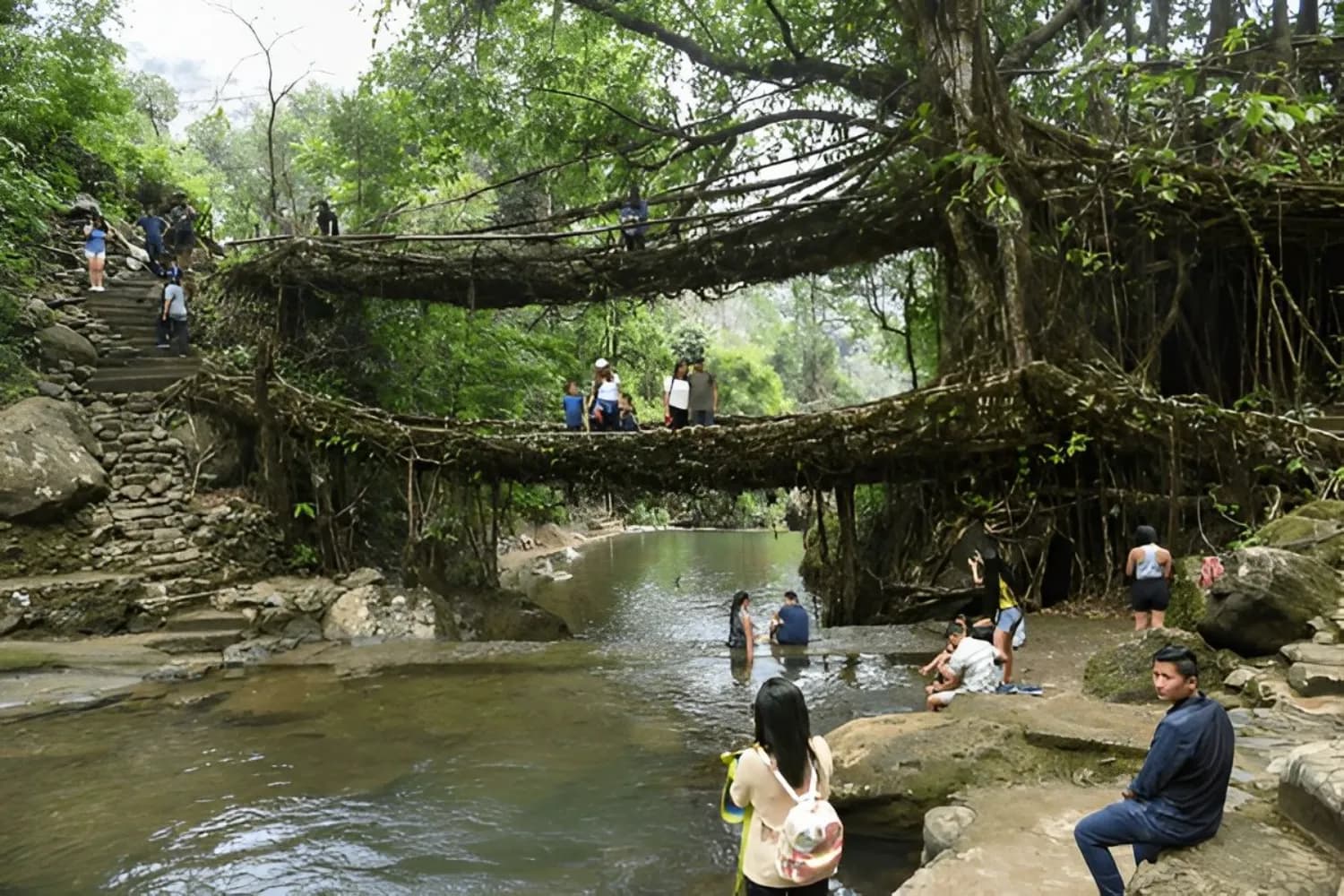
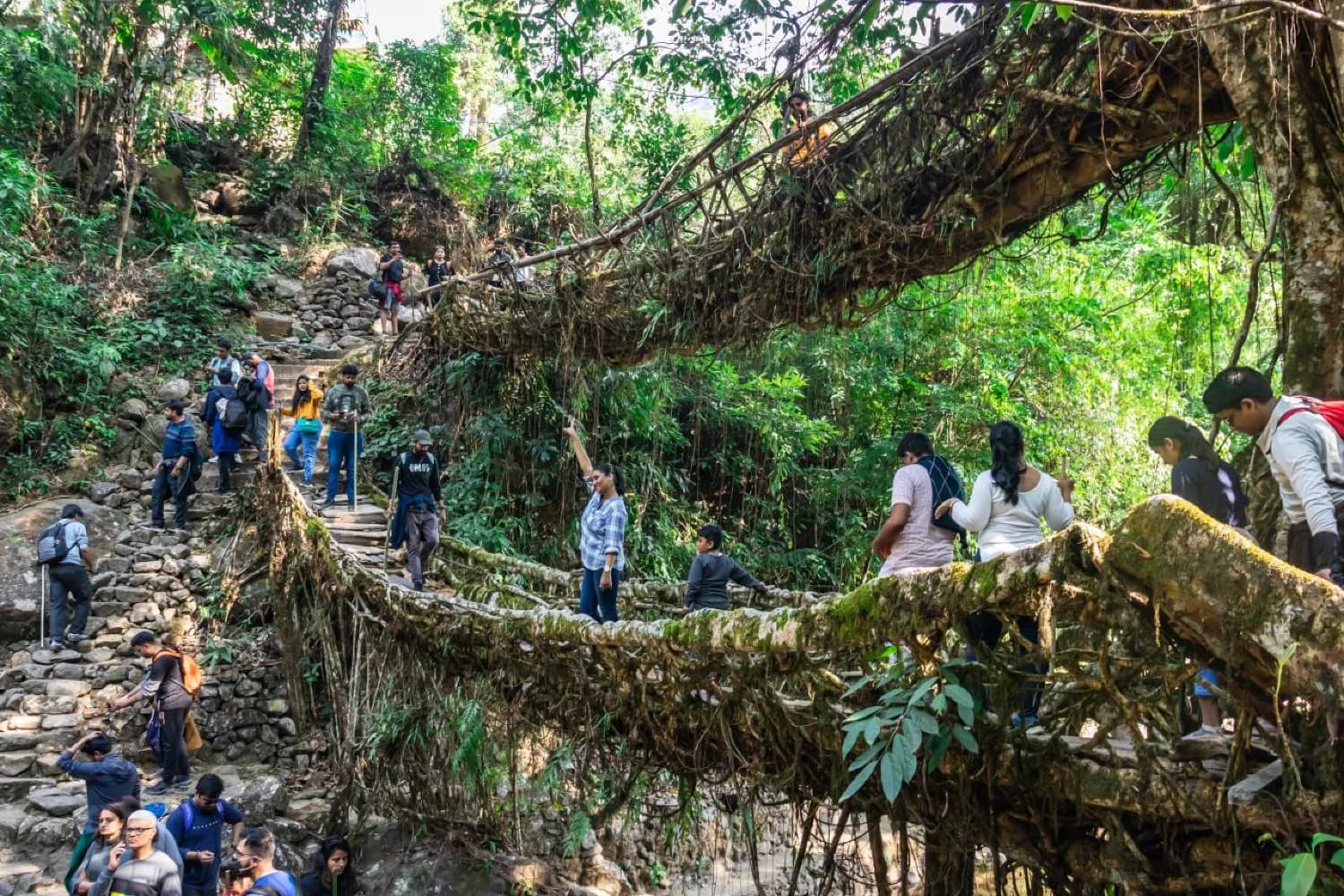
So what makes people drop everything and book a flight to Shillong? Three places do most of the convincing. The Living Root Bridges in Cherrapunji — ancient, alive, and built by tree roots over centuries. Then there is Dawki, where the river water is so transparent that boats look like they are floating on air. And Mawlynnong, officially Asia's cleanest village, where even the footpaths are swept, and the community means it. Skip these, and you are genuinely missing something that no other destination in India offers.
Viacation's Meghalaya packages run from 3 nights to 6 nights, covering Shillong, Cherrapunji, Dawki, and Mawlynnong. Pricing starts from ₹13,699 and goes up to ₹39,999 per person, depending on the itinerary and inclusions. Limited departures mean limited seats, and this is one trip you do not want to plan at the last minute.
"Honestly, I was not expecting Meghalaya to be this good. Viacation sorted everything, the stay was clean, the driver knew every viewpoint, and Dawki was just unreal. Will go again." — Riya M., Bangalore
Why Book Your Meghalaya Tour Package from Viacation?
Lots of people who land in Shillong realize they have no local SIM that works. No confirmed taxi for the next day. And a hotel that looks nothing like the photos. This is the gap Viacation fills. The team handles your full trip. From airport pickup to the last drop, with a 24/7 support line that actually picks up when you call.
We build each Meghalaya trip itinerary around practical realities. Road conditions, permit requirements, weather windows, and accommodation quality that match what is shown on the booking page. You are not guessing about anything. Every transfer is pre-arranged. Every stay is verified. And you get a dedicated trip coordinator before departure who briefs you on
- What to carry
- What to skip
- What is genuinely worth your time?
The benefit is not just convenience. It is the kind of local knowledge that saves a trip. Viacation's team has sent hundreds of travelers to Meghalaya and knows which Dawki boat operators are reliable, which season the root bridge trail gets too slippery to walk comfortably, and exactly how long the Mawsynram drive takes on a rainy afternoon. That depth of experience shows up in how smooth your trip actually feels on the ground.
What Is the Best Time to Visit Meghalaya?
October to February is the best time to visit Meghalaya for most travelers, and it fits perfectly into a Meghalaya Tour Package. You get clear skies, comfortable temperatures, and all major roads stay accessible without the monsoon chaos.
1. Summer (April to June): Pleasant Weather for Sightseeing
April to June keep temperatures between 16°C and 25°C. The waterfalls are still flowing from residual moisture. The popular spots like Dawki and Mawlynnong are not crowded yet. Travel fares during this window are moderate. Flights from Delhi to Shillong hover around ₹5,000 to ₹8,000 one-way. Our customers who traveled in May reported this as one of the best decisions they made. The weather holds, the roads are clear, and the light for photography is exceptional.
2. Monsoon (July to September): Waterfalls and Lush Greenery
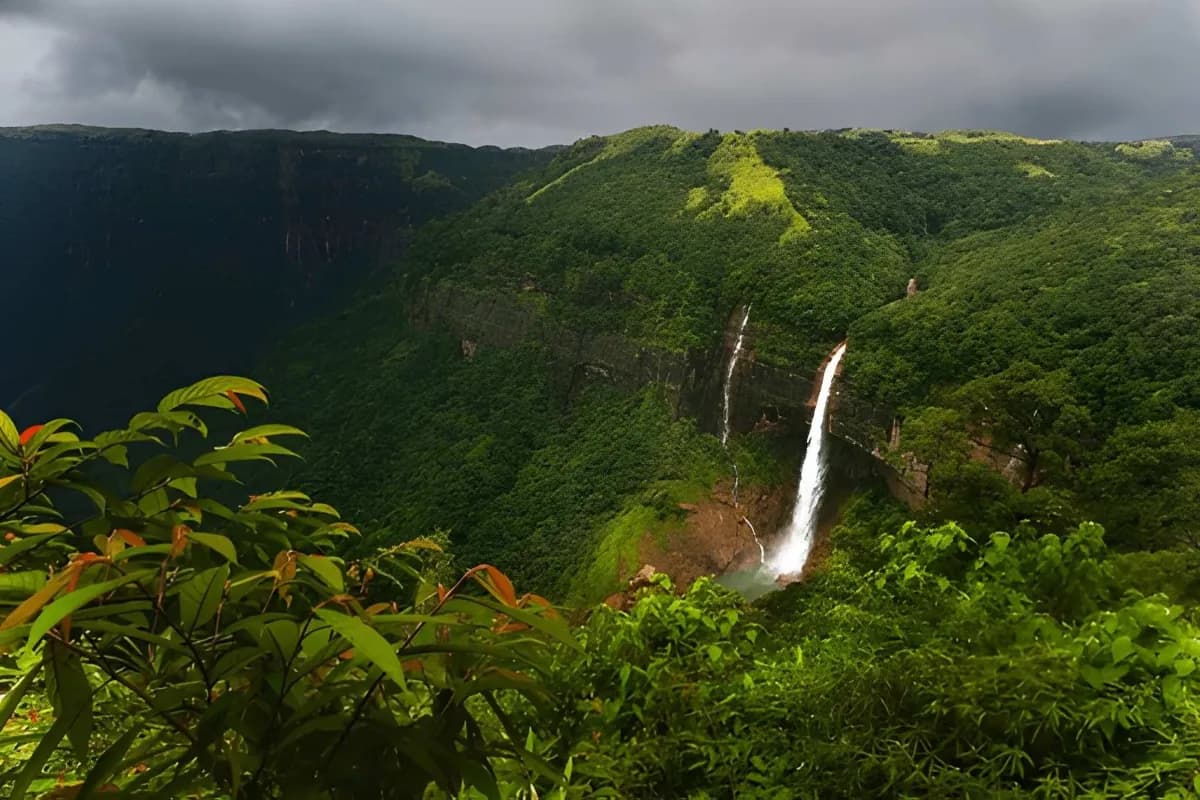
Meghalaya during the monsoon feels different. Nohkalikai Falls flow at full volume, the forests turn a shade of green that does not look real, and the living root bridges are surrounded by mist, something that really defines a Meghalaya trip. But roads can get unpredictable, and some routes to Mawsynram or Siju become difficult. If you are fine with that trade-off and love raw, wet landscapes, July to September is visually the most intense season. Expect cooler temperatures around 20°C to 30°C and heavier rainfall, especially in Cherrapunji and Mawsynram.
3. Winter (October to February): Festivals and Adventure
This is peak travel season. Temperatures drop to 4°C to 22°C in the hills, and the air is crisp and clean. Festivals like Nongkrem and the Shillong Cherry Blossom Festival fall in this window. Travel fares go up during this period. Flights can cost ₹9,000 to ₹14,000 from major cities. So booking early makes a real difference.
Do You Need an Inner Line Permit (ILP) for Meghalaya?
No, Indian citizens do not need an Inner Line Permit to visit Meghalaya. Unlike Arunachal Pradesh or Nagaland, Meghalaya has no ILP requirement for domestic travelers, which makes planning a Meghalaya Tour Package much simpler. You can enter the state freely with just a valid government-issued photo ID. Foreign nationals do need to register at the Foreigners Registration Office (FRO) in Shillong within 24 hours of arrival.
How to Reach Meghalaya?
After deciding everything, the question is how to reach Meghalaya. Let see
By Air
The most practical entry point for Meghalaya is Lokpriya Gopinath Bordoloi International Airport in Guwahati (GAU). It has direct flight connectivity from Delhi, Mumbai, Bangalore, Chennai, Hyderabad, and most other major Indian cities. IndiGo, Air India, and SpiceJet operate regular routes. From Guwahati(Airport), Shillong is roughly 121 km by road.
Airports From Major Cities:
- Indira Gandhi International Airport, DEL
- Chhatrapati Shivaji Maharaj International Airport, BOM
- Kempegowda International Airport, BLR
By Train
There is no direct train to Shillong. The nearest major railway station is Guwahati Junction (GHY). From Delhi, trains like the Rajdhani Express (12435) depart from Hazrat Nizamuddin and reach Guwahati in approximately 26 to 28 hours. This route is commonly part of a Meghalaya trip package. Once in Guwahati, hire a cab or take a shared taxi to Shillong.
By Road
- By Car: If you are starting from Guwahati by car. The NH6 route is the standard — about 170 km, taking 2 to 4 hours depending on traffic. Bike trips to Meghalaya are popular too, especially from Guwahati or Kolkata. Experienced riders doing the Kolkata to Shillong route cover approximately 600 km over 2 days. Passing through Siliguri and into Assam before hitting the Meghalaya hills. The roads post-Guwahati are mountain terrain, so confidence on ghats is non-negotiable.
- By Bus: State-run and private buses connect Guwahati to Shillong daily. The journey takes around 3 to 4 hours, a common route during a Meghalaya tour. From Guwahati's ISBT, you can find Meghalaya Transport Corporation buses running regularly. Comfortable AC buses charge around ₹200 to ₹1500 per person for this stretch.
Places to Visit in Meghalaya
Meghalaya is not a one-city destination. The places to visit in Meghalaya are spread across different districts, and each one feels like a separate world.
1. Cherrapunjee (Sohra)
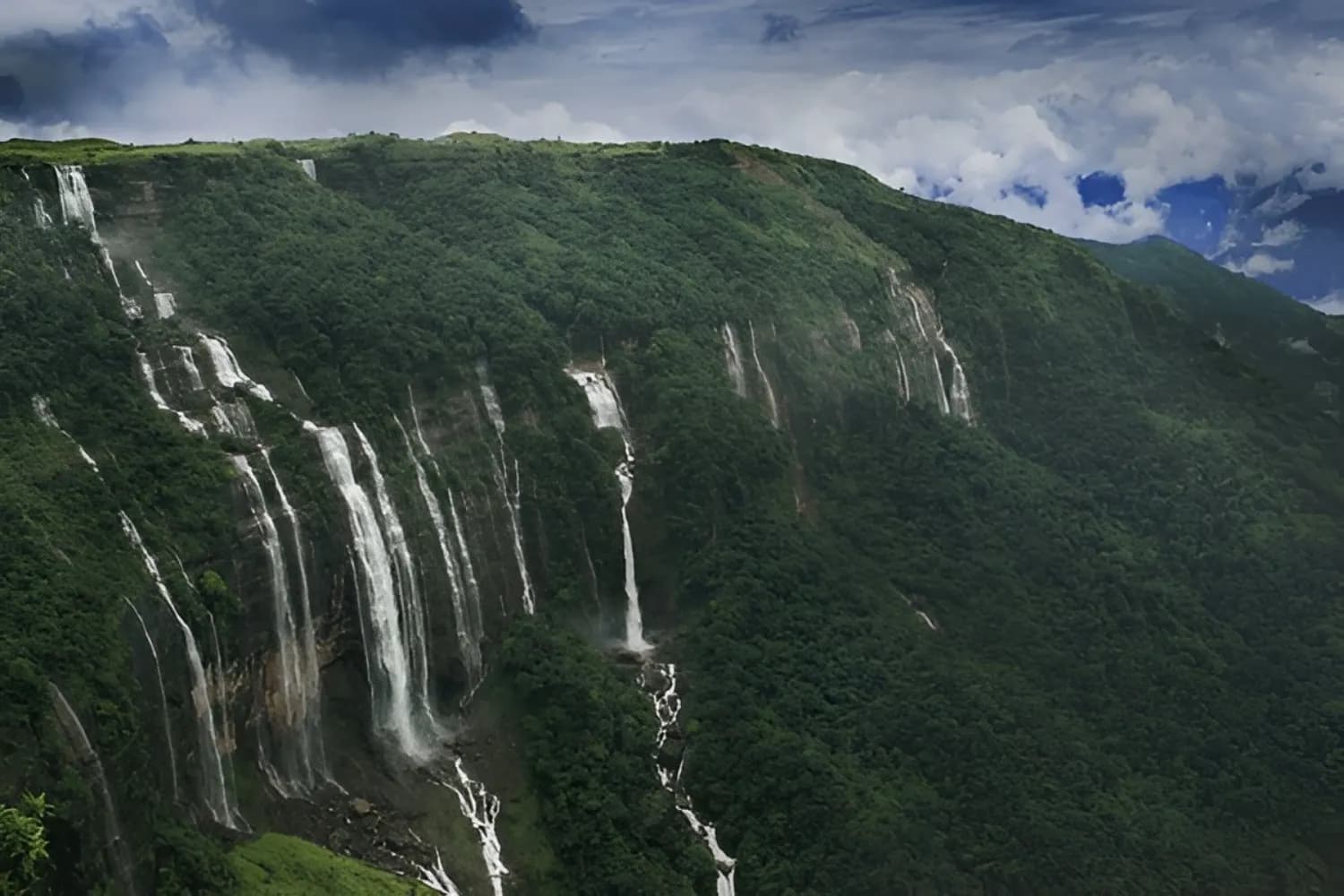
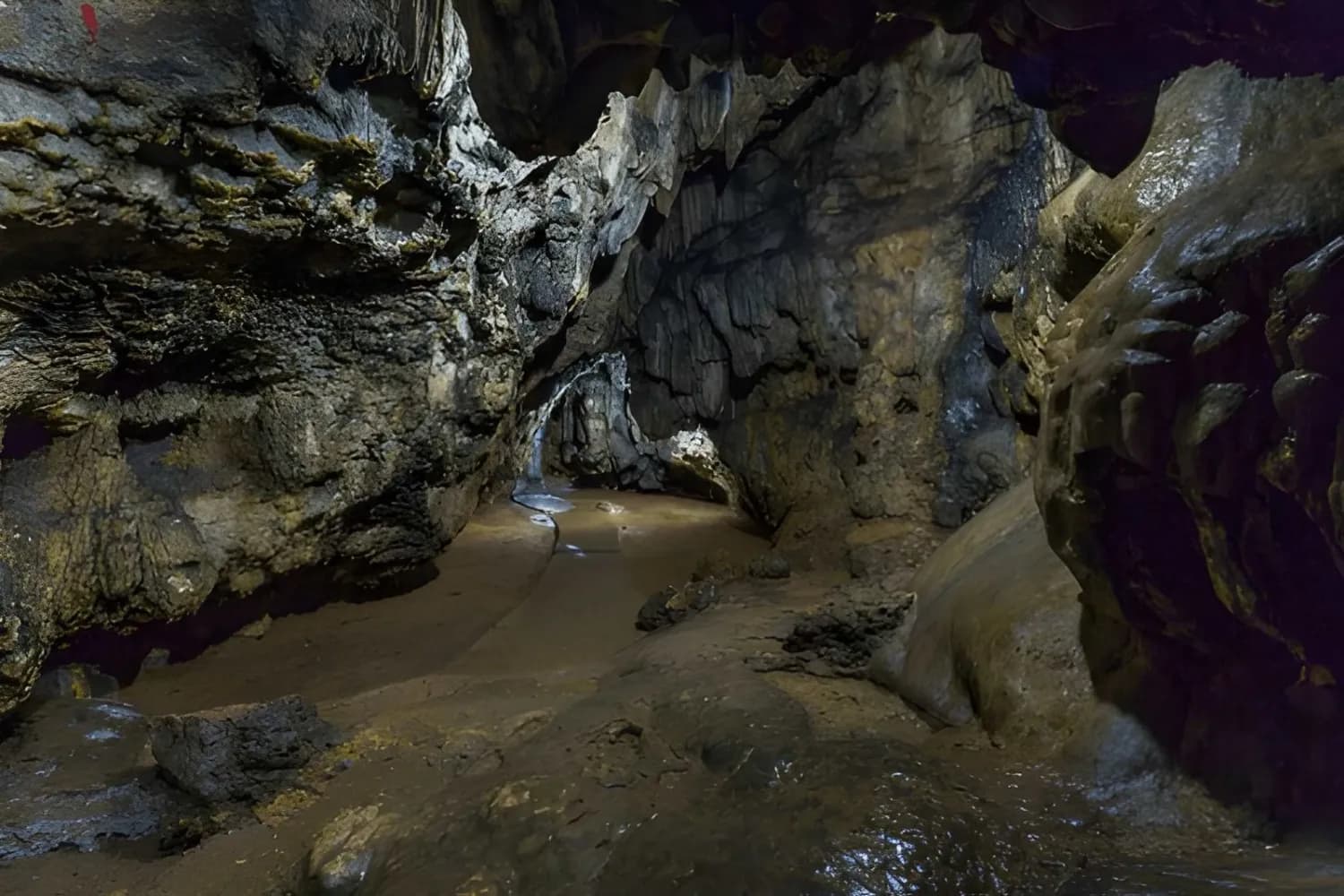
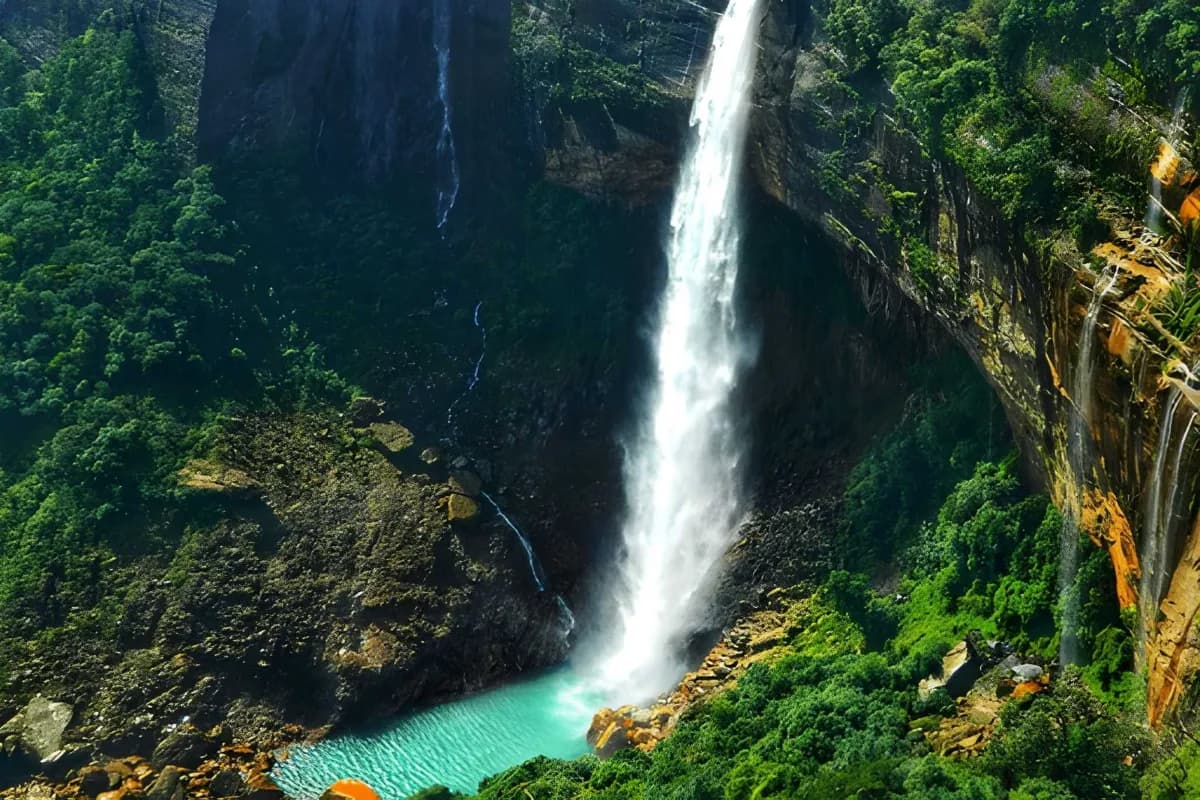
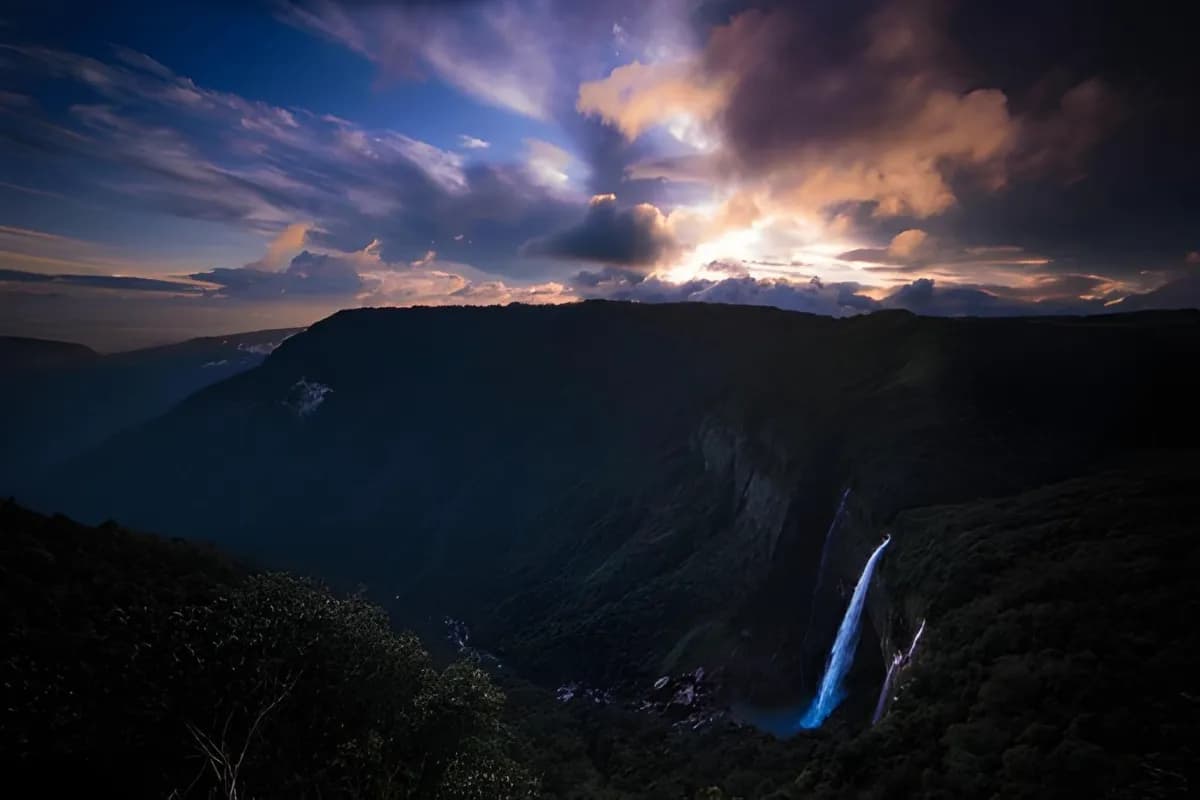
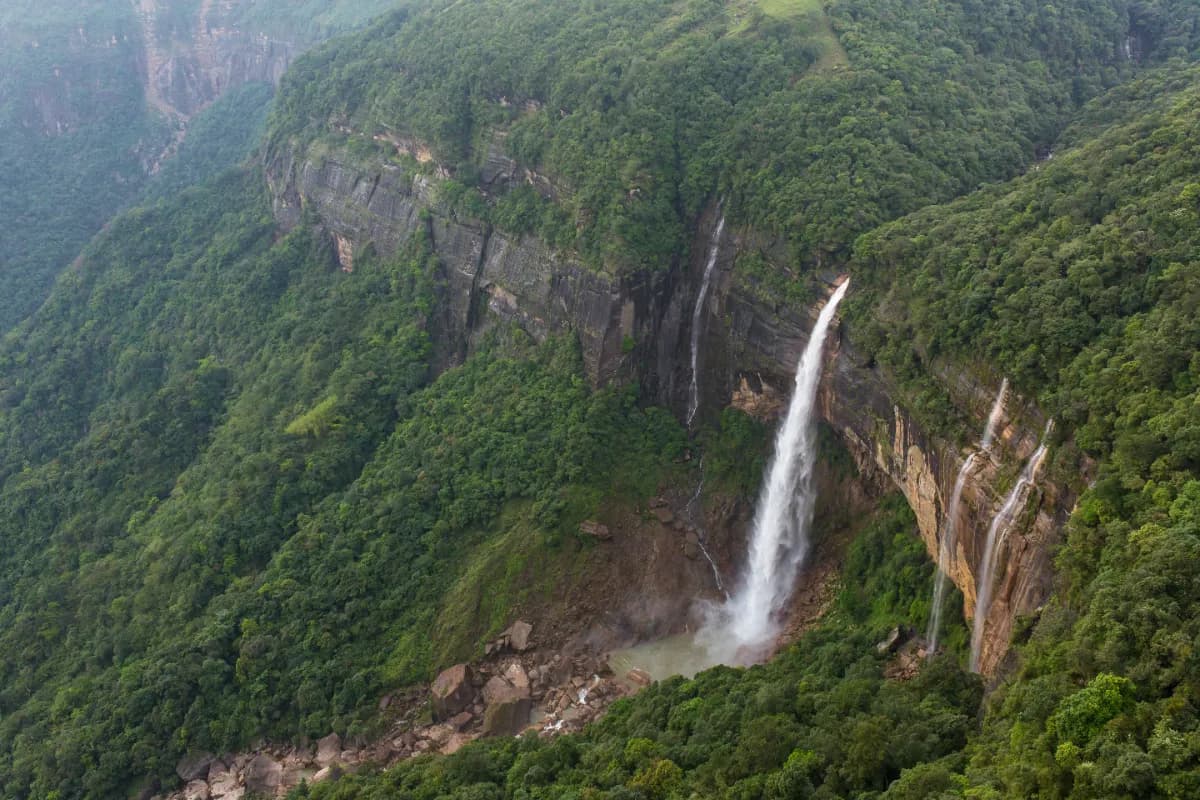
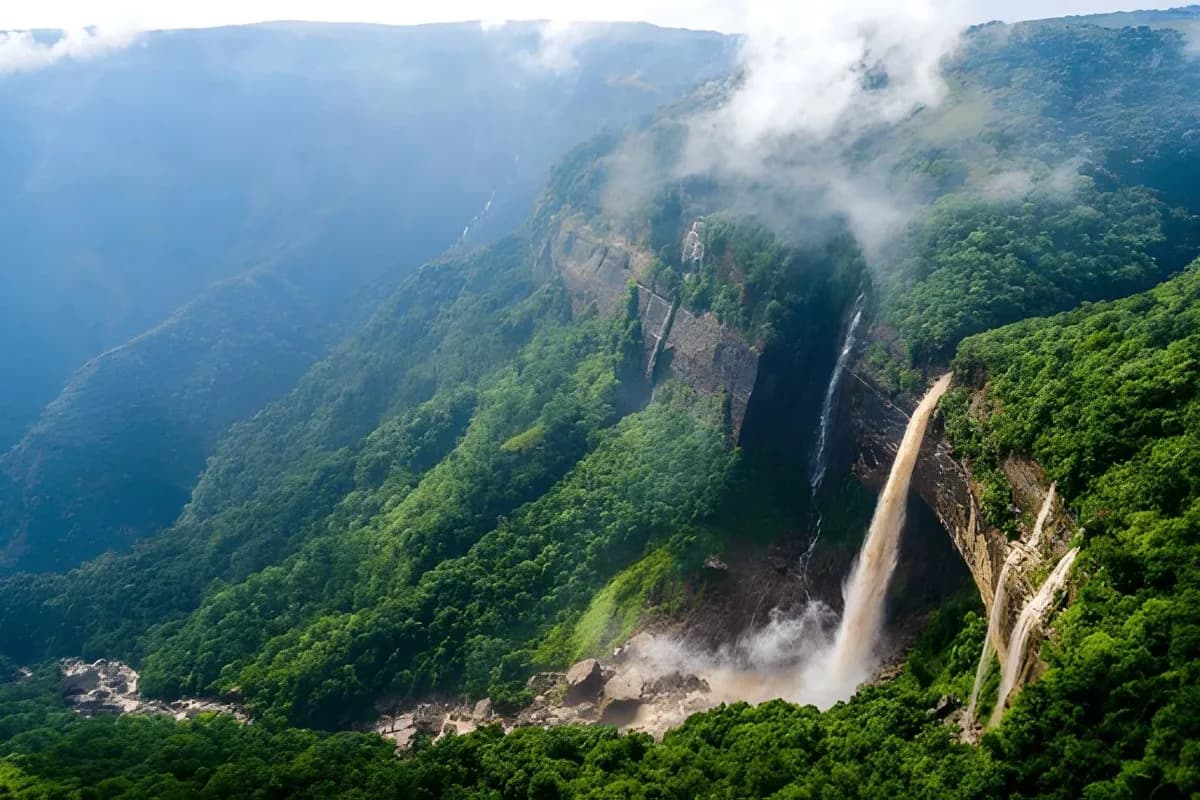
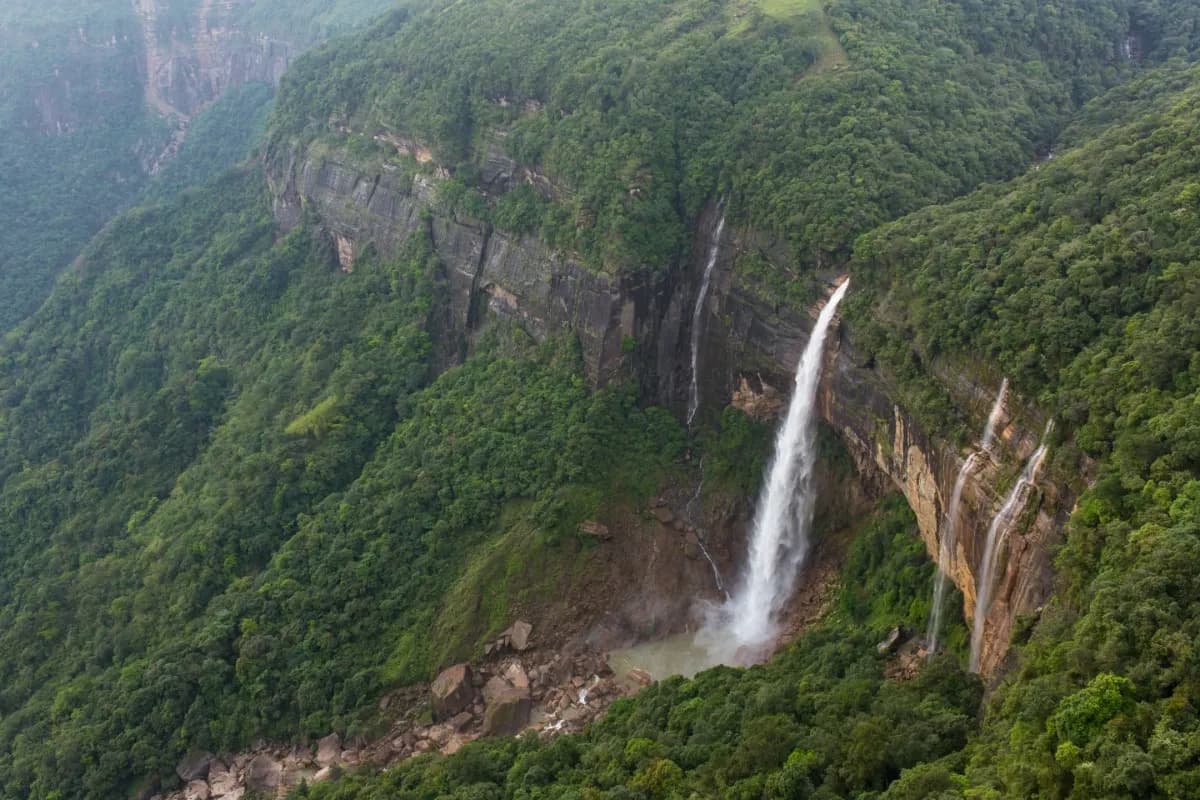
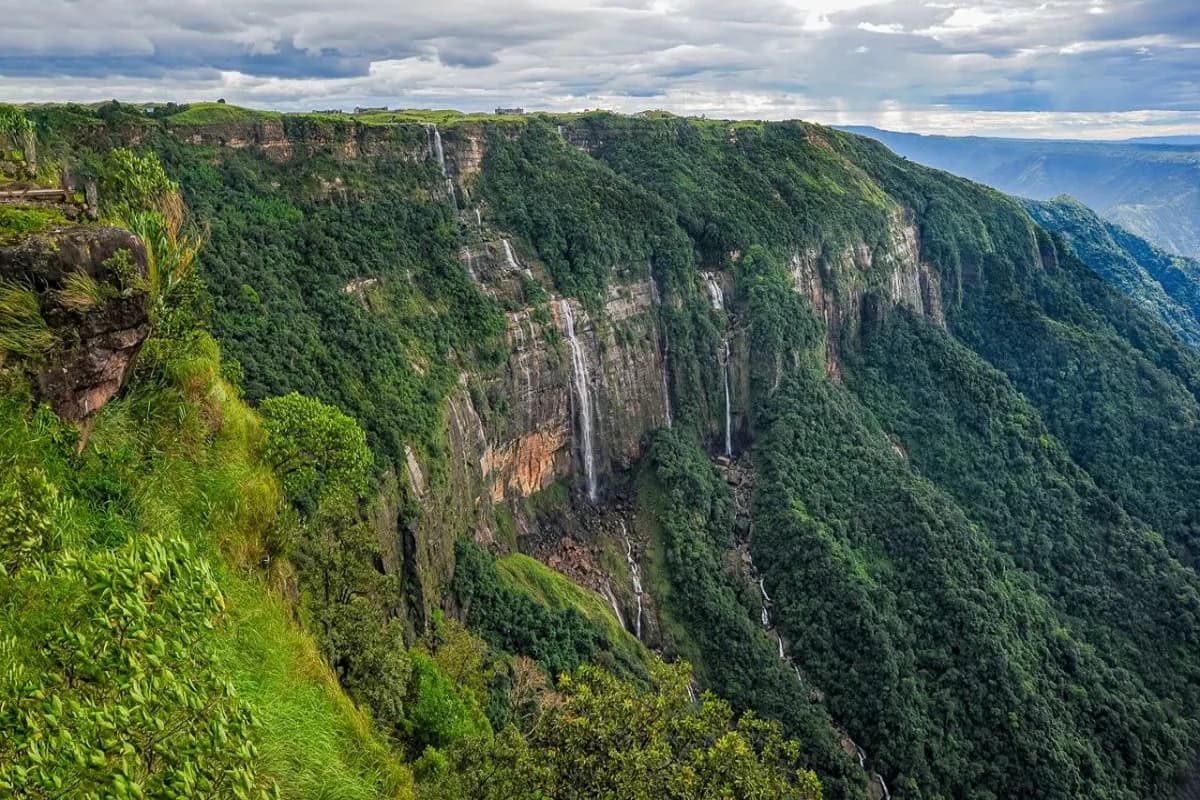
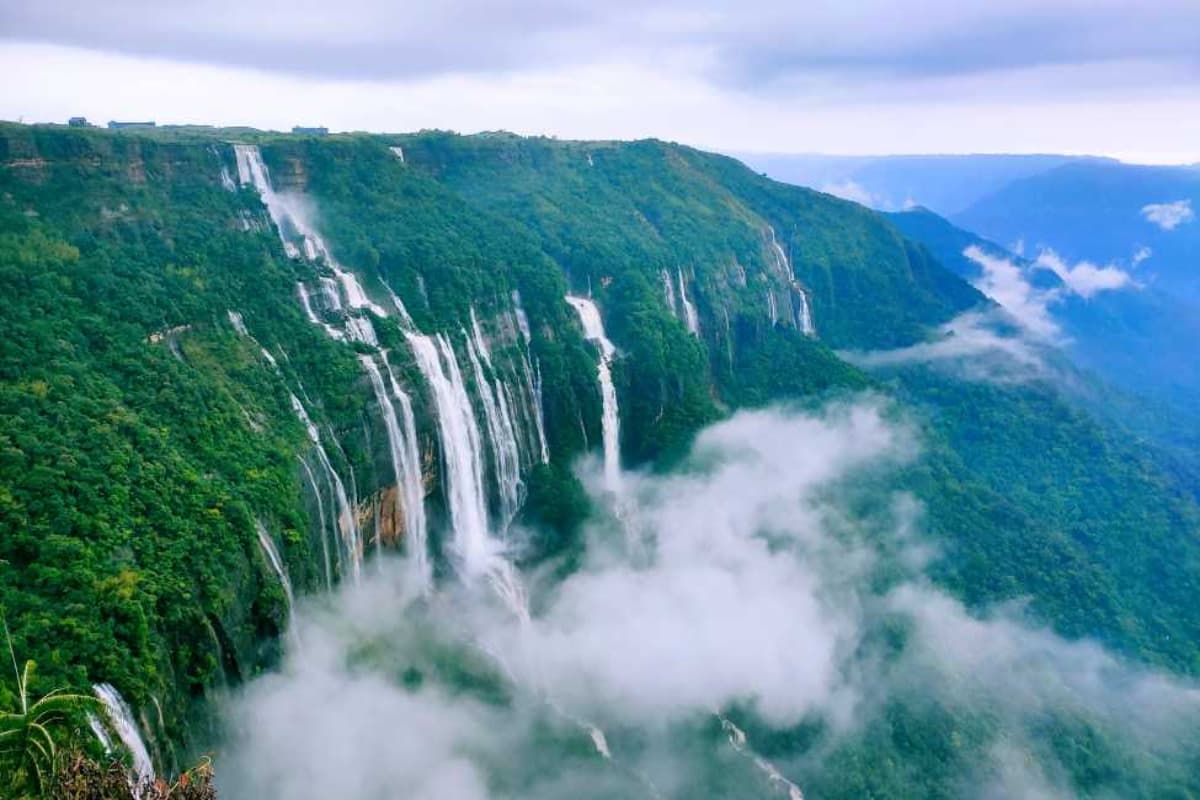
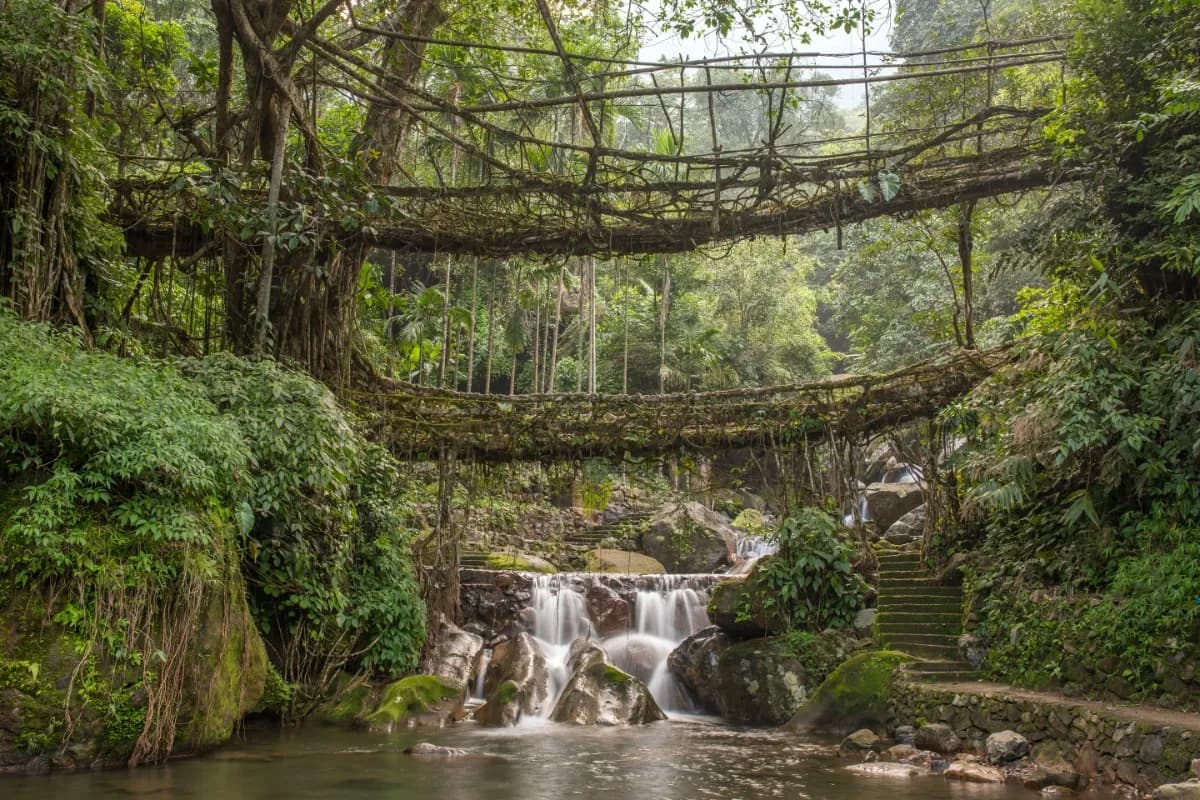
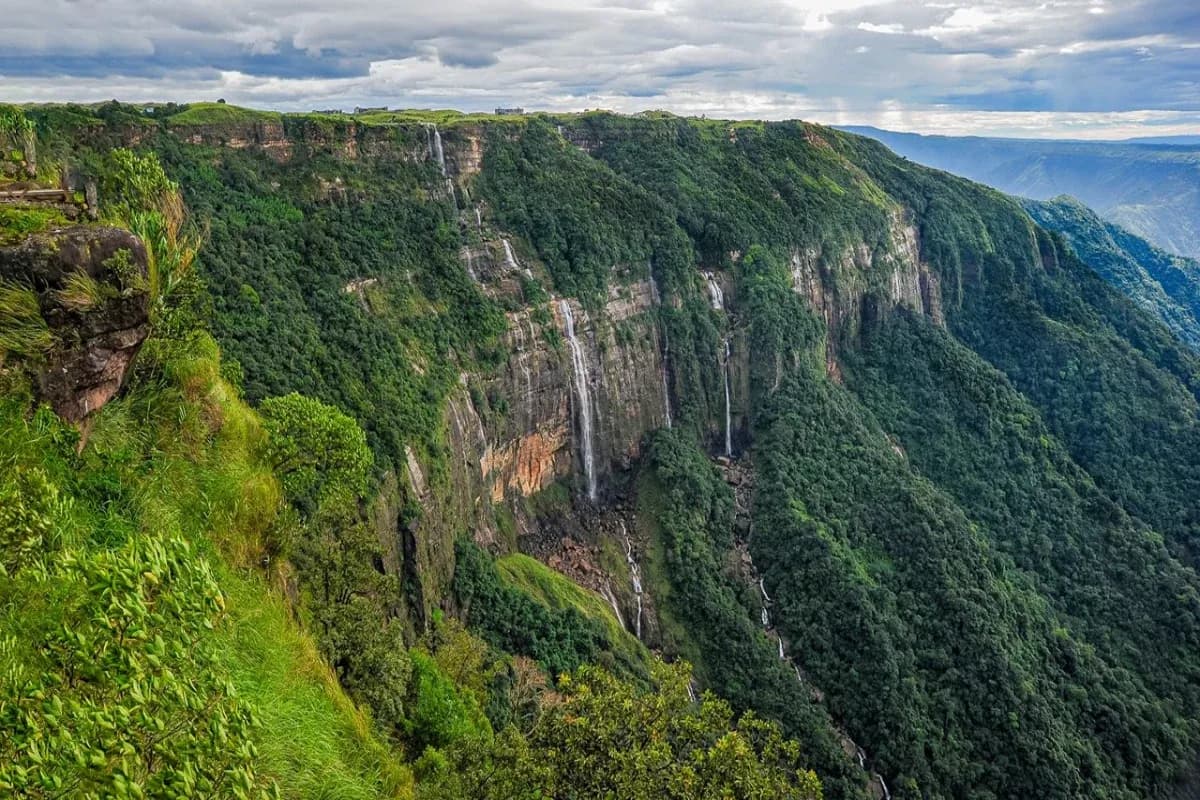
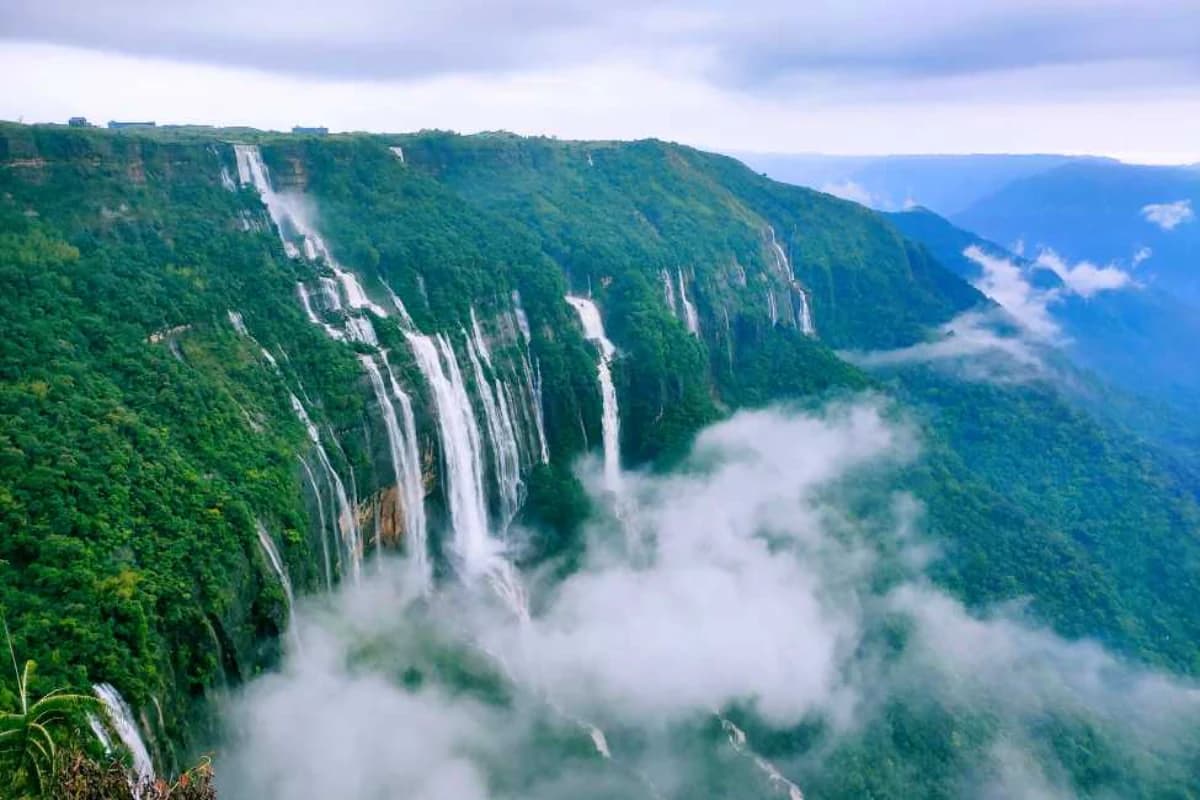
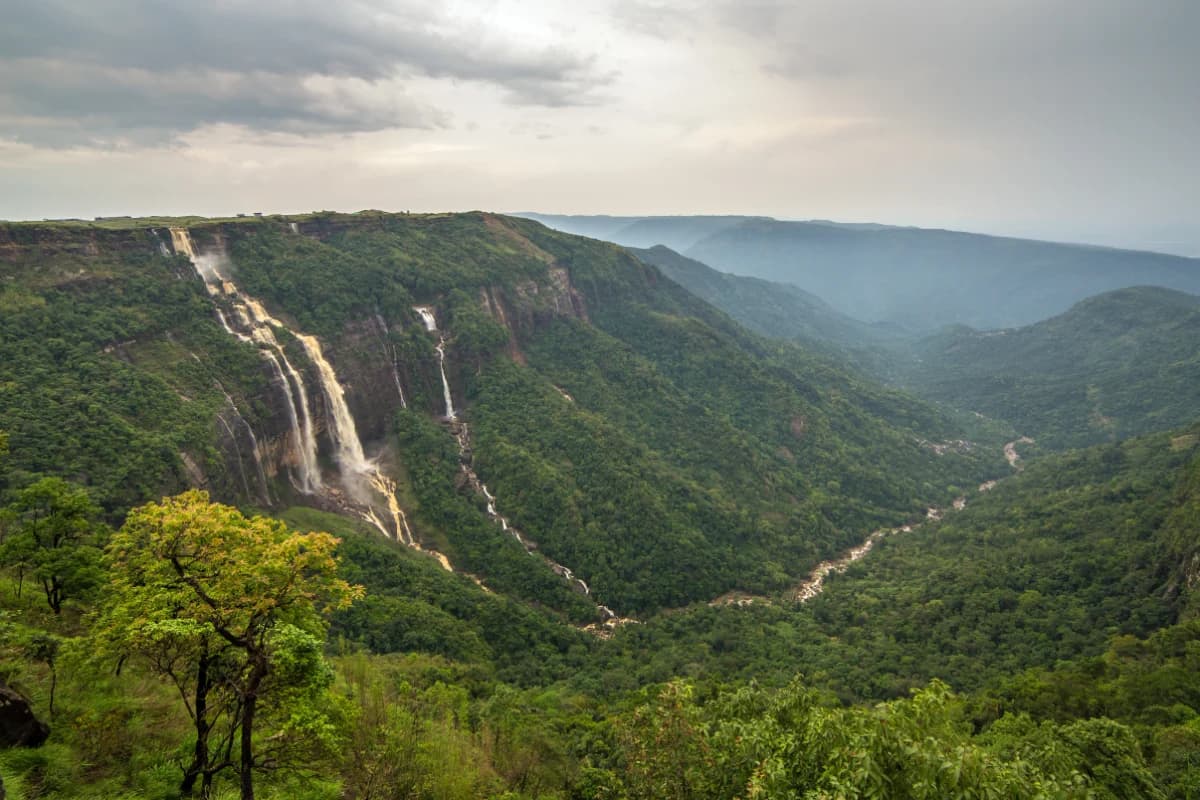
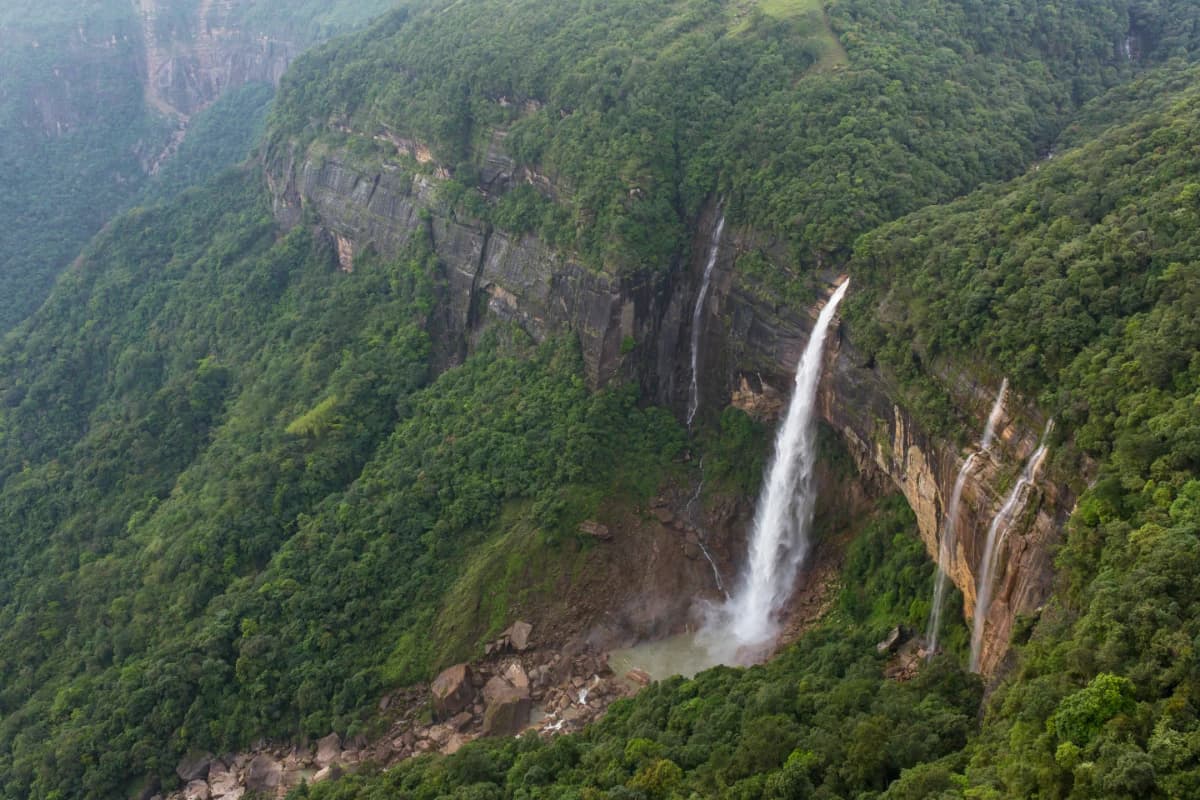
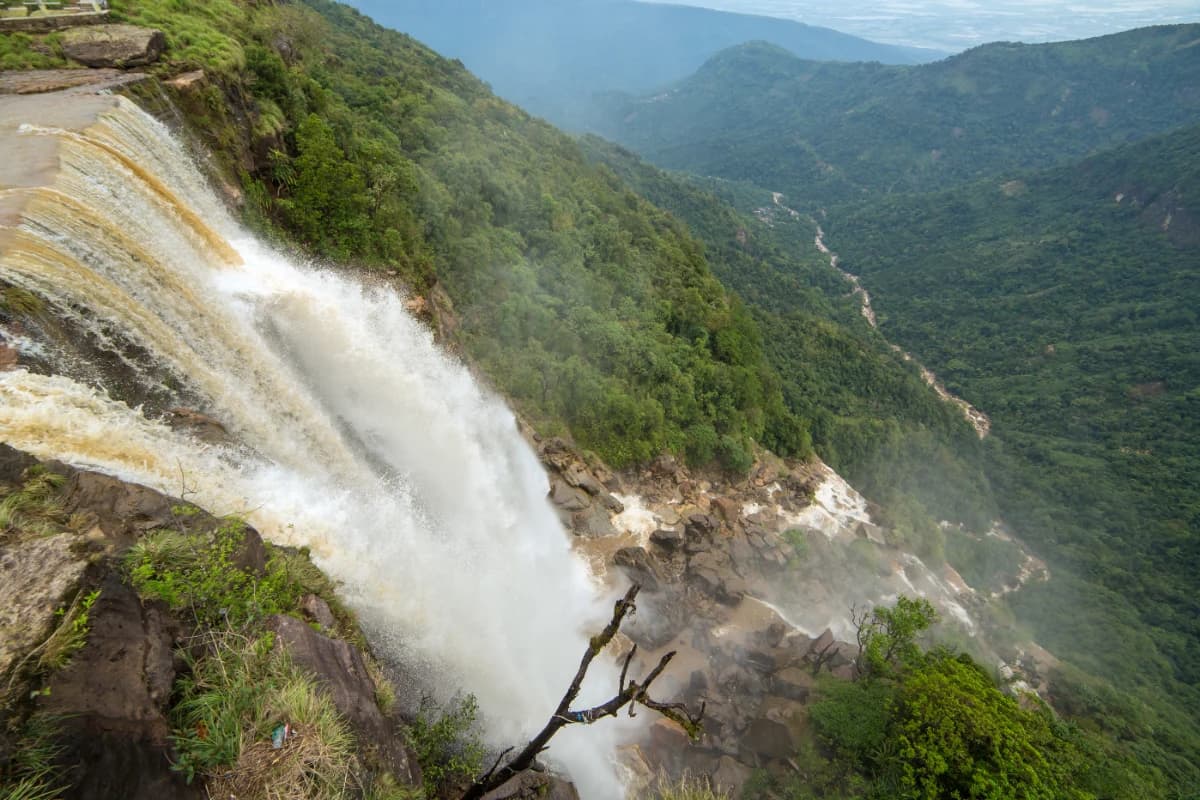
Cherrapunjee holds the record as one of the wettest places on Earth. And it earns that title every monsoon. Beyond that, it is home to the Double-Decker Living Root Bridge. A 500-year-old natural structure built by the Khasi tribe using aerial roots of rubber trees. Nohkalikai Falls is one of India's tallest waterfalls at 340 metres. Mawsmai Cave, just a few kilometres from the main town, lets you crawl through ancient limestone formations. And the Seven Sister Falls (Nohsngithiang Falls) is best seen right after the rains, when all seven streams flow simultaneously.
2. Shillong
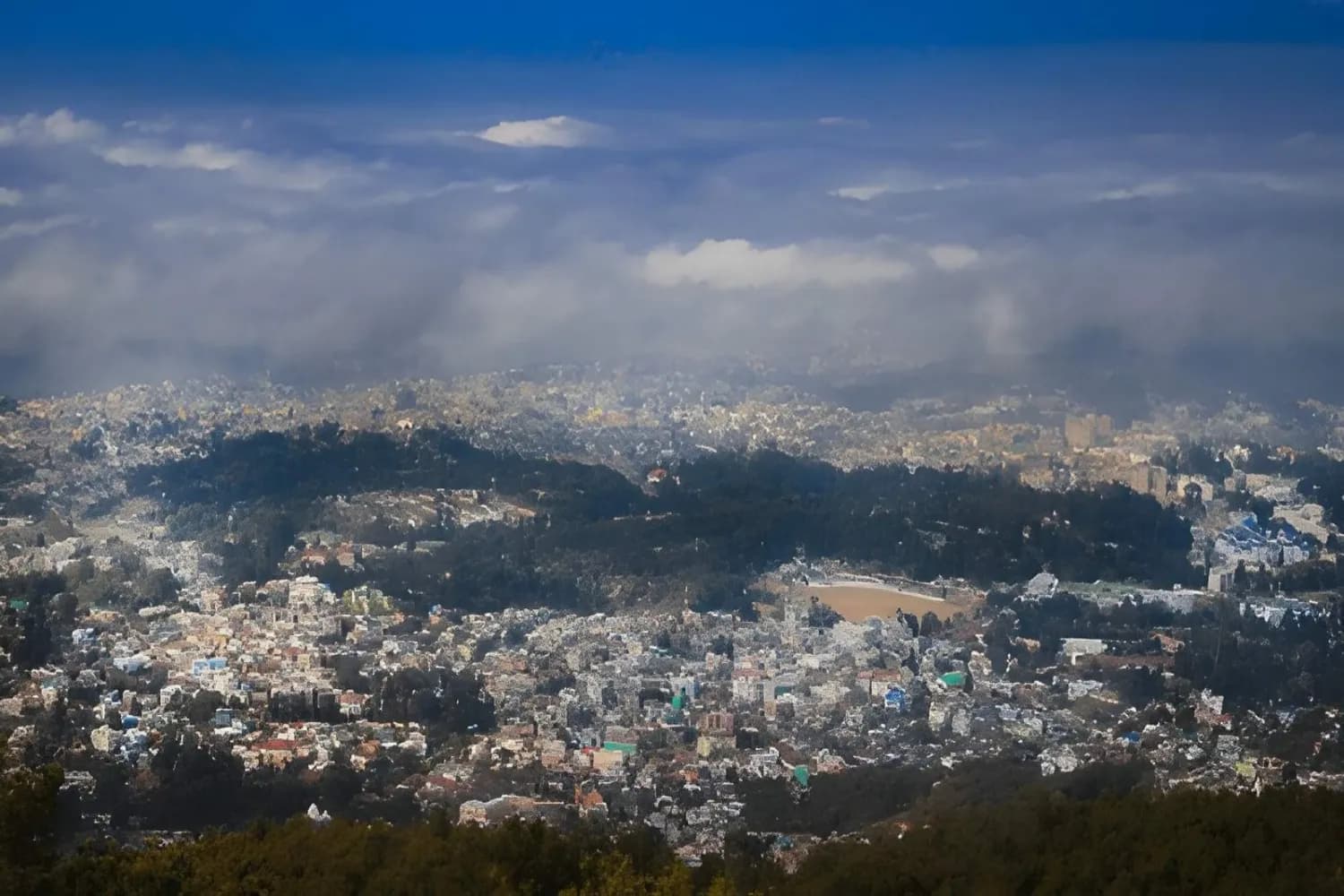
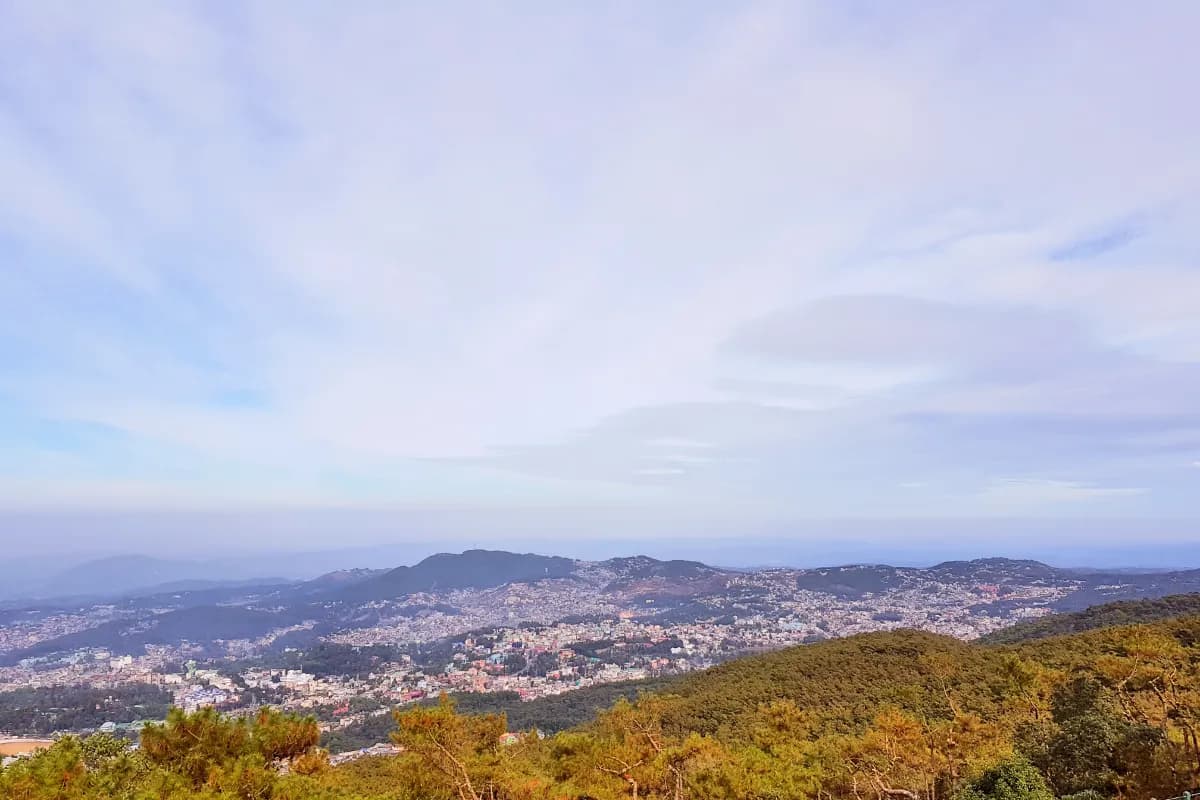
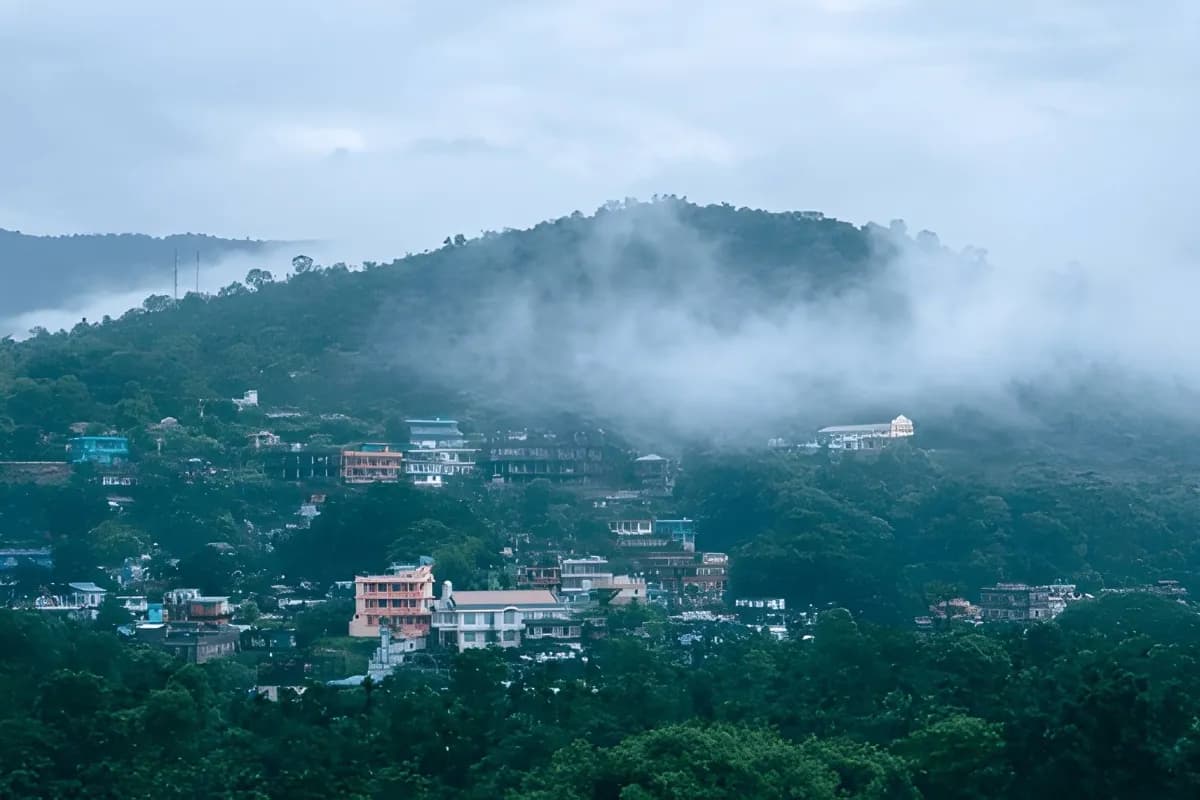
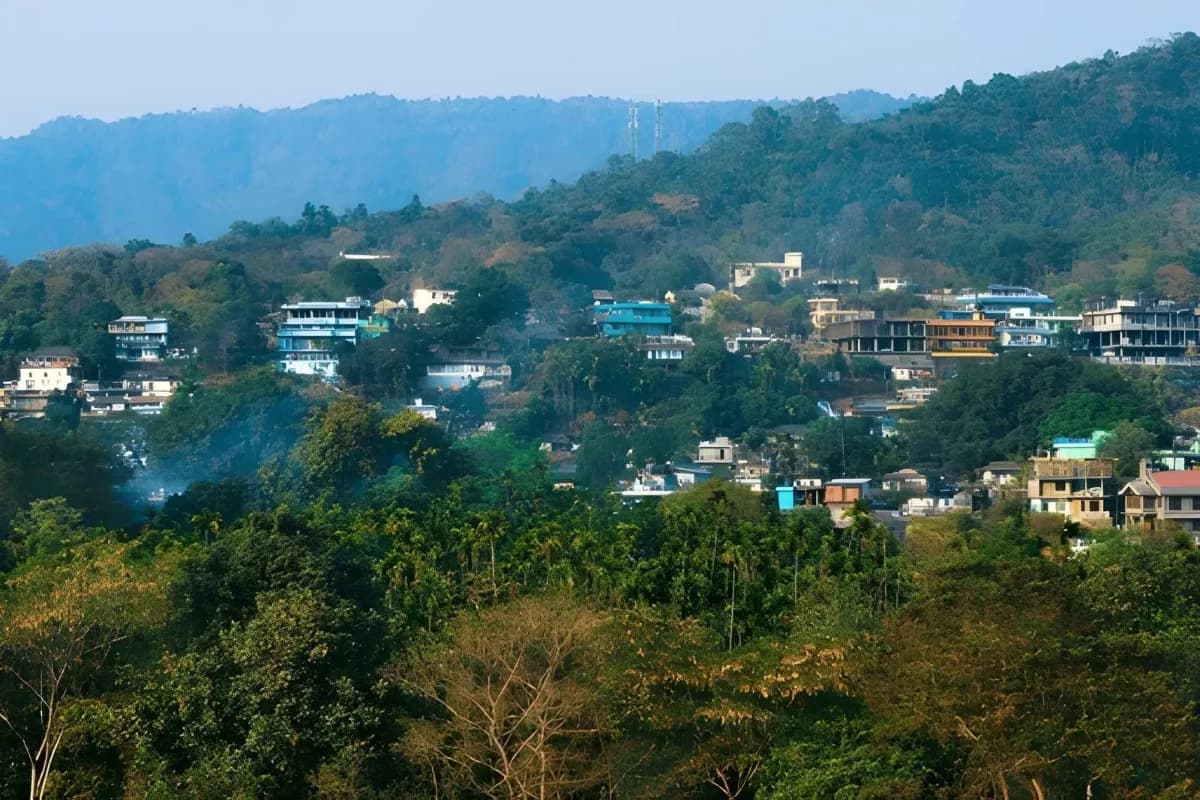
Shillong, the capital of Meghalaya, is called the "Scotland of the East" because of its beautiful hills. As part of a Meghalaya Tour Package, Shillong Peak is the highest spot at 1,965 metres, giving you a view of the whole area. In the center of the city, you can take a quiet walk around Ward's Lake, which was built a long time ago. Before you leave the city, make sure to see Elephant Falls, which has three different levels of water flowing through the forest. Shillong is also famous for its music and cafes, and it feels very energetic and fun on the weekends.
3. Mawlynnong
Called Asia's cleanest village, Mawlynnong actually lives up to the tag. Bamboo dustbins line every path, no plastic is visible anywhere, and the community enforces cleanliness collectively. The Sky View Point, a bamboo watchtower built to see above the tree canopy, gives you views of the Bangladesh plains on a clear day. There is also a naturally balanced rock here that you would assume is staged, but is entirely natural.
4. Dawki
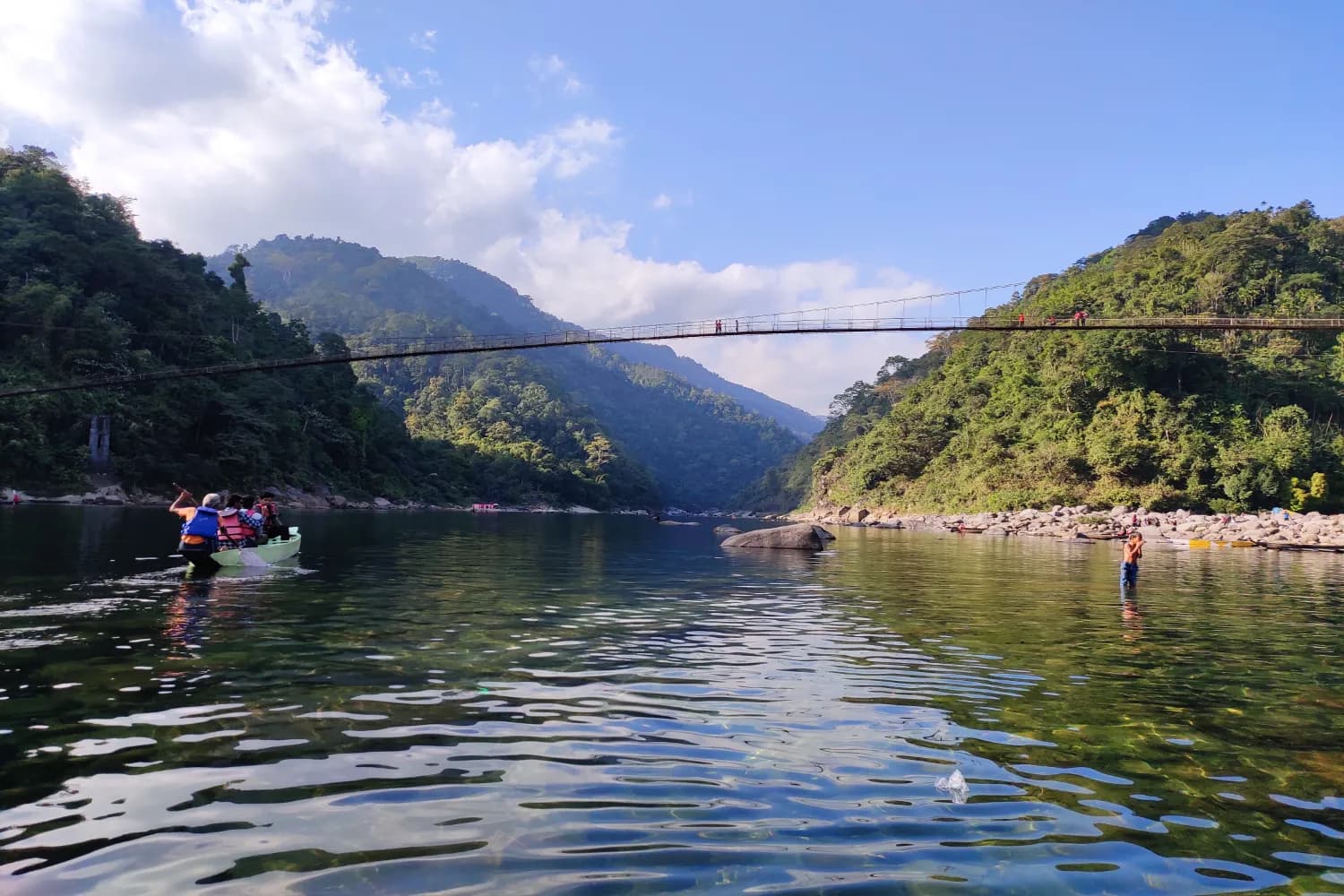
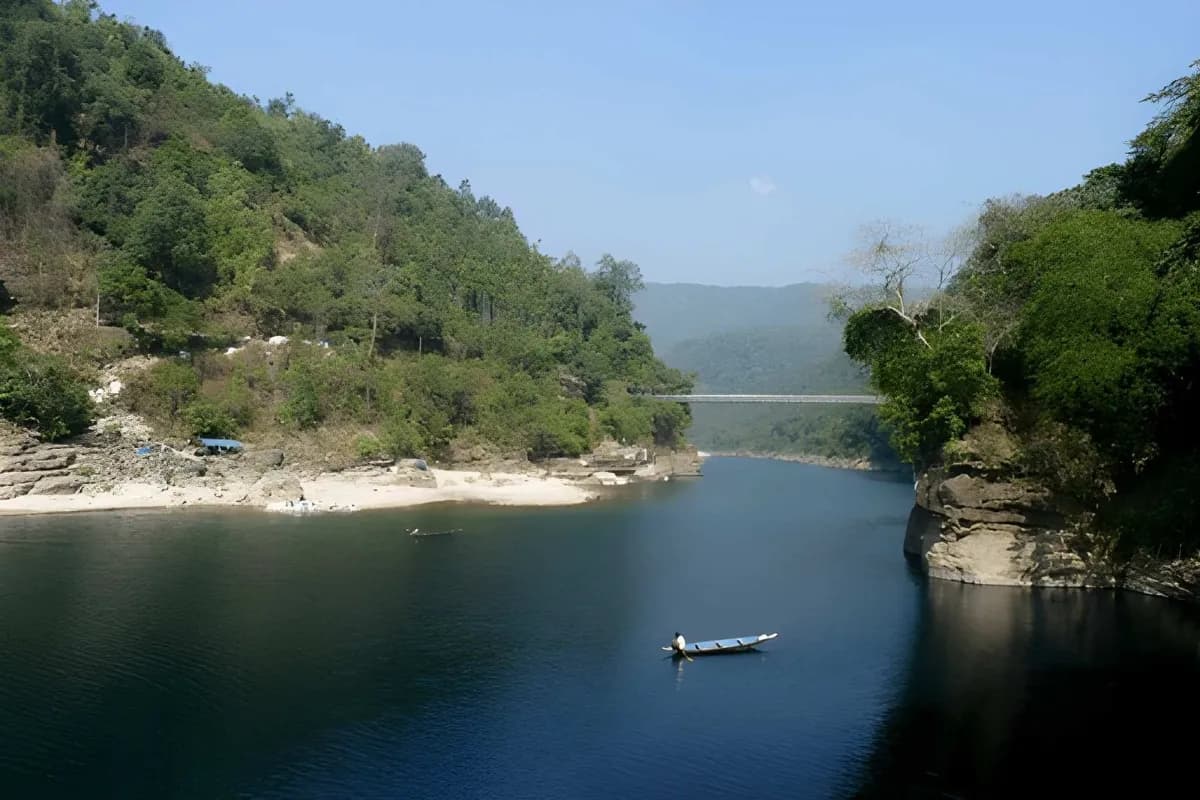
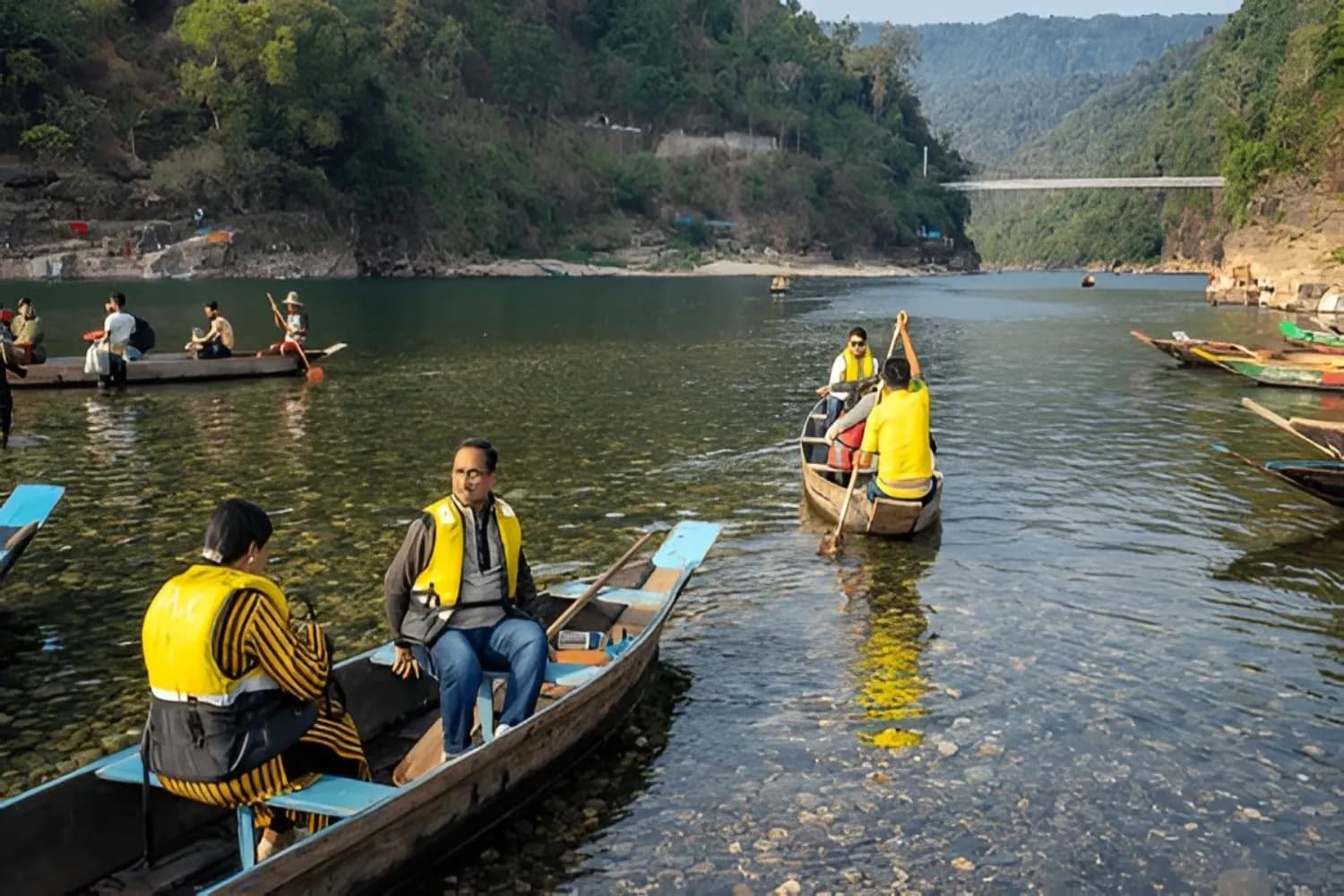
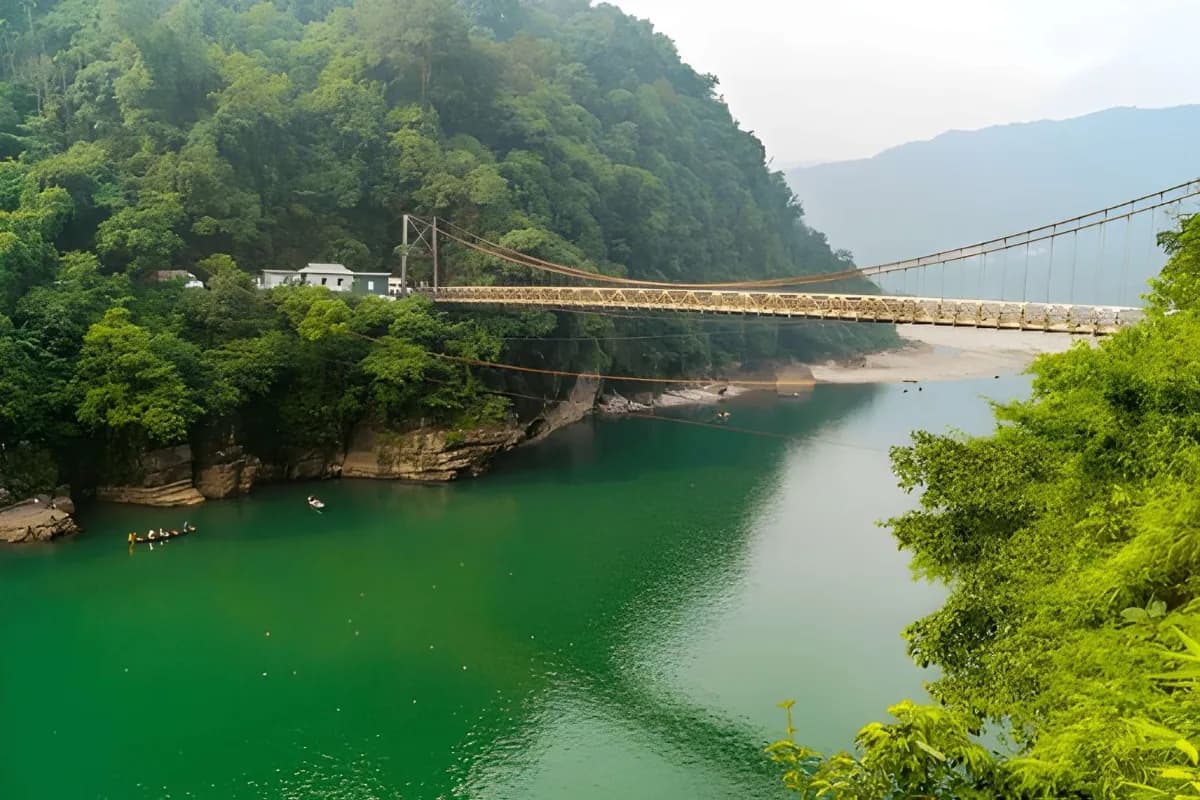
Dawki is the one who surprises people the most. The Umngot River flows over a sandy bed so light-coloured and clear that boats appear to hover mid-air. There is no filter on those photos. During a Meghalaya trip, boat rides here run from November to March when the water is calmest. The nearby Shnongpdeng village also offers camping, ziplining, and kayaking if you want to stay a little longer. The Bangladesh border is just a few kilometres away at the Tamabil crossing, which is an interesting spot to see even if you are not crossing.
5. Mawsynram
Mawsynram gets the highest rainfall in the world, and that changes everything here. The place stays green all year. There’s also Mawjymbuin Cave, where a natural rock formation looks like a Shivalinga. People visit for both faith and curiosity. It’s not a typical tourist place, no fancy cafes or big hotels. Just raw, natural beauty, and that’s exactly why people come here.
Top 5 Waterfalls in Meghalaya
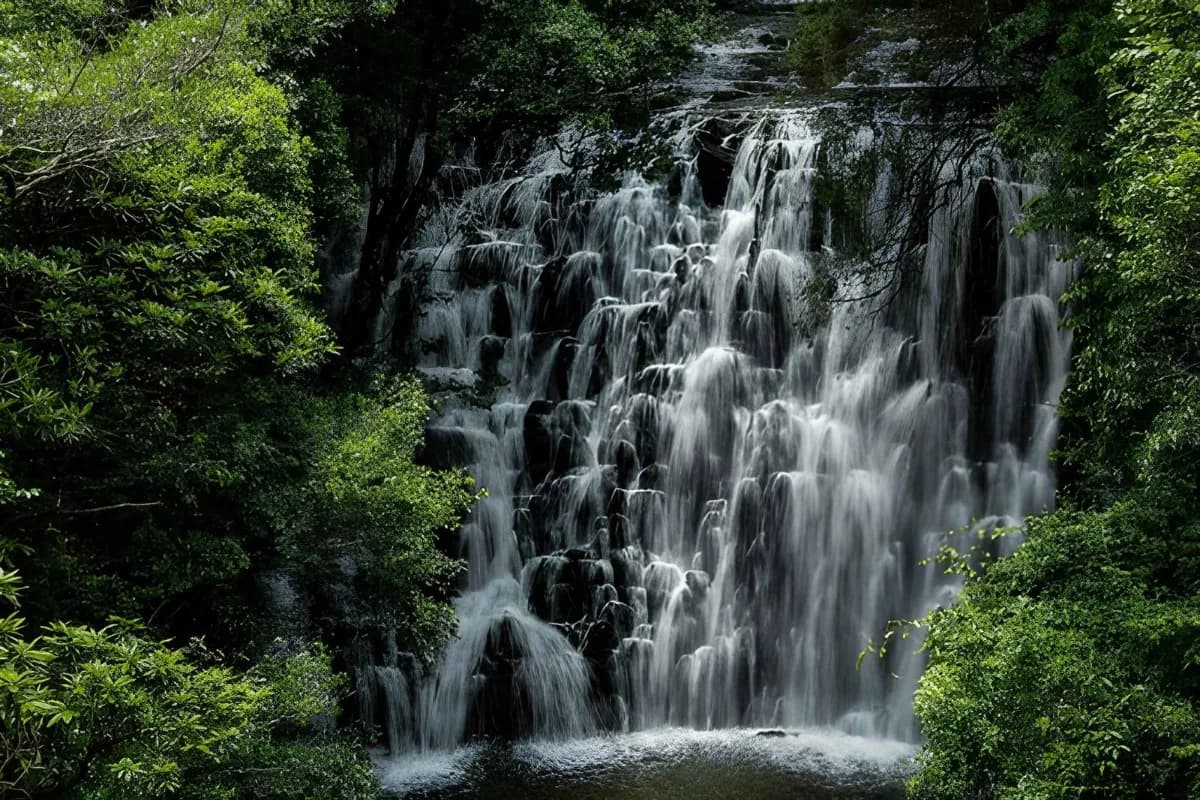
Meghalaya's rivers drop off its plateau edges in ways that stop you cold. The waterfalls in Meghalaya are some of the most powerful in South Asia. The monsoon season turns them into something almost unreal. Here are the five you should know.
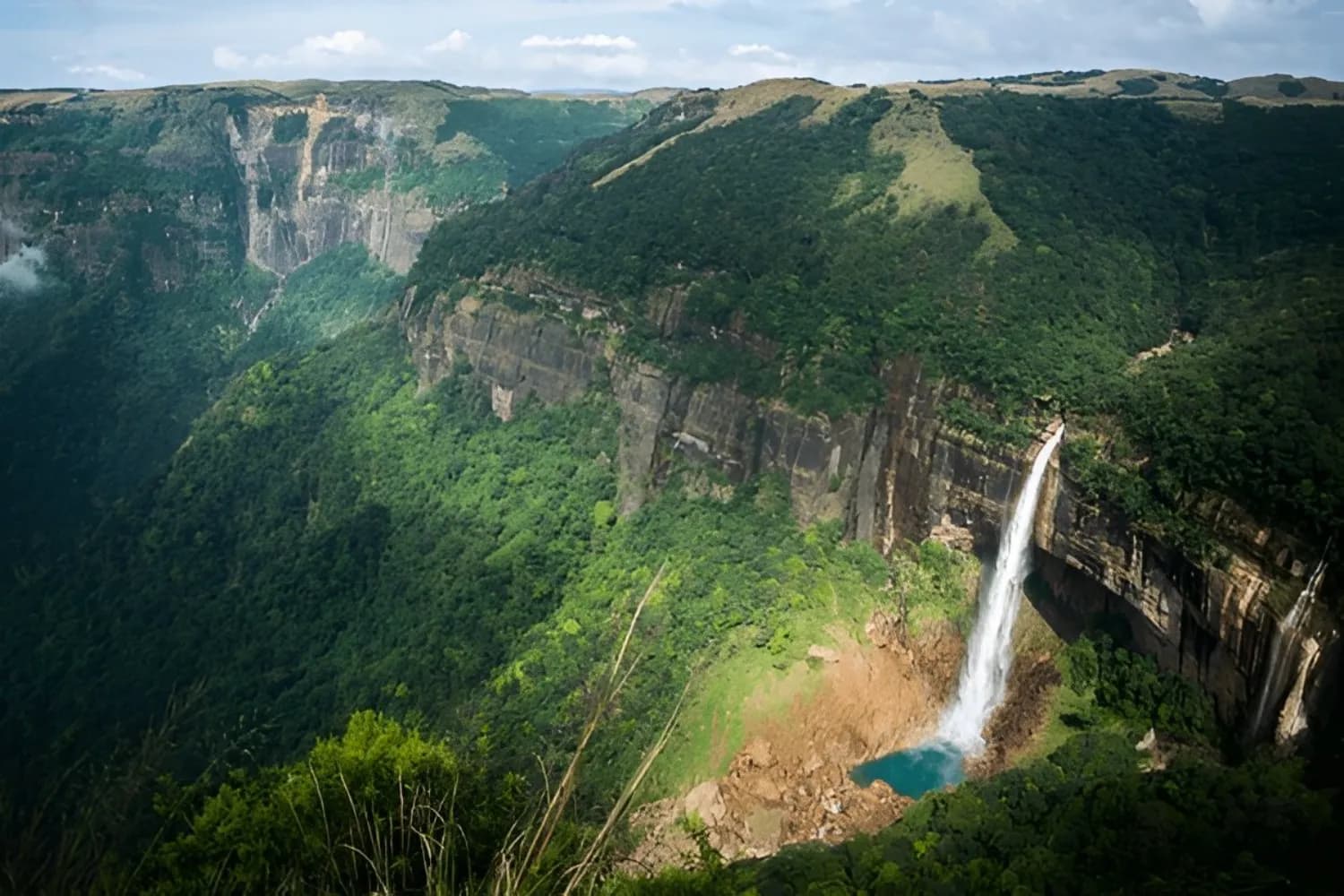
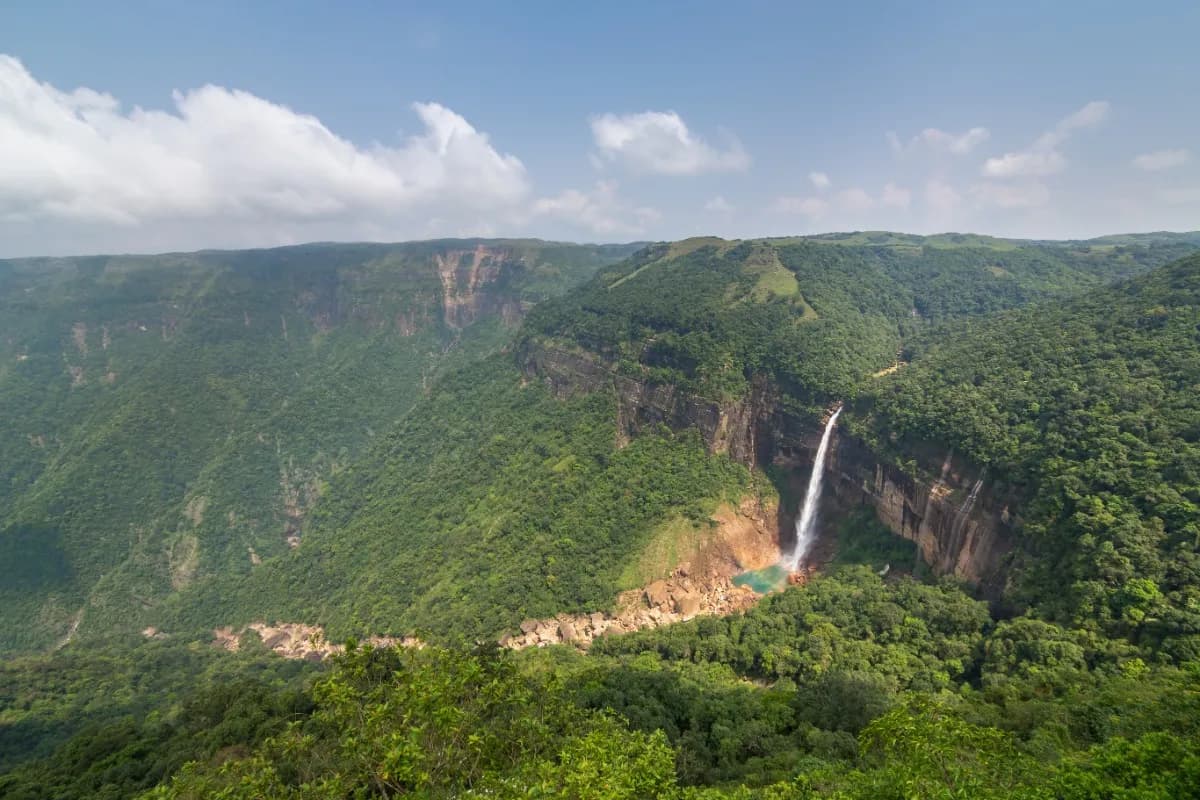
1. Nohkalikai Falls
The waterfall feeds a bright blue-green pool at the base. The legend behind its name is genuinely dark, and in a Meghalaya tour plan, it often becomes one of the most memorable stops. Local Khasi folklore connects the falls to a tragic story of a woman named Likai, and the name literally translates to "jump of Ka Likai."
- Location: Cherrapunji (Sohra), East Khasi Hills
- Height: 340 metres, making it one of India's tallest plunge waterfalls
- Timings: Open all day, but best to visit between 9:00 AM and 5:00 PM
- Entry: No fixed entry fee. May be charged around ₹20–₹50
2. Seven Sister Falls (Nohsngithiang Falls)
All seven streams flow simultaneously only between June and September. Outside the monsoon, most of the falls dry up, so timing matters enormously here.
- Location: Cherrapunji, about 1 km from the town centre
- Height: Approximately 315 metres, with seven distinct streams
- Timings: Open all day
- Entry: No entry fee
3. Elephant Falls
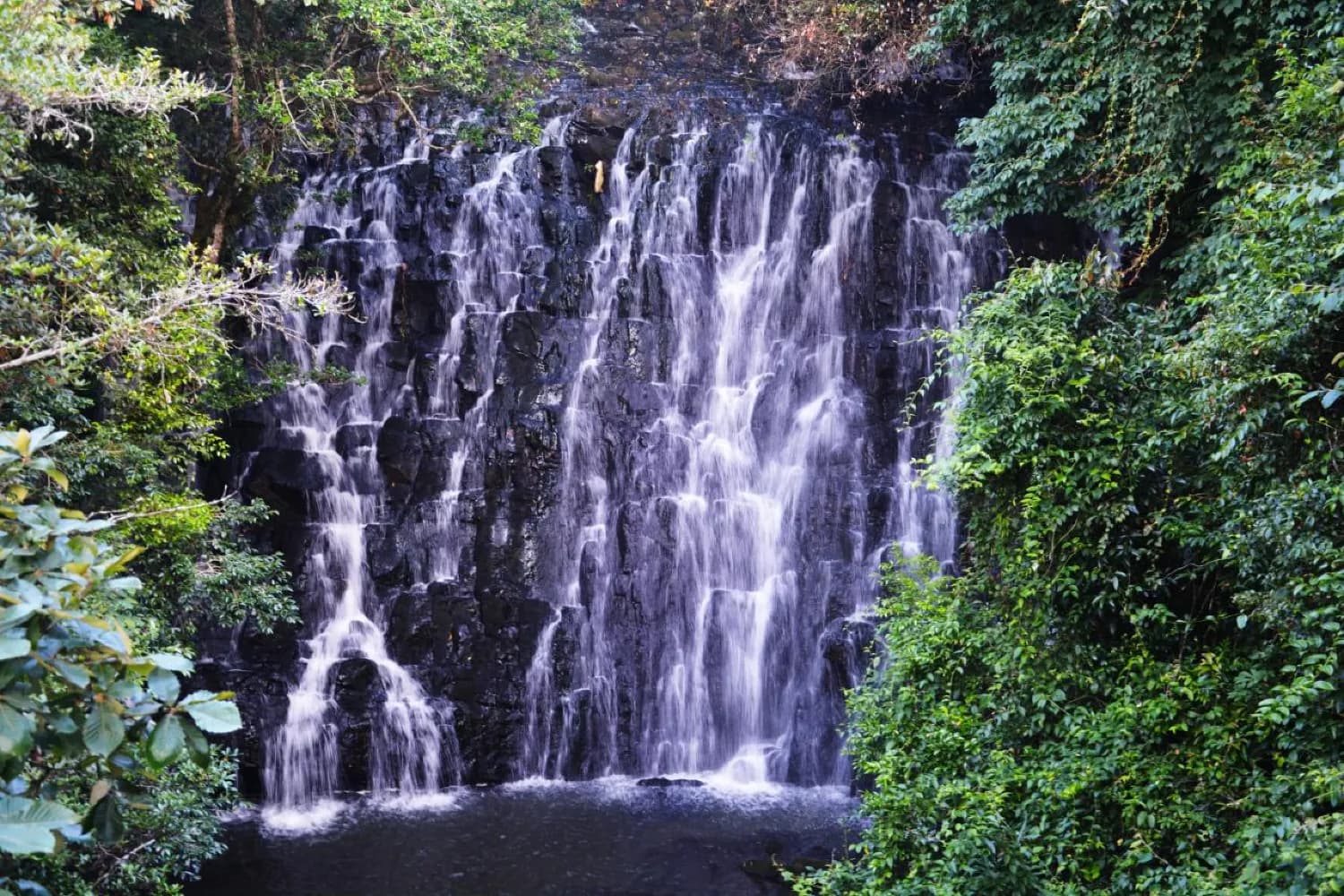
Three-tiered falls set inside a forest cover. The British named it "Elephant Falls" after a rock shaped like an elephant that was lost in the 1897 earthquake. The stepped descent through the viewpoints is easy to manage and works well for families.
- Location: Upper, Shillong, Meghalaya 793009
- Timings: Open daily from 6:00 AM to 6 PM
- Entry Fee: ₹100 per person
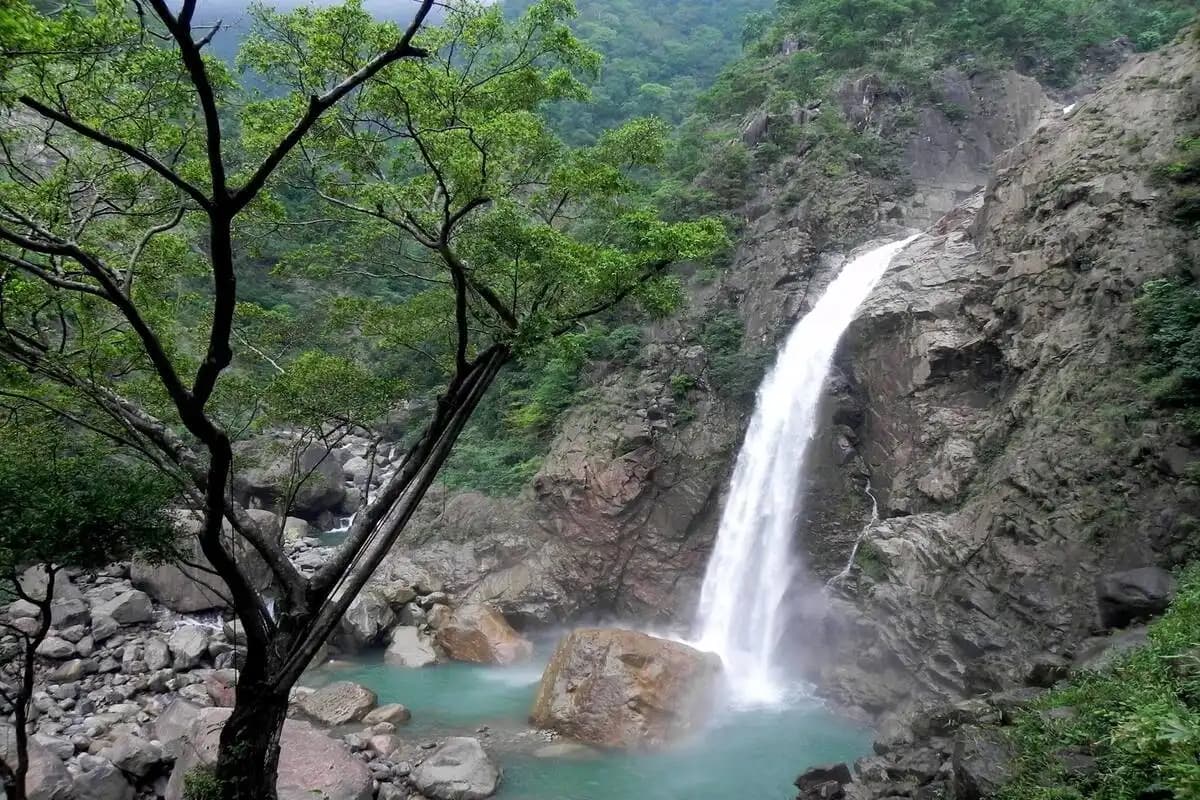
4. Krang Suri Falls
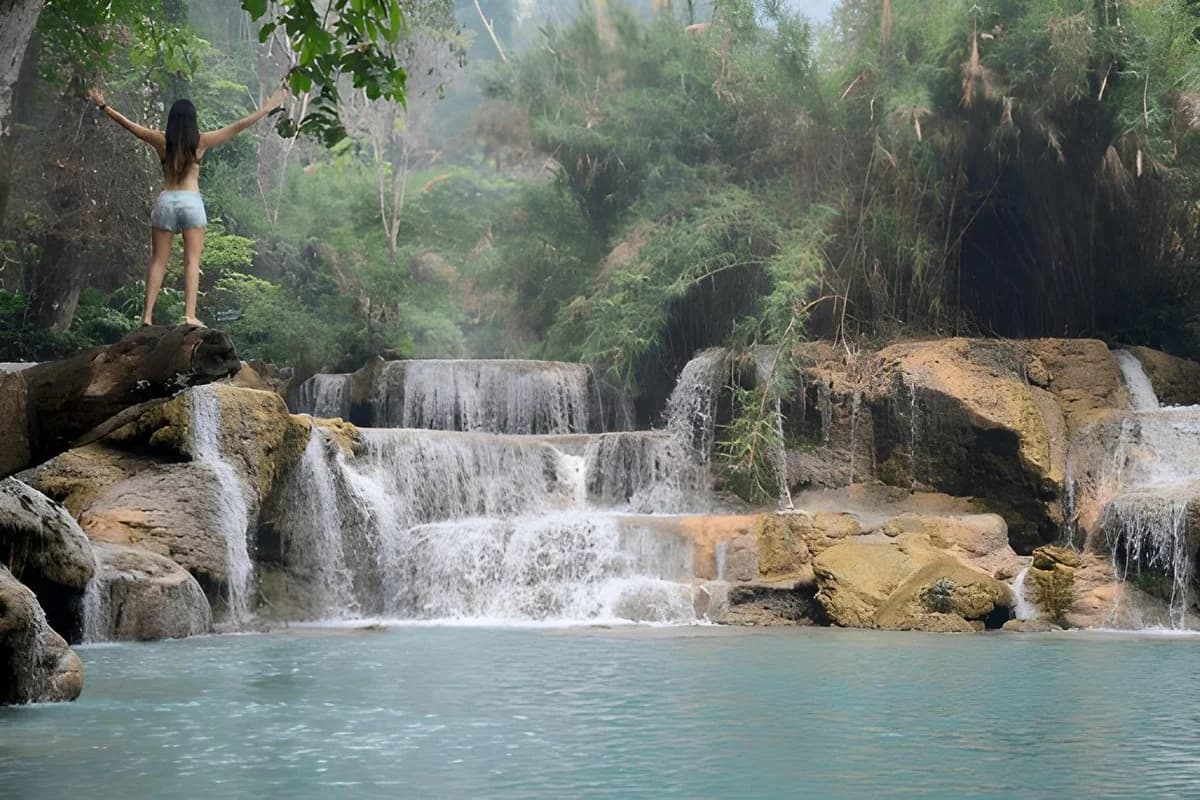
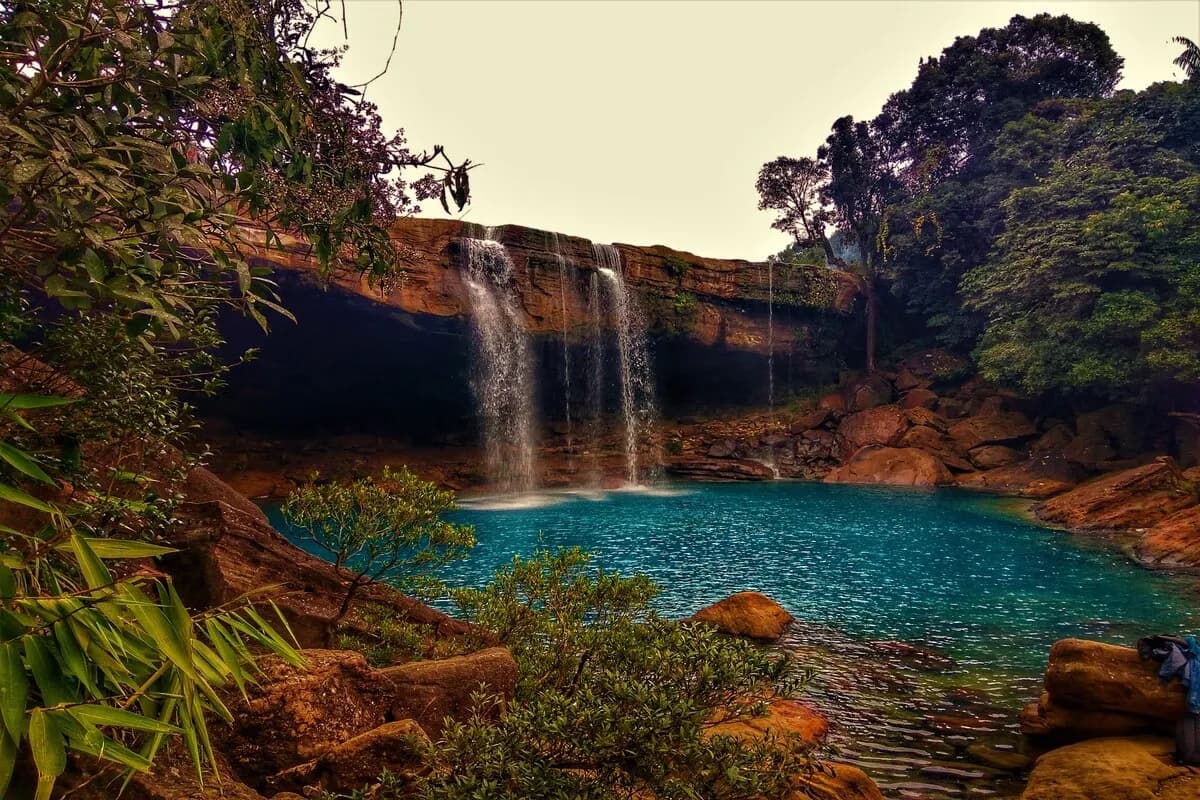
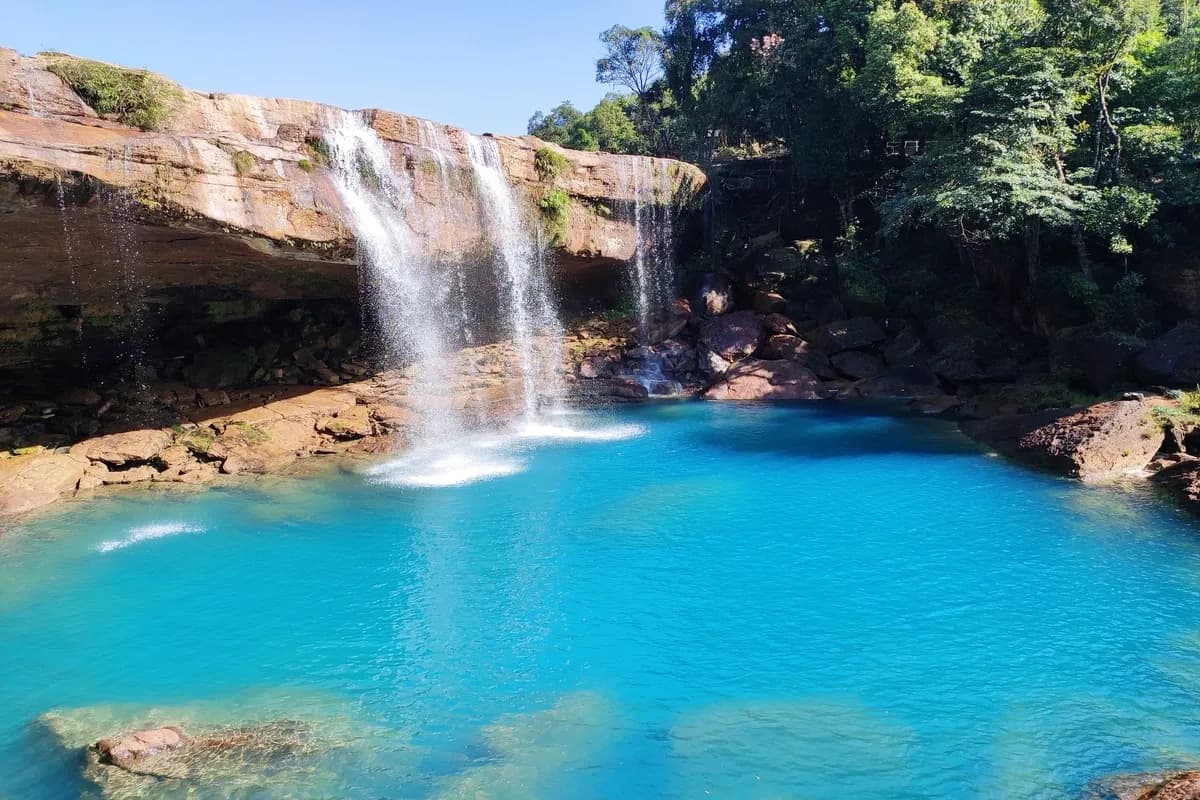
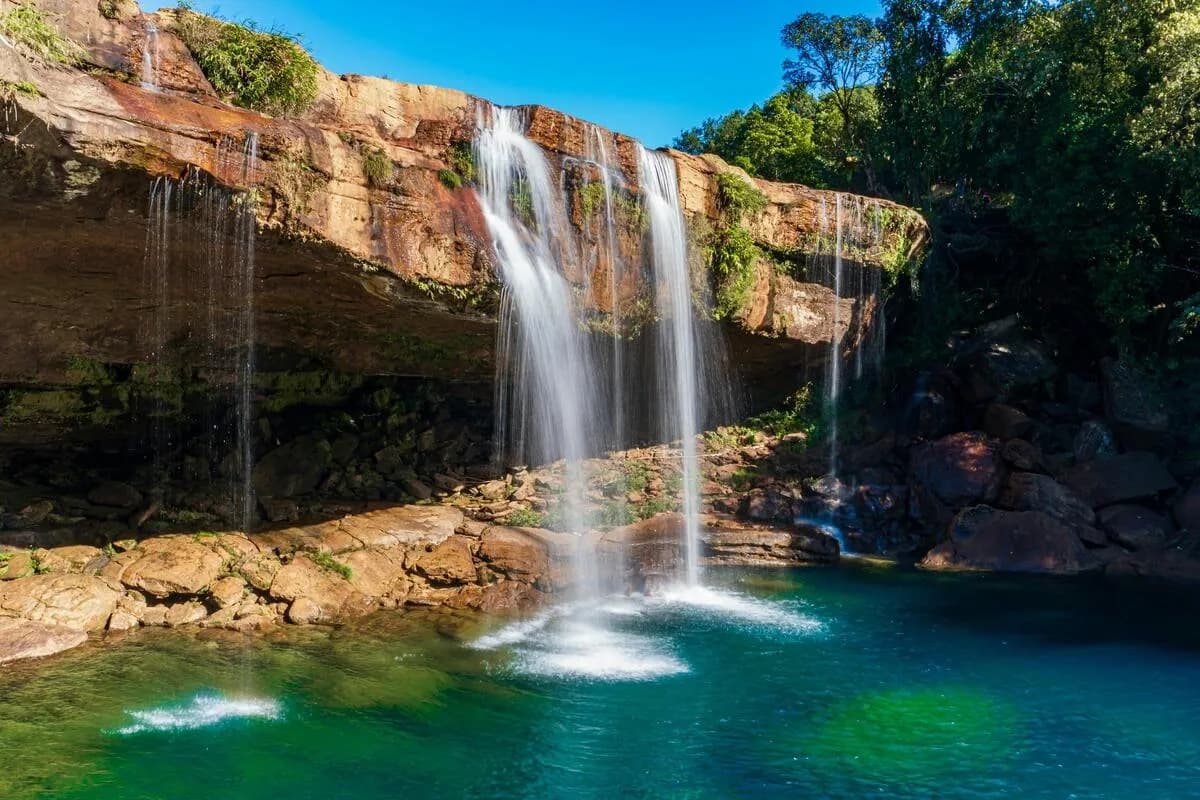
Krang Suri Falls has the clearest water of any waterfall in Meghalaya. The turquoise pool at its base is shallow enough to stand in and is perfect for a swim, which is why it’s a favorite in Meghalaya packages. It is also far less crowded than Elephant Falls, which makes the experience more peaceful.
- Location: Krang Suri Rd, Umlārem, Meghalaya 793161
- Timings: Open daily from 7:00 AM to 6:00 PM
- Entry Fee: Approximately ₹30-₹50 per person
5. Rainbow Falls
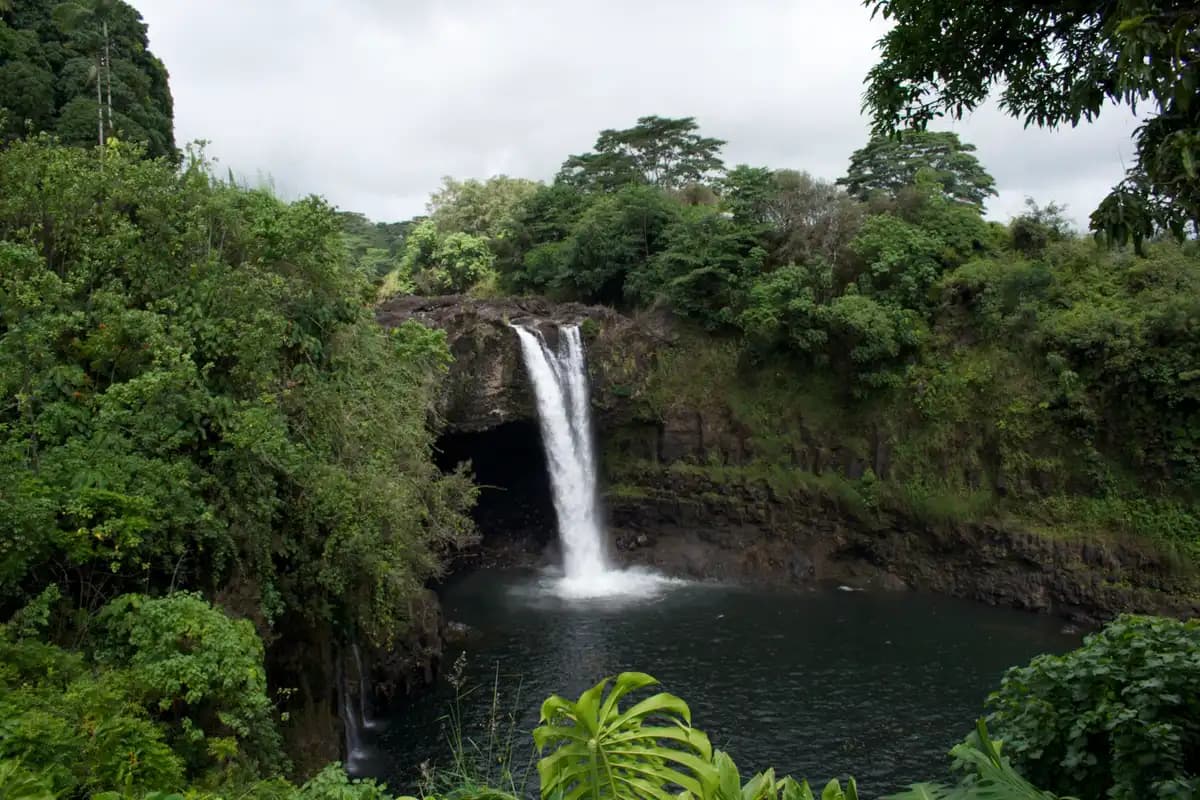
The trek to Rainbow Falls passes through the Double-Decker Root Bridge and continues deeper into the gorge. The falls create a natural rainbow in afternoon light, which is where the name comes from. This is a strenuous trail — not for those with knee issues.
- Location: Nohkalikai Rd., Sohra, Meghalaya 793108
- Timings: 7 AM to 5 PM. It is closed on Monday
- Entry: No entry fee
Best Trekking Trails of Meghalaya
Meghalaya tour offers trekking routes through gorges, root bridges, and colonial-era paths — very different from the snowbound Himalayan variety. Here is what each trail offers:
1. Laitlum Canyons
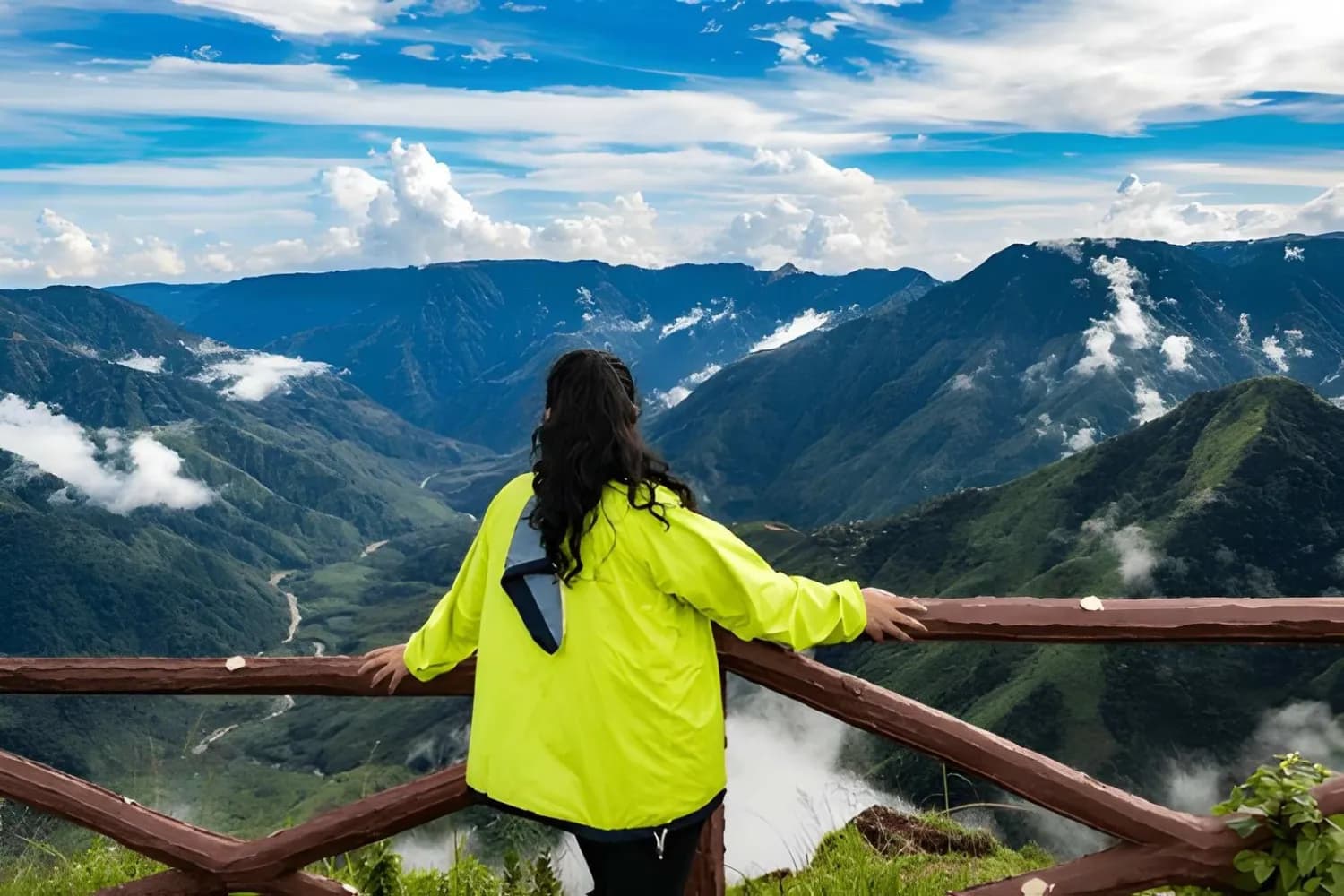
Hiking is very easy in with the valley views. It is perfect for beginners. You can go early morning for clear skies and fewer crowds, trust that timing matters.
- Location: 50 km from Shillong, East Khasi Hills
- Difficulty Level: Easy to moderate
- Round Trip Distance: 5 to 7 km
- Duration: 2 to 3 hours
- Timings: Laitlum Canyons Open all day; 7 AM to 5 PM
- Attractions: Deep canyon views, terraced valley
2. David Scott Trail
David Scott Trail is here with river views and waterfalls. It is not too hard, but long. You can hire a local guide who helps you understand the route better.
- Location: Mawphlāng, Synrang Kaban, Meghalaya 793121
- Difficulty Level: Easy to moderate
- Distance: 16 km (one way)
- Duration: 4 to 5 hours
- Timings: Daily 8:00 AM to 6:30 PM
- Guide Fee: Approximately ₹500 to ₹800 for a local guide
- Attractions: Historical Khasi trail built under British administrator David Scott (1802–1832), Umiam River views, Simpanghang Falls
3. Mawryngkhang Trek (Bamboo Trail)
Narrow bamboo bridges above deep gorges. Mawryngkhang Trek feels thrilling but safe. Not for weak nerves, but the views make it completely worth it.
- Location: Wahkhen, Meghalaya 793110
- Difficulty Level: Moderate
- Distance: 3 to 4 km round trip
- Duration: 2 to 3 hours
- Timings: 6:00 AM to 5:00 PM
- Attractions: Narrow bamboo bridges over the gorge, river views, and tea gardens
4. Mawkyront Living Root Bridge
Short and easy walk to a natural root bridge. Quiet, less crowded than the famous ones. Good for a relaxed, cultural experience.
- Location: Mawkyront village, East Khasi Hills
- Difficulty Level: Easy
- Distance: 2 to 3 km round trip
- Duration: 1 to 2 hours
- Timings: Daylight hours
5. Smit Trek
Simple trail with village views and cultural touch. No rush here. Combine it with the Nongkrem Festival timing for a richer experience.
- Location: Near Smit village, East Khasi Hills
- Difficulty Level: Easy
- Distance: 4 to 6 km, depending on route
- Duration: 2 to 3 hours
- Timings: Open all day
- Entry Fee: No formal fee
- Attractions: Smit is the seat of the Syiemship (traditional Khasi kingdom) and the venue for the Nongkrem Dance Festival. The trail gives views of the village and the surrounding hills.
Top 5 National Parks in Meghalaya
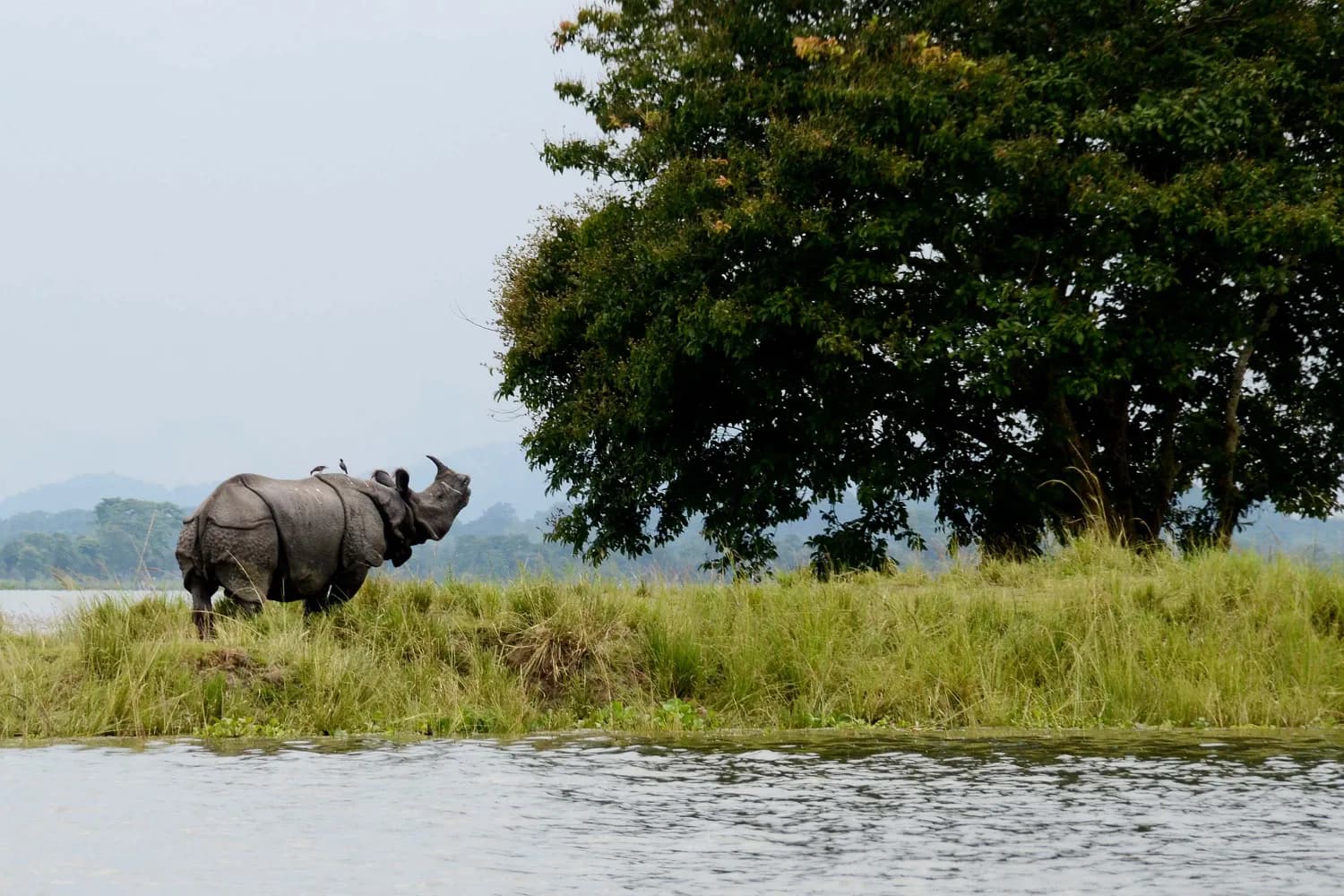
Wildlife in Meghalaya does not get the attention it deserves. The state covers dense forests, river systems, and grassland pockets that shelter some of Northeast India's rarest species. The national parks in Meghalaya are the right entry point for anyone who wants to see this side of the state.
1. Nokrek National Park
Nokrek National Park is a UNESCO Biosphere Reserve and one of the last remaining habitats of the Red Panda in India. It also houses the rare Citrus indica — the wild ancestor of all citrus fruits. Elephant, leopard, and clouded leopard sightings are reported here.
- Location: Tura district, Garo Hills, about 50 km from Tura town
- Timings: 10:00 AM – 5:00 PM
- Entry Fee: ₹20 to ₹50 for Indians; higher for foreigners
- Permit required: Yes
2. Balpakram National Park
Balpakram National Park is known locally as the "Land of Spirits," Balpakram is a canyon-rimmed plateau with high-altitude forests and grasslands. Bengal tigers, elephants, and gaur have been recorded here. The dramatic landscape makes it feel unlike any park in India.
- Location: South Garo Hills, approximately 165 km from Tura
- Timings: Daylight hours; forest department permit required
- Entry Fee: ₹50 to ₹150 for Indians
- Permit required: Yes
3. Siju Bird Sanctuary
Built around the Simsang River and famous Siju Cave (one of the longest cave systems in South Asia), this sanctuary is particularly good for bird watching. River terns, fishing cats, and various migratory birds are regularly spotted near the water.
- Location: South Garo Hills, about 100 km from Tura
- Timings: 4:00 AM to 8:00 PM
- Entry Fee: Nominal, around ₹50 to ₹100 per person
4. Nongkhyllem Wildlife Sanctuary
One of the most accessible wildlife areas from Shillong, this sanctuary covers the Umiam river basin and holds tigers, clouded leopards, and a rich birdlife, including the Hill Myna and hornbill species, often featured in a Meghalaya trip package.
- Location: 20th mile, Nongpoh, LaiLad, Meghalaya 793102
- Timings: 9:00 AM to 4:00 PM
- Entry Fee: ₹30 to ₹50 for Indians
- Permit required: Yes
5. Baghmara Reserve Forest
Smaller in size but dense in biodiversity, Baghmara is particularly noted for elephant corridors and birdwatching. It borders Bangladesh, giving the landscape a flat, open quality different from the hilly parks further north.
- Location: South Garo Hills, near Baghmara town
- Timings: 8:00 AM to 5:00 PM
- Entry Fee: ₹20 to ₹50 per person
- Permit required: Yes
Things to Do in Meghalaya
Meghalaya is not a place where you just look at things. The activities here pull you in physically. Ok, then explore these things to do in Meghalaya
1. Trek to the Double-Decker Root Bridge
The trek starts from Tyrna village (about 75 km from Shillong) and descends 3,500 steps into the Nongriat gorge — a round trip of about 6 to 7 hours. Viacation builds this into select Cherrapunji itineraries with a local guide, proper rest stops, and manageable group sizes. One traveler put it plainly: "The root bridge photos don't do it justice. Standing on something alive and 500 years old — that hits differently."
- Best time: October to March, when the trail is drier and safer.
2. Boat Ride on the Umngot River in Dawki
The ride costs around ₹500 to ₹800 per boat (holds 4 to 5 people) and lasts 30 to 45 minutes. Watching your own boat shadow on the riverbed 10 feet below is a genuinely surreal experience. Many travelers call this the single most visually stunning moment of their Meghalaya trip. Viacation ensures boat bookings are pre-arranged, so you are not scrambling at the ghat.
- Best time: November to April, when water clarity is at its peak.
3. Explore Mawsmai Cave
The cave system at Mawsmai, 6 km from Cherrapunji, is lit and walkable for about 150 metres. Entry is approximately ₹30 per person. The passages are narrow in sections, not recommended for those with severe claustrophobia, but the limestone formations inside are genuinely impressive. It’s a popular stop in Meghalaya travel packages. Plan for 45 minutes to an hour.
- Best time: October to June.
4. Attend the Shillong Autumn Festival
Held annually in Police Bazaar and Ward's Lake, the festival brings together Khasi cultural performances, local food stalls, and live music that reflects Shillong's deep rock and blues culture. Entry is free or low-cost for most events. If you are traveling in October, plan your dates around this — the city's energy during the festival is completely different from any other time of year.
- Best time: October.
5. Visit the Sacred Forest in Mawphlang
The Mawphlang Sacred Forest Grove is a 78-hectare ancient forest protected by the Khasi people for centuries under the concept of "Law Kyntang." Nothing is removed from this forest — not a leaf, not a stone. Entry requires a guide (around ₹300 to ₹500 per group), who explains the ecological and spiritual significance of what you are walking through. It is quiet in a way that few places are anymore.
- Best time: Year-round, though October to February is most pleasant.
Festivals in Meghalaya
Meghalaya's festivals are rooted in harvest cycles, spiritual traditions, and community identity. They are not tourist productions — they are real events that happen to welcome visitors.
1. Wangala Festival
The "Festival of 100 Drums" marks the end of the harvest season for the Garo tribe. Wangala Festival features traditional Garo dance performed in full ceremonial attire, with rows of drummers driving the rhythm. The energy at the main celebration grounds in Tura is unlike anything else in the Northeast.
- Time: October to November
- Duration: 2 to 3 days
- Place: Tura, Garo Hills
2. Behdienkhlam Festival
The Behdienkhlam festival is celebrated by the Jaintia tribe to drive away diseases and bring a good harvest. It includes big wooden structures, group rituals, and fun boat races on the Myntdu River. Many people from nearby villages come to watch. Jowai is about 58 km from Shillong, so plan a 2-night stay.
- Time: July
- Duration: 4 days
- Place: Jowai, Jaintia Hills, Held by the Pnar
3. Nongkrem Festival
Nongkrem Festival is the most important religious festival of the Khasi tribe, performed to give thanks to God for a good harvest. The female dancers in elaborate silver and beaded jewelry, and the male dancers with swords and white dhotis, create an image that stays with you, a highlight of a Meghalaya Tour Package. Smit is 16 km from Shillong.
- Time: November
- Duration: 5 days
- Place: Smit village, East Khasi Hills
4. Shad Suk Mynsiem
This is a Khasi spring festival celebrating life and gratitude. Young men and women dance in traditional dress, and the ritual has been maintained without interruption for generations. April is also a good travel month, so this festival fits naturally into your summer trip.
- Time: April
- Duration: 3 days
- Place: Shillong Held in Weiking ground in Shillong
5. Shillong Cherry Blossom Festival
Shillong's Cherry Blossom Festival celebrates the bloom of Prunus cerasoides trees across the city. Ward's Lake and Police Bazaar area look genuinely pink during this period. Live music, food stalls, and cultural performances run across the festival.
- Time: November
- Duration: 3 days
- Place: All over Shillong
Things to Carry Before Travelling to Meghalaya
- Waterproof jacket and rain gear: Meghalaya rains fast and hard, even outside the monsoon.
- Comfortable trekking shoes with grip: Root bridge trails are steep and uneven underfoot.
- Postpaid SIM card with data: Local network coverage in remote areas needs postpaid connectivity.
- Cash in hand (at least ₹3,000 to ₹5,000): ATMs are scarce outside Shillong city centre.
- Warm layers for winter travel: Nights in Cherrapunjee and Shillong drop sharply after sunset.
- Valid government-issued photo ID: Required at entry points, hotels, and border-adjacent areas.
- Power bank fully charged: Long drives mean limited charging options during the day.
- Reusable water bottle and personal snacks: Shops disappear fast on remote trekking trails.
- Sunscreen and lip balm: High-altitude sun at Mawlynnong and Shillong Peak hits harder than expected.
- Small first-aid kit with altitude and motion sickness tabs: Mountain roads to Cherrapunjee are winding.
Check Out Meghalaya Tour Packages
Package Name
Price Per Adult
₹13,699
per person
₹18,999
per person
₹18,999
per person
Popular Packages
Family Tours










Attractions

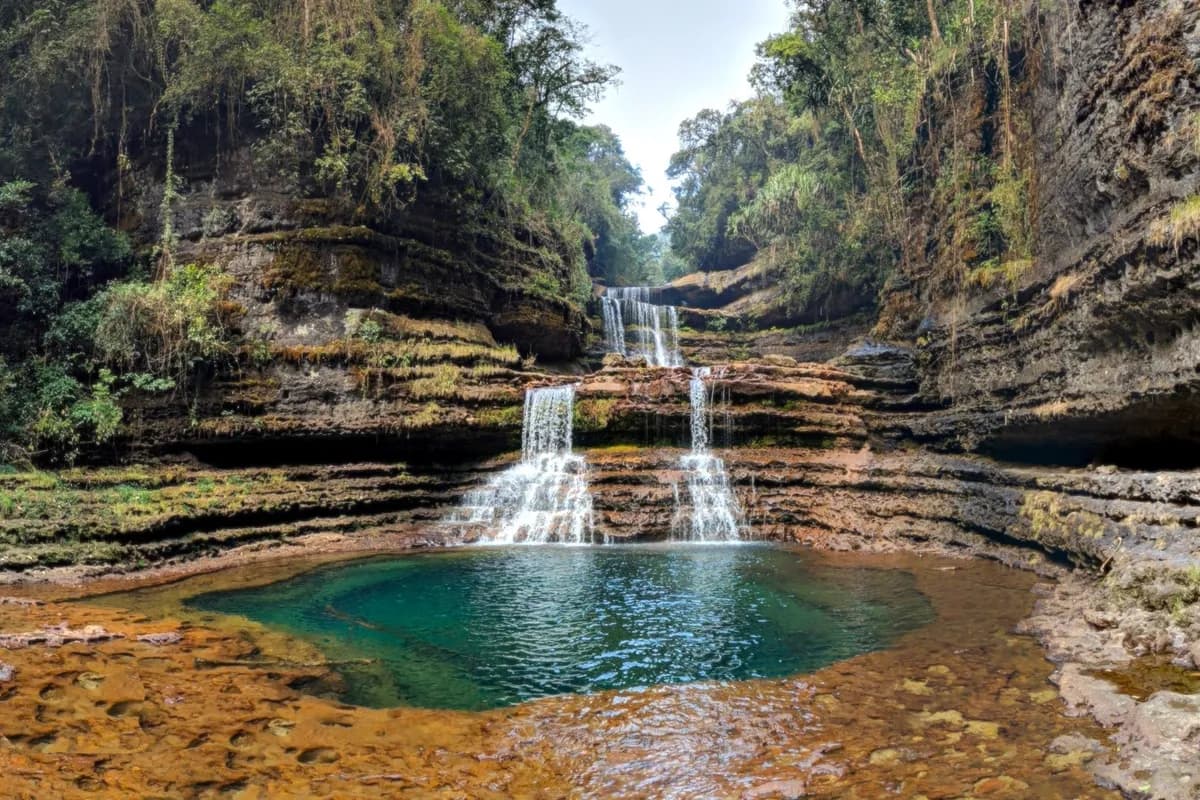
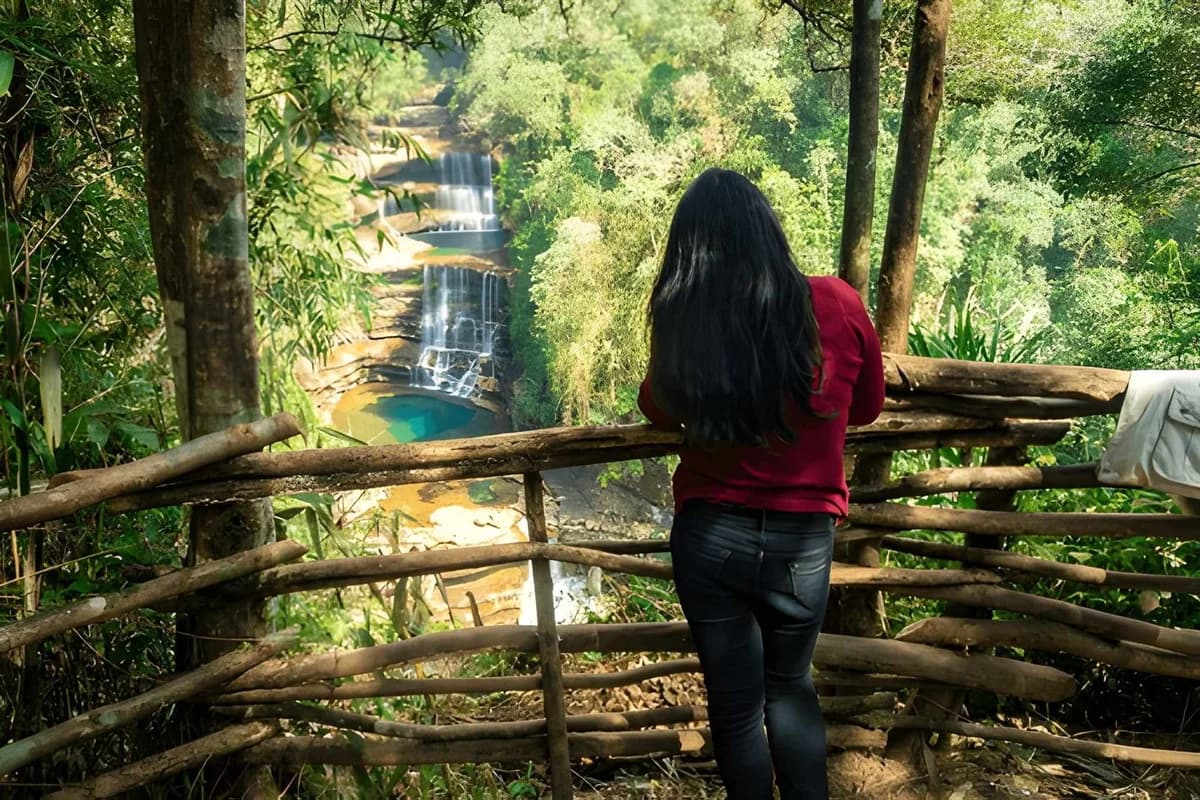
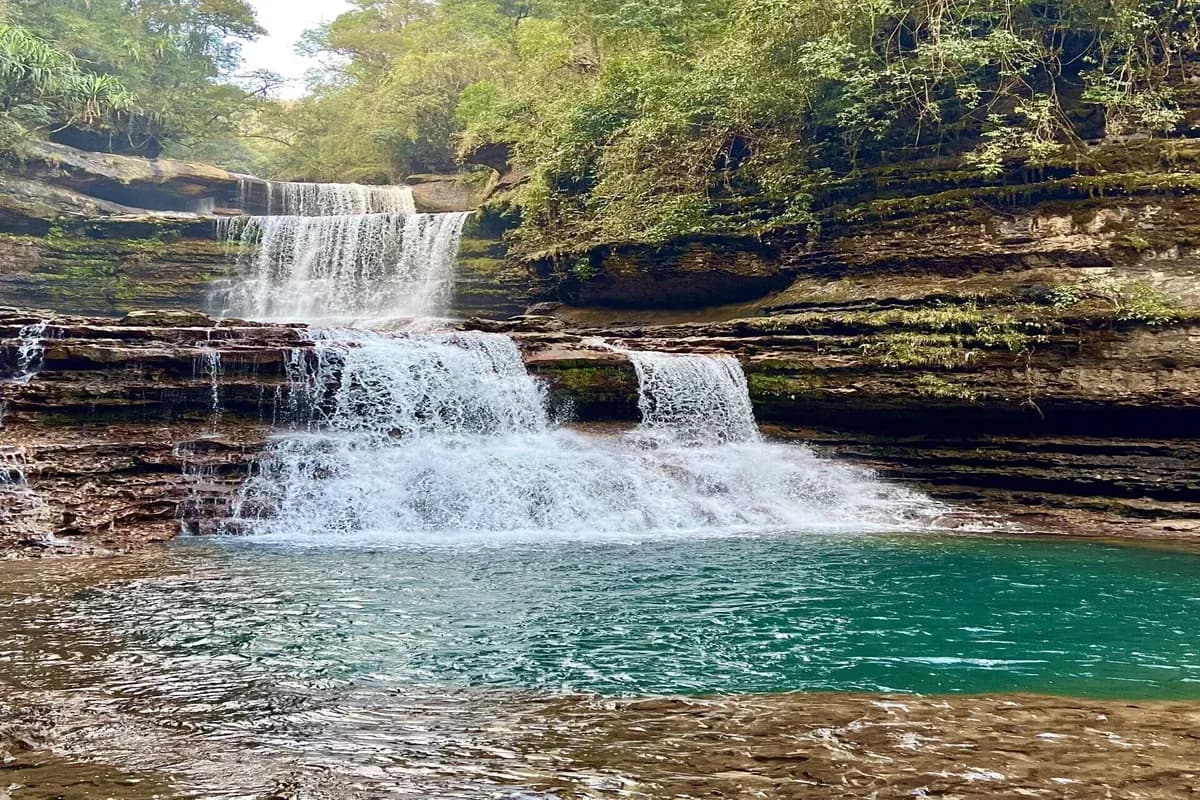
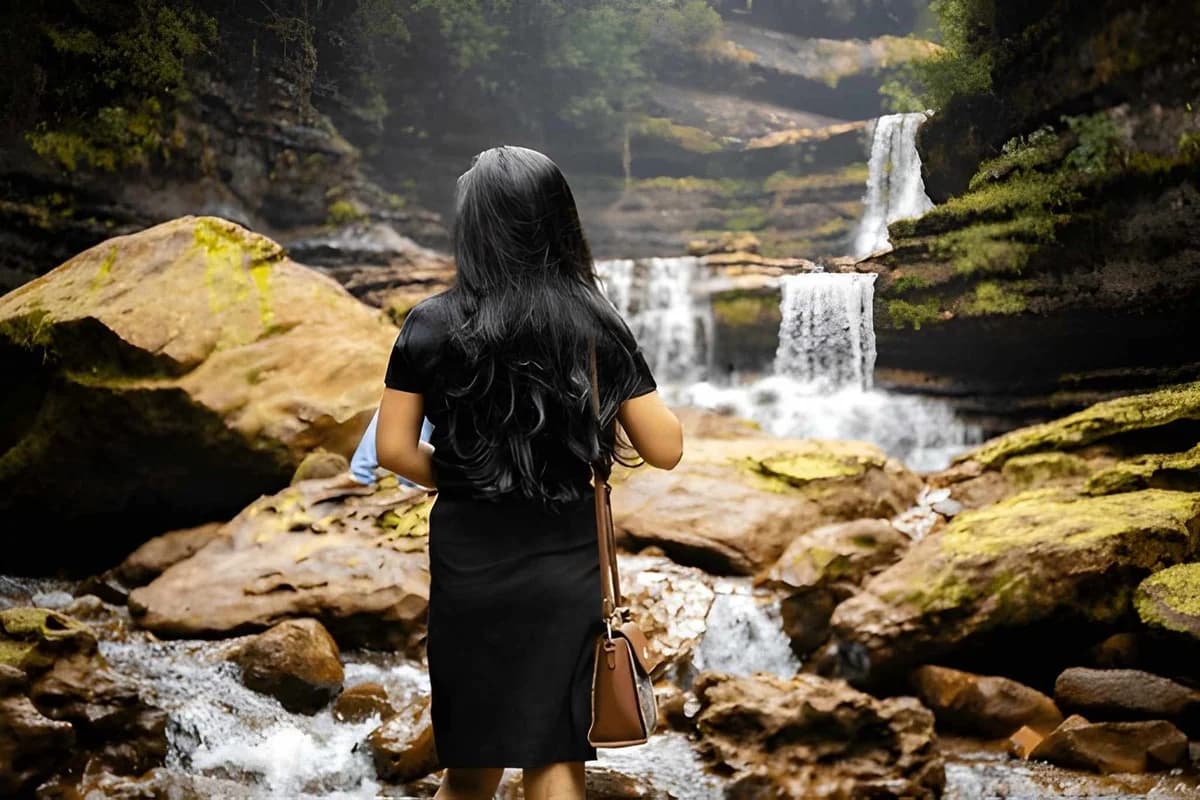
Honeymoon Special
Why Book Packages with Viacation?

Trusted by 1,00,000+ travellers

Dedicated experts to plan your trips

Secure bookings, clear cancellations
10,000+ unique trips to choose from
More Meghalaya Packages
Frequently Asked Questions About Meghalaya
October to April gives you clear skies and accessible roads. April to June is also comfortable, with temperatures between 16°C and 25°C. Monsoon (July to September) is dramatic but road-risky. Most travelers prefer October to February for the best overall experience.
A minimum of 5 nights and 6 days covers the core circuit: Shillong, Cherrapunjee, Dawki, and Mawlynnong. Add 2 more days if you want to include Mawsynram or the trek to Rainbow Falls. Rushing this trip is the most common mistake travelers make — the drives are long, and the places deserve time.
The Double-Decker Root Bridge in Cherrapunjee, the Umngot River in Dawki, Mawlynnong village, Nohkalikai Falls, and Shillong Peak are non-negotiable. If you are up for off-the-beaten-path stops, Laitlum Canyons and the Mawphlang Sacred Grove add serious depth to any itinerary.
The Shillong Autumn Festival held annually in October at the Polo Ground is Meghalaya's most prominent music event, drawing both Northeast Indian artists and national acts. The Nongkrem Dance Festival in Smit village is the most culturally significant traditional event, held across 5 days in October to November.
A standard 5-night, 6-day trip from a major Indian city costs between ₹18,000 and ₹35,000 per person with flights included. Budget packages without flights start from ₹8,999 per person. Costs vary based on accommodation category, transport preferences, and seasonal demand. December and January packages run 15 to 20 percent higher than off-season.
Indian nationals do not require any permit to visit Meghalaya. No Inner Line Permit applies to the state. Foreign nationals need a Protected Area Permit for restricted zones near the Bangladesh border. Viacation handles all permit documentation as part of the booking process.
Trekking to root bridges, boating on the Umngot River, caving in Mawsmai and Siju, camping in Shnongpdeng, and wildlife watching in Nokrek and Nongkhyllem are the main draws. Shillong also has an active café and live music scene if you are after an urban, cultural experience. Ziplining and kayaking near Dawki are available from October to March.
The 5-night Shillong-Cherrapunjee-Dawki circuit works well for families with kids. Activities like Elephant Falls, Ward's Lake, and the Dawki boat ride are all low-effort and high-impact. Avoid itineraries that include the Double-Decker Root Bridge trek with younger children. The 3,500 steps down and back up are genuinely tough. Viacation's family Meghalaya holiday packages build in extra buffer time for rest and adjust pace to suit all ages.
The Cherry Blossom Festival in Shillong takes place in November, typically in the second or third week, when the Himalayan cherry trees bloom across Ward's Lake and the surrounding areas. The exact timing shifts slightly year to year depending on the season. Viacation's November packages are specifically timed around the bloom window.
Meghalaya Blogs
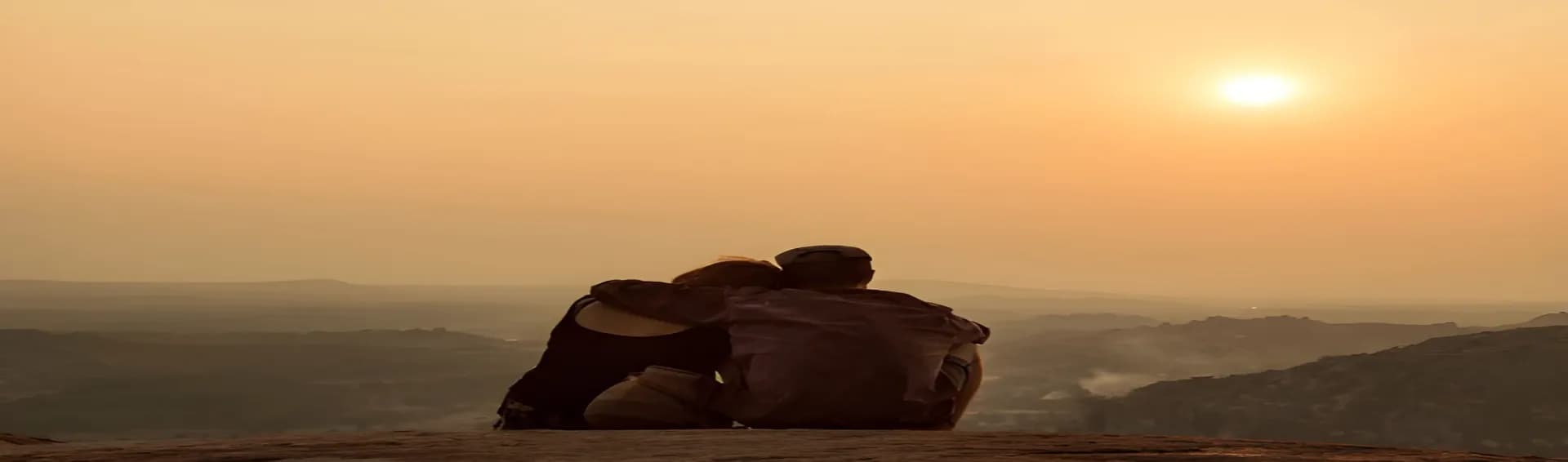
Meghalaya Honeymoon Guide: Most Romantic Spots, Stays & Experiences for Couples
Hidden in the scenic hills of Northeast India, Meghalaya is a perfect destination for couples looking for a nature-filled honeymoon. In this guide, we...

Local Markets and Street Food in Shillong: What to Eat, Buy, and Spend
Shillong does not have a dedicated food street. Nobody told the city it needed one. The local markets in Shillong do that job, and honestly, they do i...
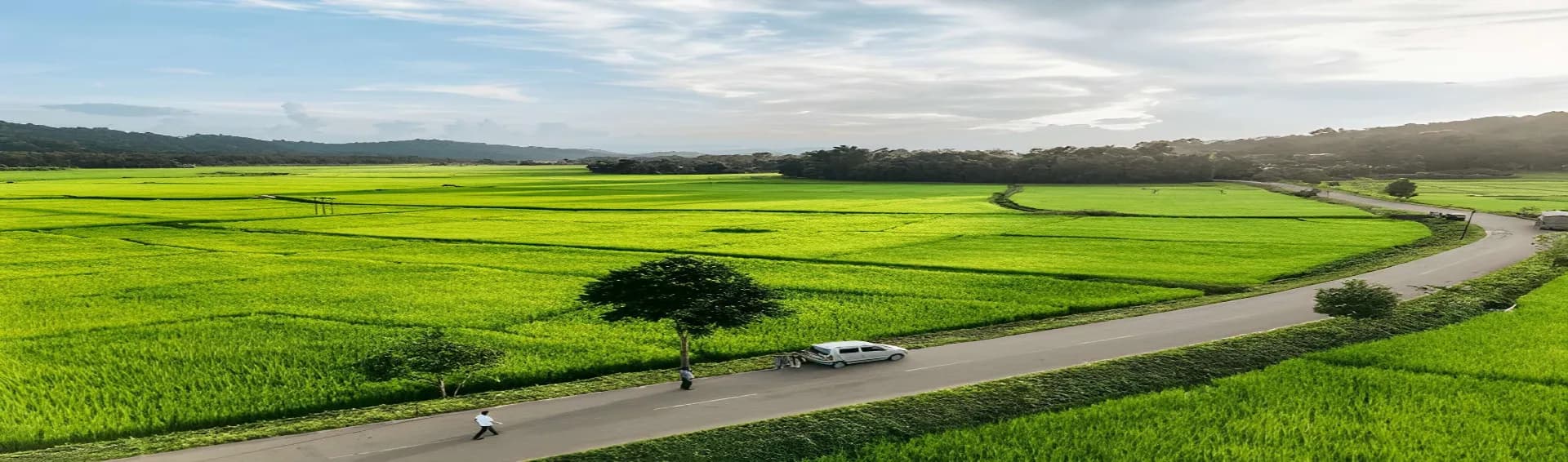
Getting Around Meghalaya: Complete Local Transport Guide — Cabs, Buses & Shared Taxis
After reaching Meghalaya by flight or Train. The big question comes to you, now, “How should I continue my journey?” “Should I choose private or loca...
