

Kerala Tour Packages From Dehradun
Dehradun understands green in a very particular way. Surrounded by the lower Himalayan ranges, the Garhwal foothills, and the famous Doon Valley — carpeted in sal forests, tea gardens, and the fragrant gardens of the Forest Research Institute — Dehradun is a city that lives close to natural beauty and has developed a refined appreciation for landscape. The Indian Military Academy, the Doon School, the Survey of India headquarters — Dehradun has also produced generations of India's most disciplined, most well-travelled, and most experientially adventurous citizens. For a city like this, the holiday destination must match the standard of what is already known. Kerala does more than that. It reveals an entirely new India.
Viacation's Kerala Tour Packages from Dehradun are crafted for a city of educated, outdoor-loving, aesthetically attuned travellers who want genuine experiences rather than tourist circuits. Our Kerala Tour Packages from Dehradun connect the Doon Valley's cool, Himalayan-edged world to a tropical paradise that shares the same love of altitude and forest but expresses it in a completely different language — the language of cardamom rather than pine, of backwater canals rather than mountain streams, of the Arabian Sea rather than the Ganges. Whether you are a defence family from IMA seeking a warm-weather escape, a young Dehradun couple planning their first South India honeymoon, an outdoor enthusiast ready to swap Himalayan treks for Western Ghats forest trails, or a retired professional seeking Kerala's celebrated Ayurvedic renewal, Viacation builds the Kerala journey that is exactly right for you. Book Kerela Tour Packages
About the Destination
If Dehradun speaks the language of the Himalayas — cool air, pine needles, distant snow peaks, the sound of the Tons and Asan rivers — Kerala speaks the language of the tropics, and speaks it with a fluency and a richness that transforms every visitor. The Western Ghats that form Kerala's eastern spine are, geologically, among the oldest mountain ranges on earth — far older than the Himalayas — and the extraordinary biodiversity they shelter is a product of millions of years of uninterrupted evolution. Kerala's 44 rivers flow westward from these ancient mountains to the Arabian Sea, creating as they go the 900-kilometre backwater network that has defined the state's culture, cuisine, and way of life for millennia. The result is a state that is simultaneously tropical and highland, coastal and forested, ancient and cosmopolitan — a place that has been shaped by the sea, the mountain, and the river in equal measure. For Dehradun travellers who have spent their lives between the Himalayan rivers and the Doon Valley forests, Kerala offers a landscape that is both a recognition and a revelation — the same fundamental love of green, alive, and moving, expressed in a completely different and utterly magnificent form.
"Dehradun people love the hills and we honestly wondered if a coastal state like Kerala would feel as satisfying. We were completely wrong. Munnar's Western Ghats are different from our Garhwal hills but equally beautiful in their own way — the tea estates at sunrise are something we talk about constantly. The Alleppey houseboat was unlike anything we had experienced. And the Periyar wildlife safari reminded us of our Rajaji National Park visits but in a much more dramatic jungle setting. Viacation planned every detail perfectly and the prices were genuinely fair. Cannot recommend them enough." — Col. (Retd.) Suresh & Meena Rawat
Why Choose Viacation Over Other Travel Websites
- Uttarakhand & North India Travel Culture Experts: Viacation understands the travel sensibility of Dehradun's community — the military families, the hill-station lovers, the outdoor enthusiasts, and the retired professionals who have spent lifetimes in some of India's most beautiful natural environments. Every Kerala package from Dehradun is built to match and extend that standard of experience.
- Defence Family & Retired Officer Packages: Dehradun's large defence community — from IMA, FRI, and the surrounding cantonments — travels with specific preferences: comfortable, reliable, well-organised itineraries with quality accommodation and honest pricing. Viacation specialises in building Kerala packages for defence families and retired officers from Dehradun that meet every one of these expectations without compromise.
- Via Delhi — Best Flight Combinations Secured: Jolly Grant Airport (DED) connects to Kochi and Trivandrum via Delhi (DEL), with the full journey taking approximately 5 to 6 hours. Viacation monitors all available flight combinations via Delhi to secure the most competitive fares and most convenient connection times for Dehradun travellers.
- Outdoor & Nature Experience Specialists: Dehradun's outdoor community — trekkers, campers, wildlife enthusiasts, river rafters — finds in Kerala a completely different outdoor universe. Viacation builds nature and adventure-focused Kerala packages from Dehradun that go beyond standard sightseeing to include wildlife safaris, forest treks, river experiences, and coastal adventures.
- Flexible Itineraries for All Group Sizes: From couples on a romantic break to large joint families, Viacation builds Kerala packages to fit every group configuration — with the right accommodation mix, transfer arrangements, and activity selection for each type of traveller from Dehradun.
- Full Price Transparency: Every Viacation quote is completely itemised — flights, accommodation, meals, guides, transfers, and activities — with zero hidden charges at any stage. Dehradun's straightforward, no-nonsense community deserves exactly this level of clarity.
What is the Best Time to Visit Kerala?
Dehradun's climate is one of India's most pleasant — cool Himalayan winters, a beautiful monsoon, and warm but not extreme summers. Understanding how Kerala's seasons compare helps Dehradun travellers choose the best window for their holiday.
- October to February — The Peak Season & The Perfect Escape: As Dehradun settles into its lovely winter season, Kerala is simultaneously entering its finest period. Clear Arabian Sea skies, coastal temperatures between 22°C and 30°C, and the complete Kerala experience — backwater cruises, beach holidays, wildlife safaris, cultural performances — all at peak quality. For Dehradun families and couples making their first Kerala trip, October to February is the unambiguous best season. The contrast between Dehradun's cool winter mornings and Kerala's warm, golden coastal days makes the journey feel like the most satisfying seasonal trade imaginable.
- March to May — Dehradun Heats, Kerala Hills Beckon: As the Doon Valley warms through March and into the April–May heat, Kerala's Western Ghats hill stations — Munnar, Wayanad, Vagamon — remain cool and inviting. For Dehradun's hill-station-accustomed community, a Kerala highland package in April–May offers a South Indian version of the cool-altitude experience they love at home — with the added reward of tea estates, spice plantations, and tropical Western Ghats wildlife. Hotel rates across Kerala are significantly lower during this window.
- June to September — Two Mountain Monsoons: Dehradun's monsoon is beautiful — the Doon Valley turns vividly green and the surrounding hills shine with waterfalls. Kerala's monsoon, arriving from the opposite coast on the same June timeline, produces an equally dramatic transformation on an even larger scale. The Western Ghats receive some of Asia's heaviest rainfall, creating a green spectacle that Dehradun's monsoon-lovers will find deeply resonant and impressively amplified. For Uttarakhand travellers who love the rain, Kerala's monsoon season is a revelation rather than a deterrent.
- Quick Verdict: Go in winter for the complete Kerala experience, in summer to find cool hill station air in the South, and in monsoon for a dramatic green landscape that speaks the same language as the Doon Valley — only louder and more tropical.
How to Reach Kerala from Dehradun
By Air (Fastest & Most Recommended)
Jolly Grant Airport (DED) in Dehradun connects to Cochin International Airport (COK) and Trivandrum International Airport (TRV) via one-stop connections through Indira Gandhi International Airport, New Delhi (DEL). IndiGo, Air India, and SpiceJet operate multiple daily flights from Dehradun to Delhi, from where frequent direct flights to Kochi take approximately 3 hours. Total travel time from Dehradun to Kochi including the Delhi connection is approximately 5 to 6 hours. This is by far the most practical option for Dehradun travellers, and Viacation monitors all flight combinations and fare windows to secure the best prices.
By Train (Scenic & Budget-Friendly)
Dehradun Railway Station (DDN) connects southbound via Haridwar Junction to the national rail network. Travellers can board trains from Haridwar Junction to Ernakulam Junction (Kochi) or Thiruvananthapuram Central via the Kerala Express and other southbound expresses from Delhi or Haridwar. The total train journey from Dehradun (via Haridwar) to Kerala takes approximately 54 to 58 hours, passing through the Deccan plateau and into Kerala's lush coastal landscape. Train travel is the most economical option for large families and groups who value the comfort of reserved AC compartments and the scenic experience of watching North India give way to South India over two days of travel.
By Road (For the Long-Distance Adventure)
The road distance from Dehradun to Kochi is approximately 2,850 km via NH58, NH44, and NH544 through Delhi, Agra, Nagpur or Hyderabad, and Bangalore — a multi-day journey of approximately 40 to 45 hours. Best approached as a 4 to 5-day road adventure with overnight stops in Delhi, Hyderabad, and Bangalore. The final approach from Bangalore through Mysore and the Western Ghats into Kerala is particularly spectacular and worth planning as a deliberate scenic section of the journey.
Places to Visit in Kerala
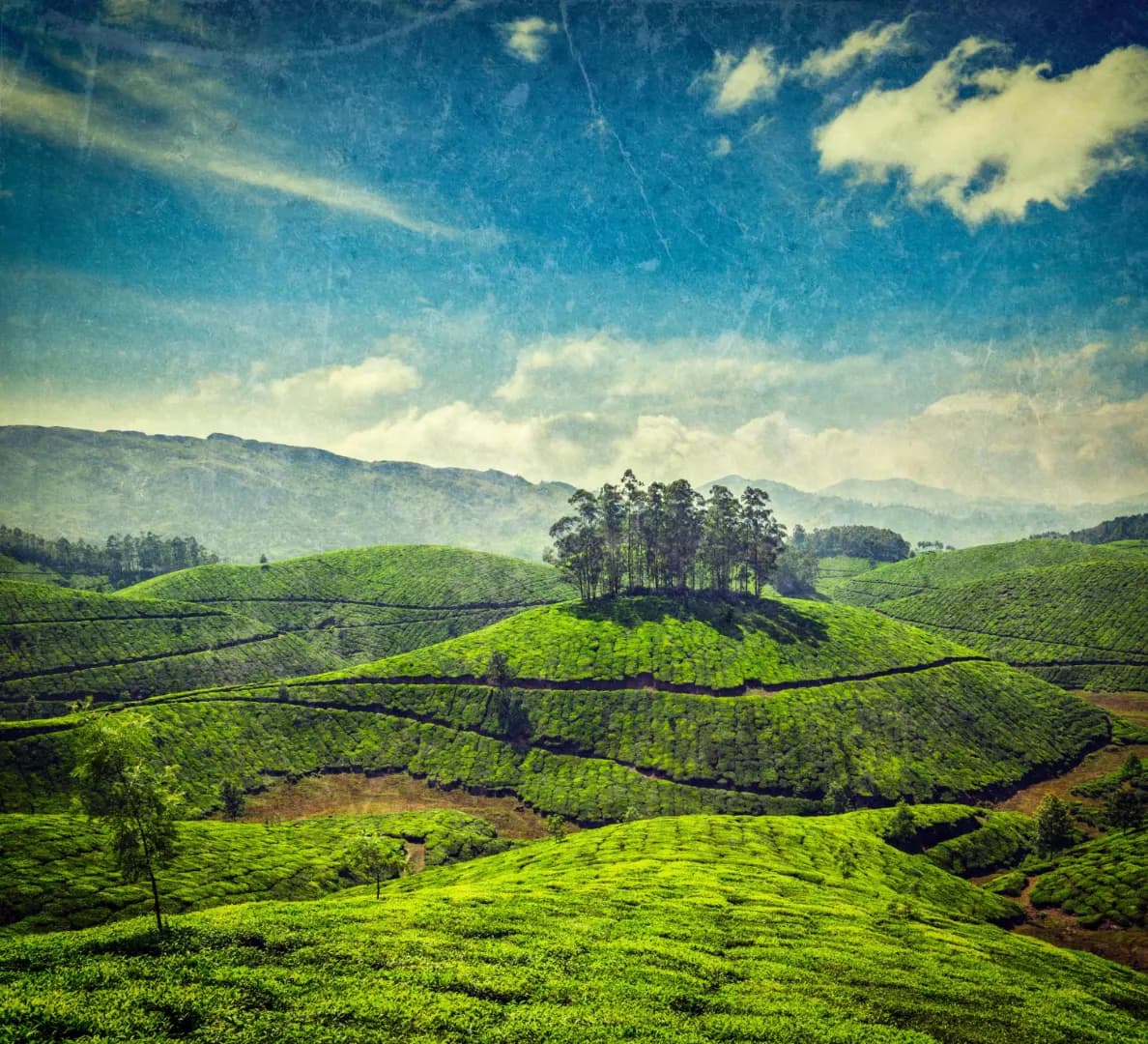
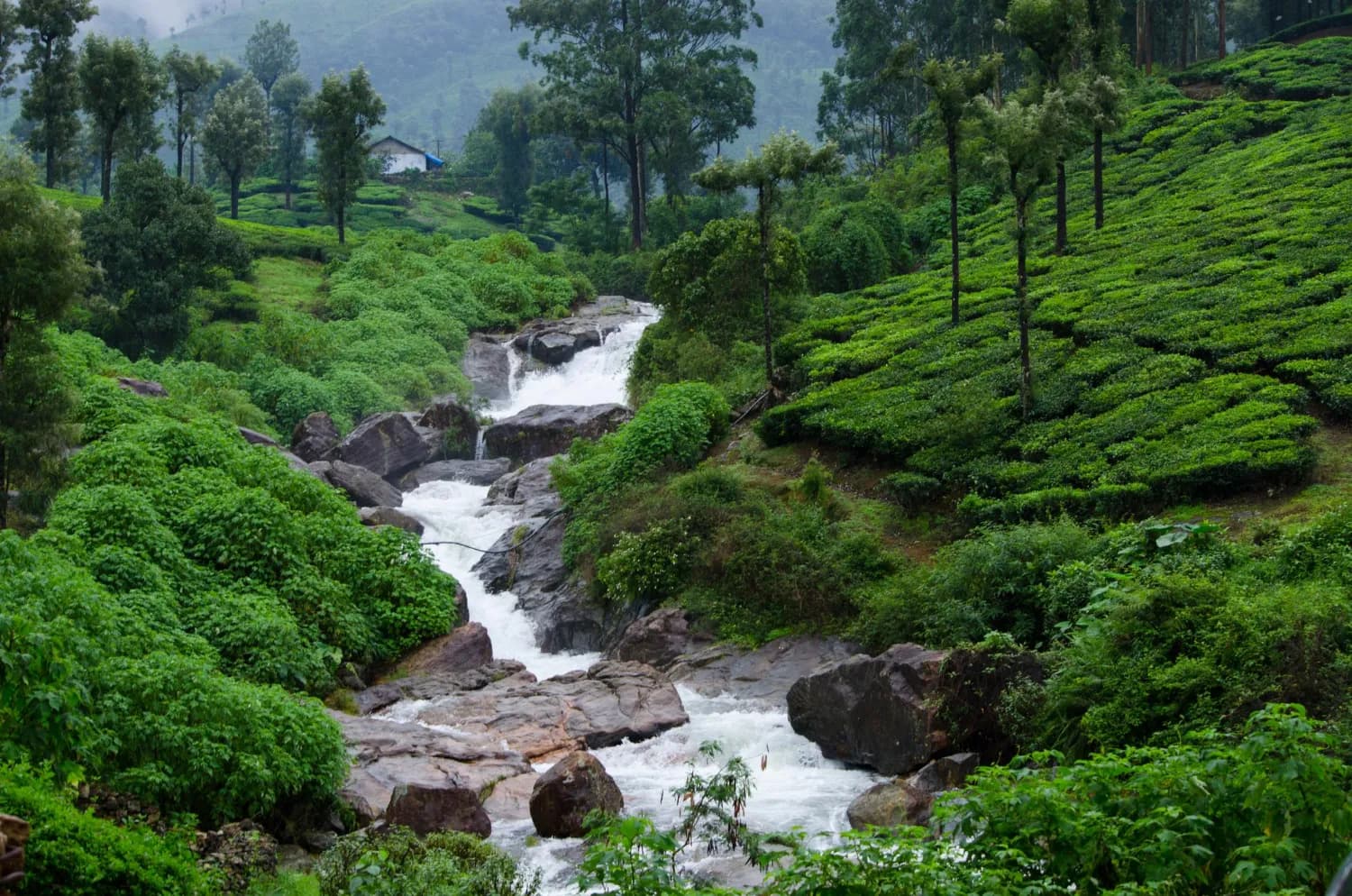
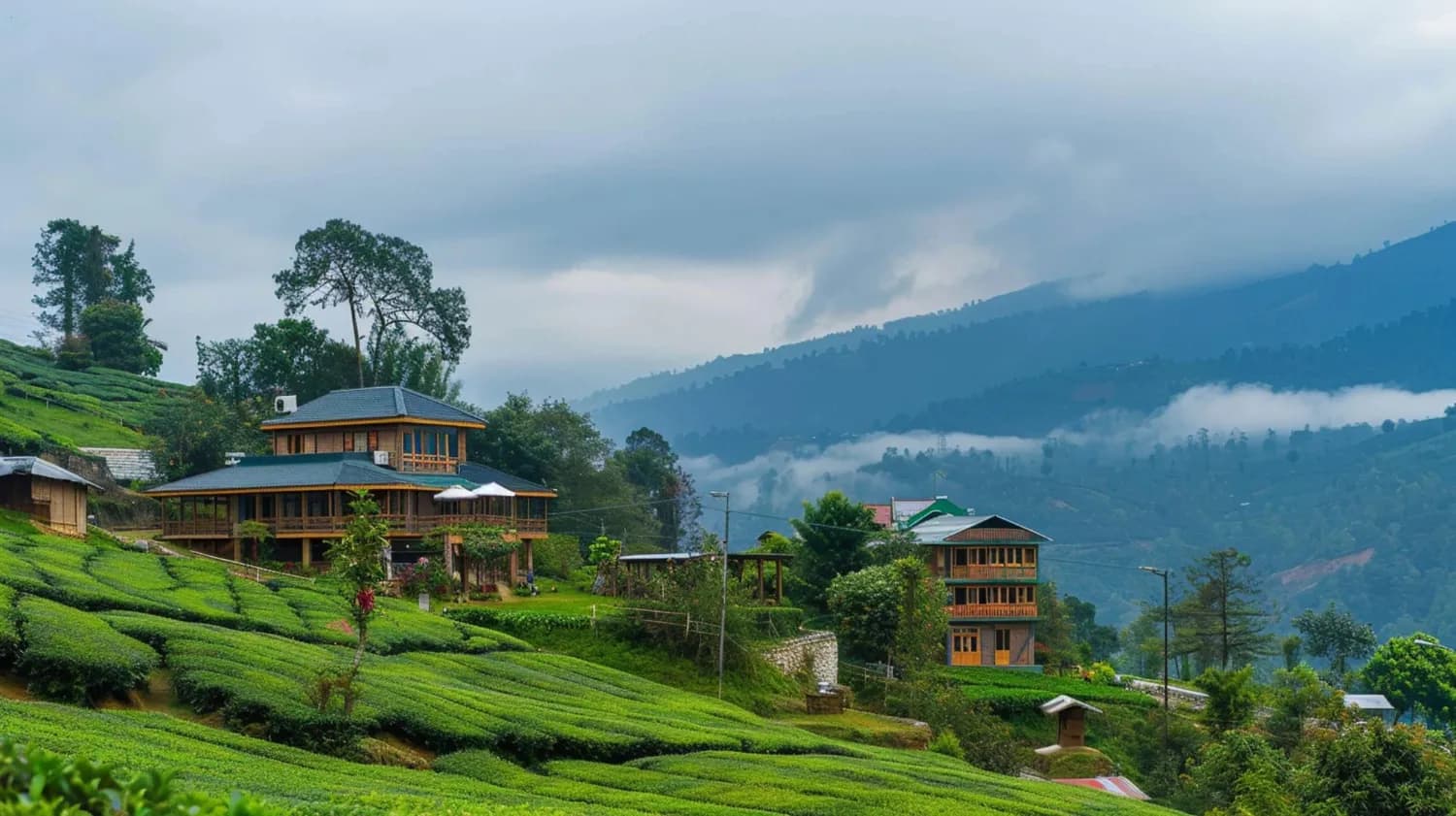
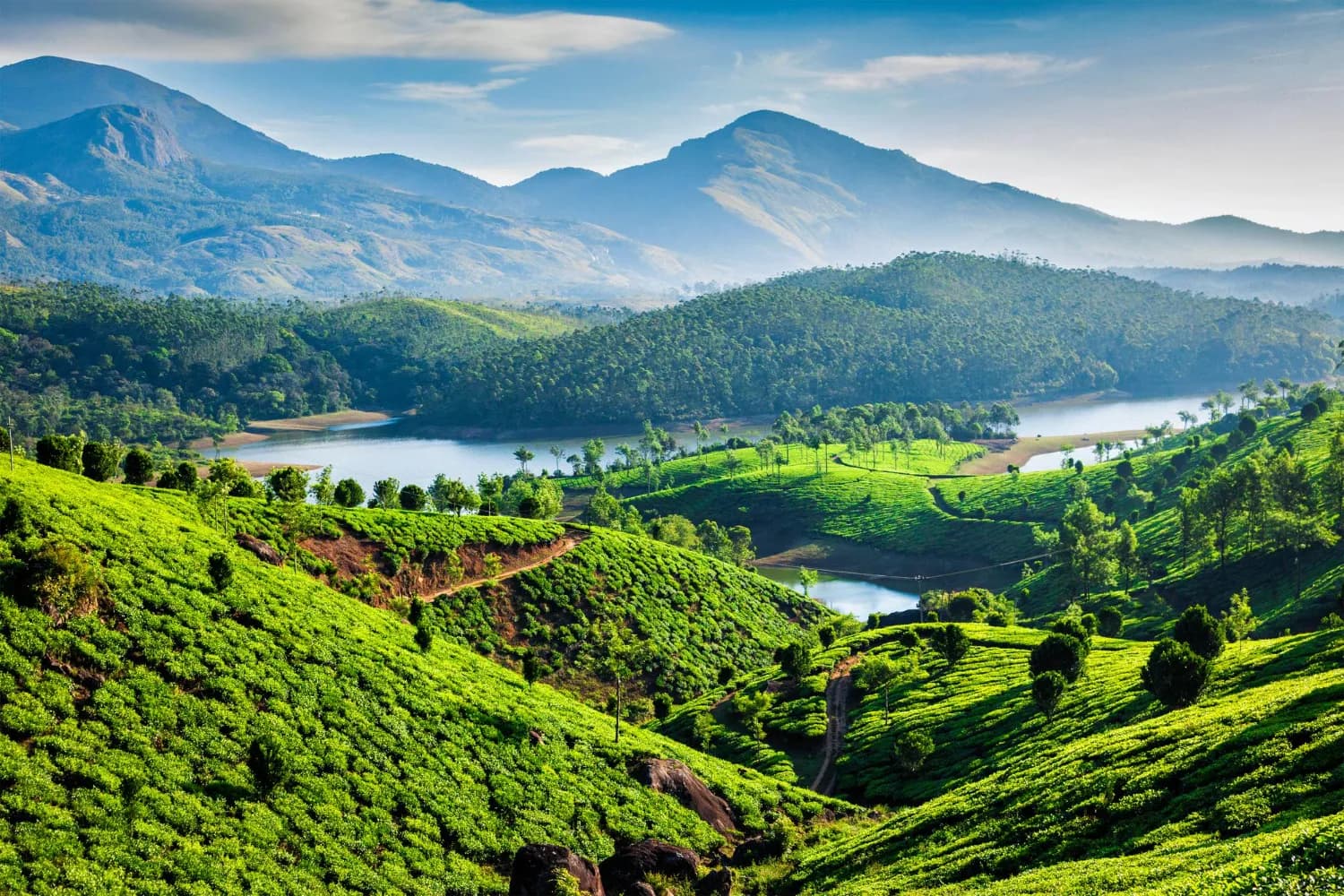
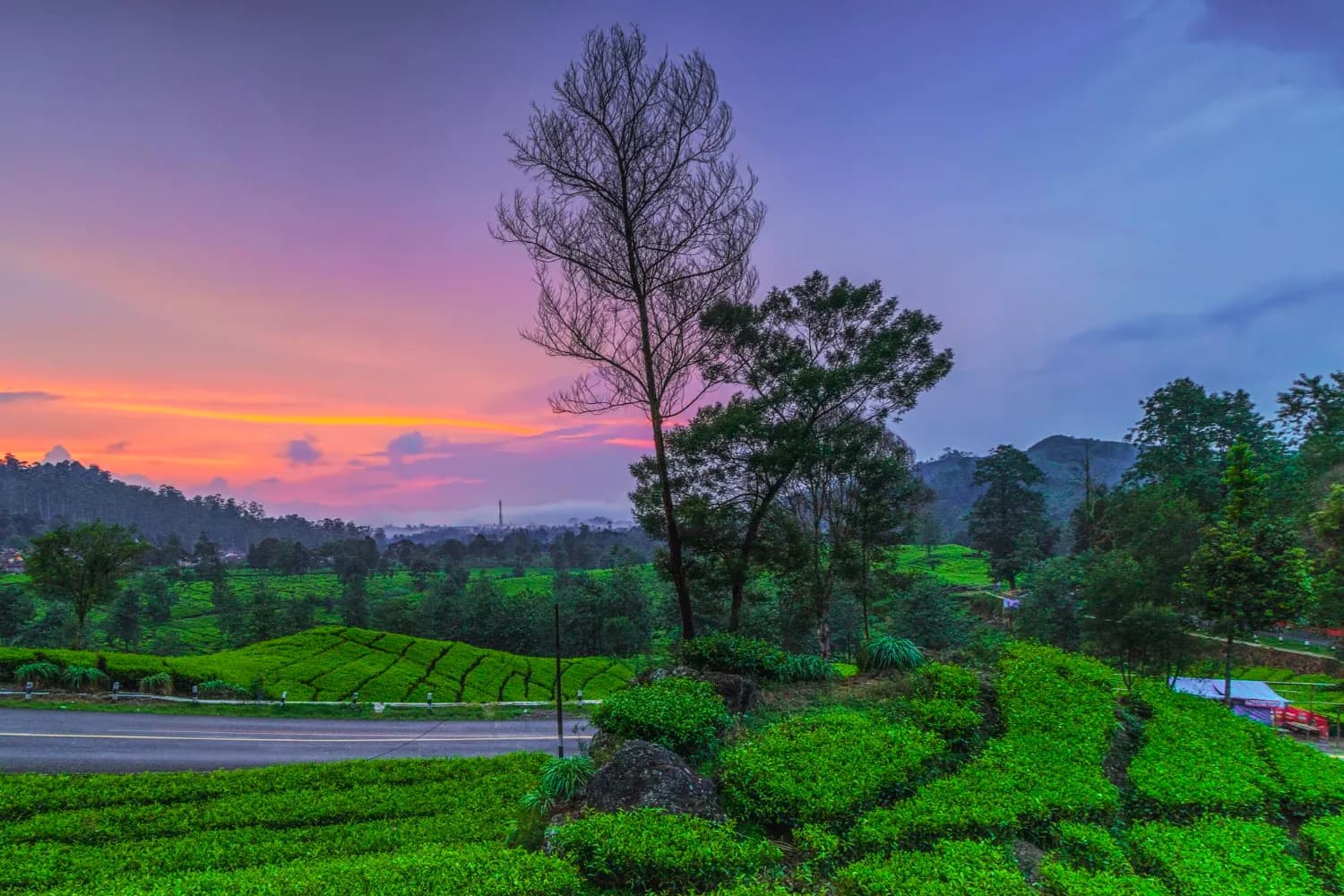
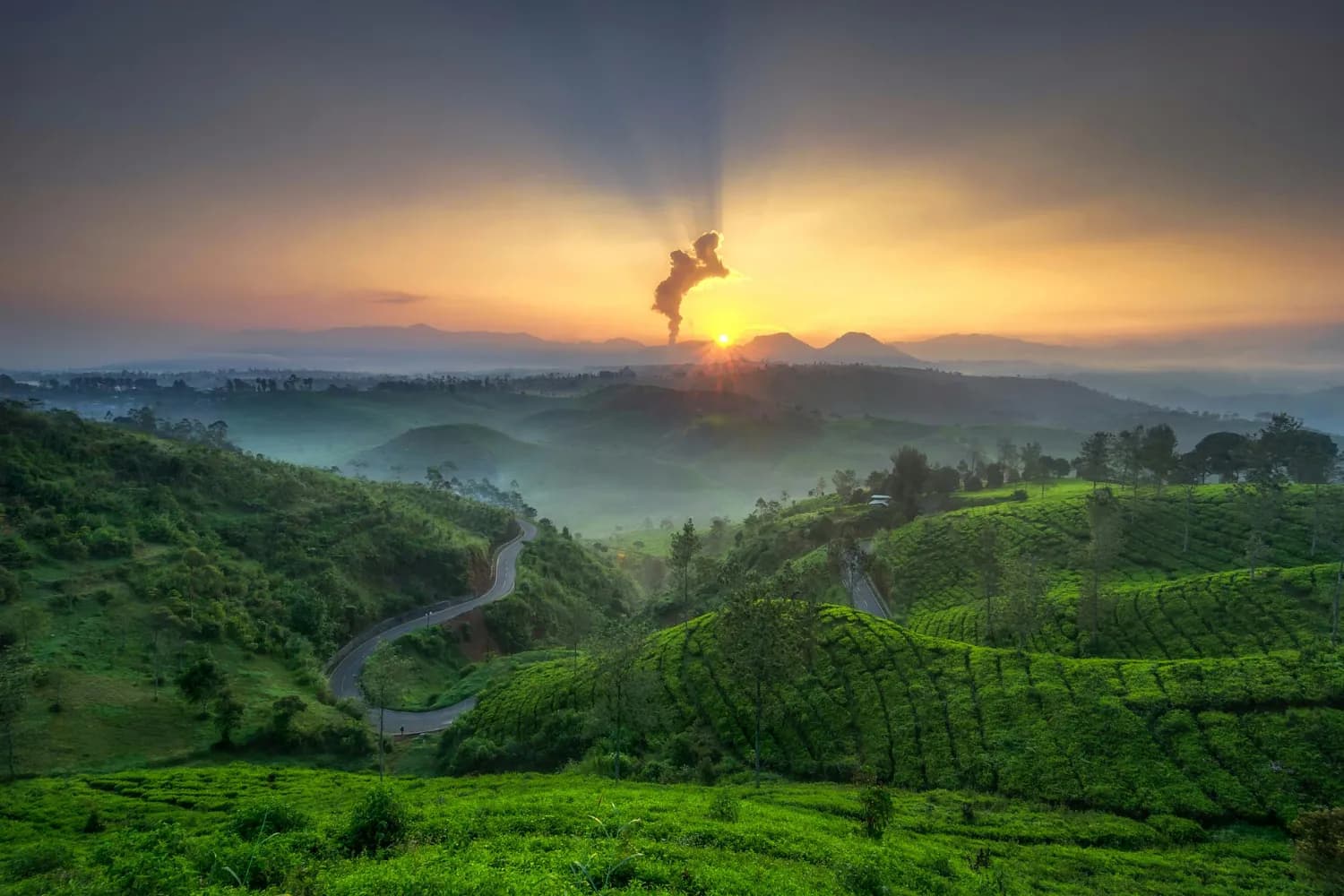
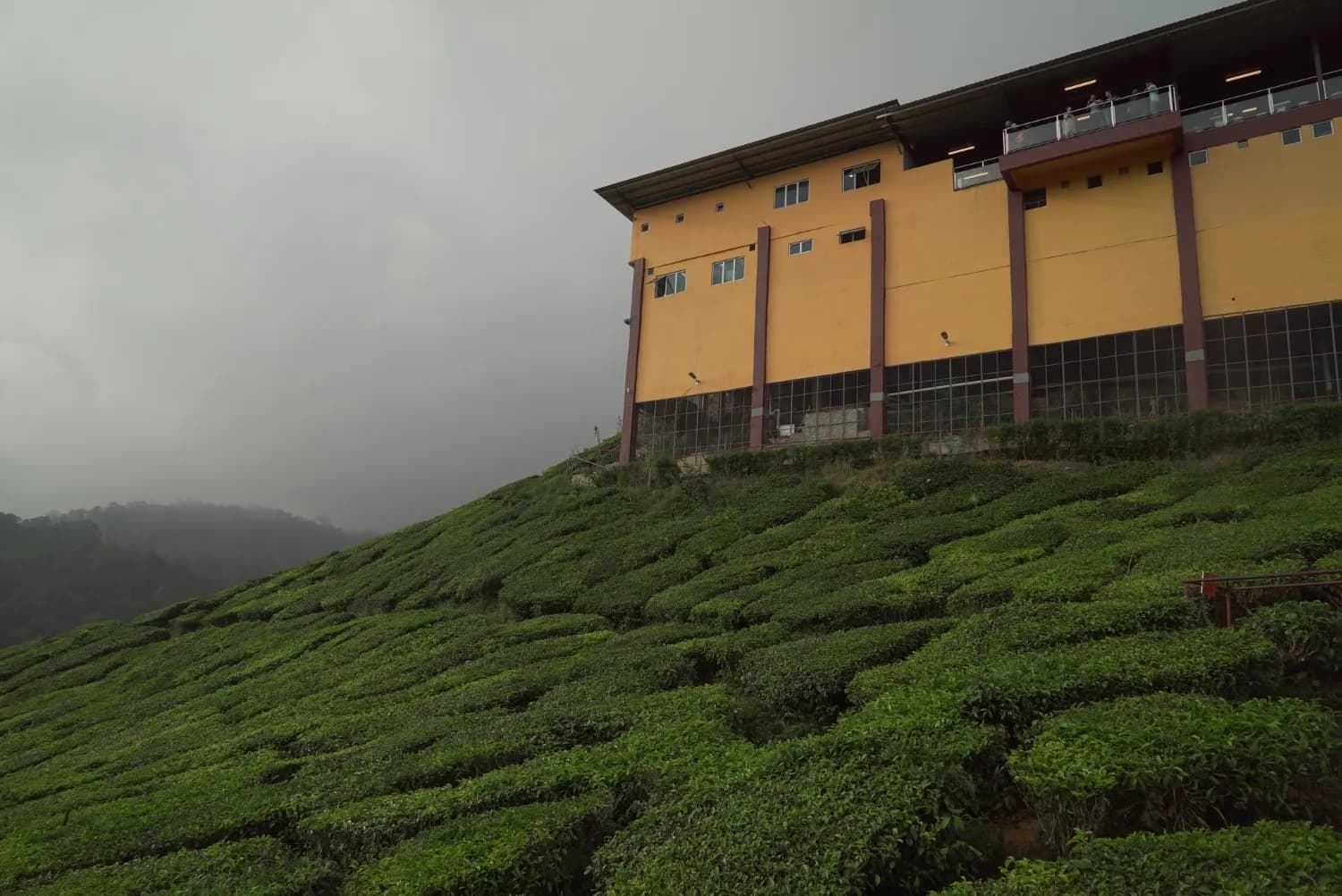
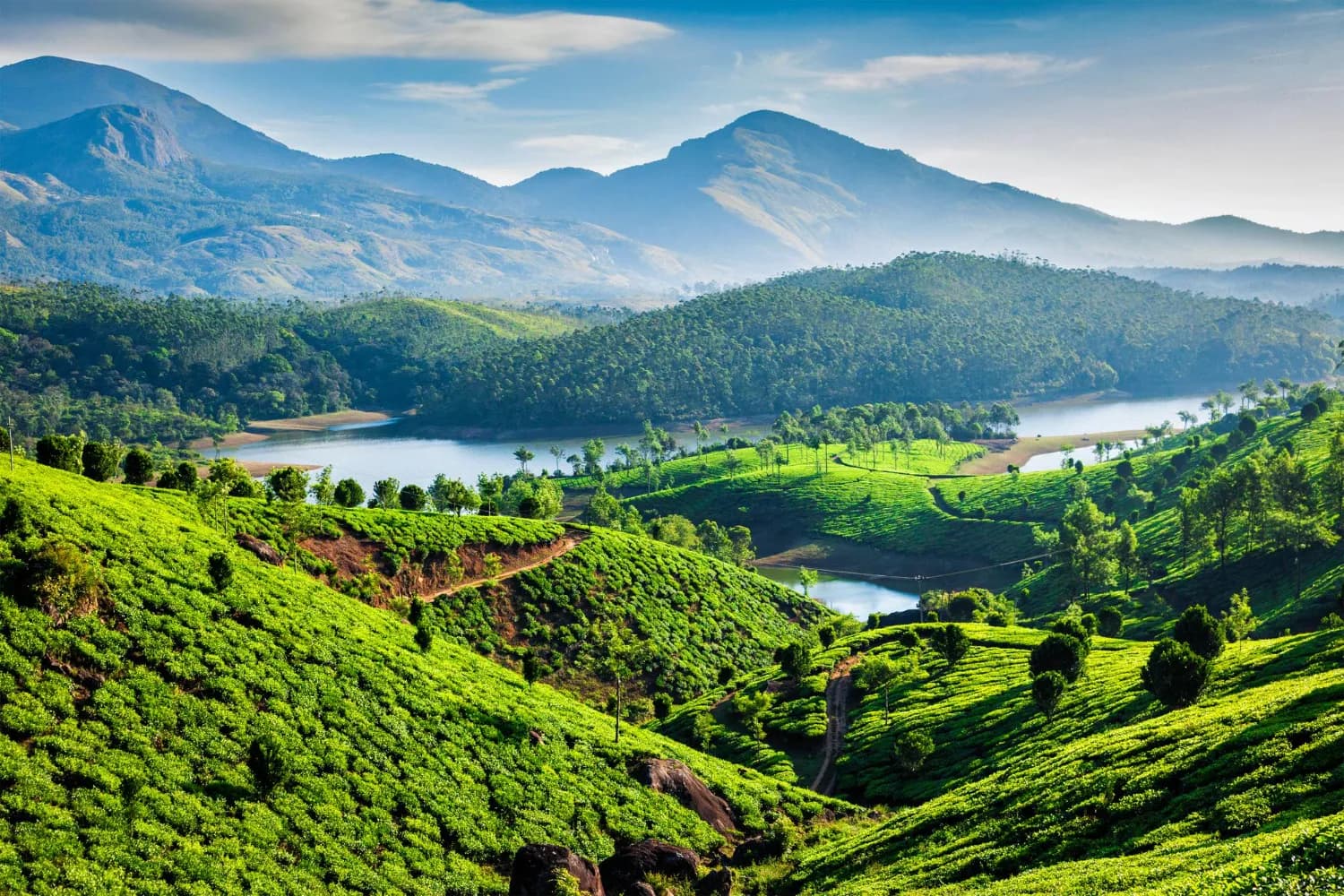
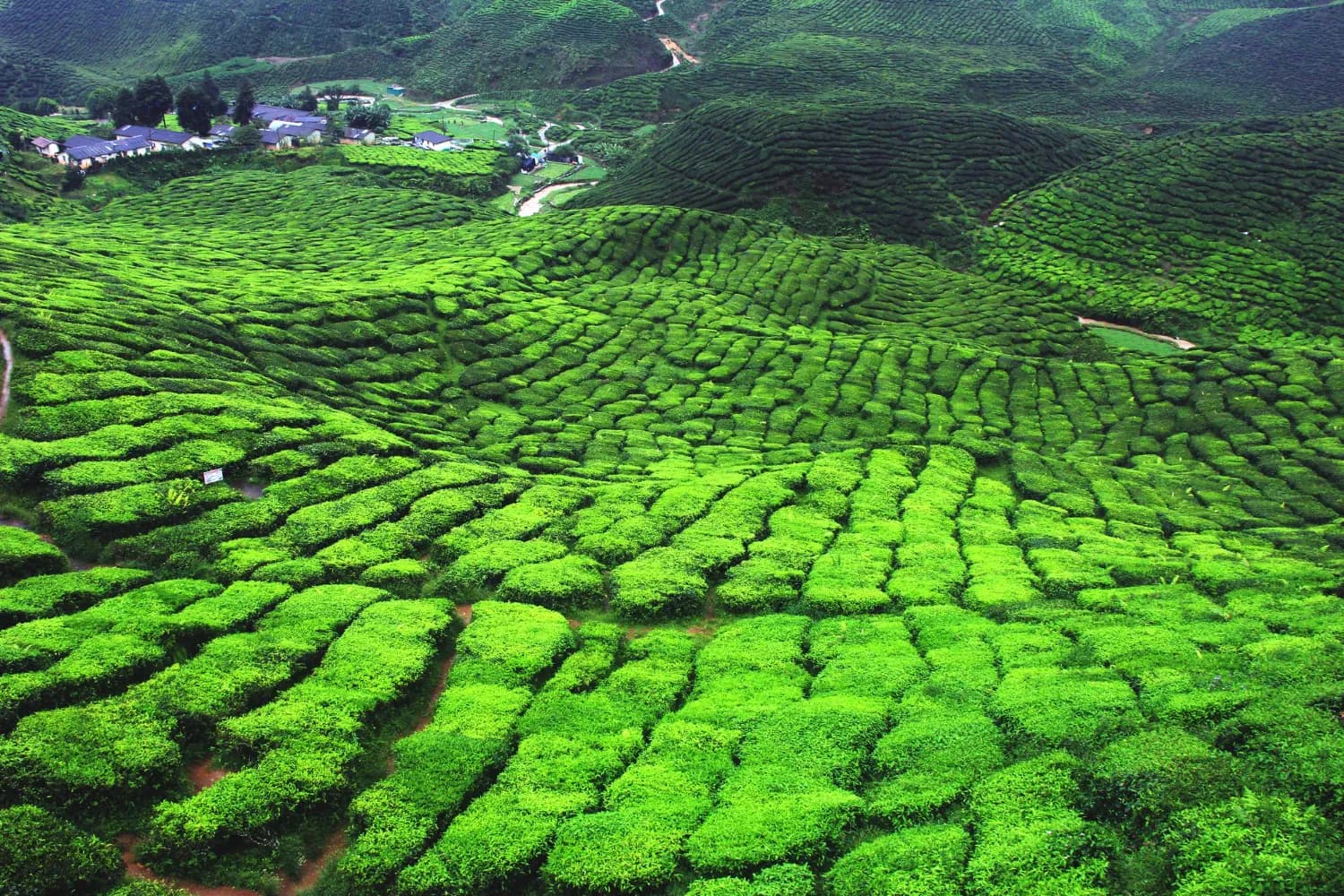
1. Munnar: For Dehradun travellers — hill station people at heart — Munnar is the Kerala destination that creates the most immediate, most complete sense of recognition. The Western Ghats ridge at 1,600 metres, the cool mountain air that smells faintly of tea and rain, the dramatic Ghat roads climbing through waterfalls and forest, the distant blue silhouette of higher peaks — and then, cresting the final rise, the extraordinary sight of tea estates covering every ridge and valley as far as the eye can see. Munnar is not like Mussoorie or Landour. It is its own thing entirely. But for Dehradun's hill lovers, it speaks an immediately understood language of altitude and green.
Key Attractions:
- Eravikulam National Park (Nilgiri Tahr & Rhododendron Valley)
- Top Station — Highest Motorable Viewpoint in the Region
- Mattupetty Dam, Echo Point & Kundala Lake
- Tea Museum & Guided Plantation Walk
- Anamudi Peak — South India's Highest Summit (2,695 m)
2. Wayanad: Dehradun's outdoor community will find Wayanad immediately compelling — a forested highland plateau that shares the same instinct for wildness that makes the Garhwal forests so beloved at home, but expresses it in a dense, tropical, Western Ghats register that is entirely its own. Ancient tribal communities, prehistoric cave carvings, wildlife corridors hosting tigers, elephants, and leopards, dramatic waterfalls, and the most rewarding highland trek in Kerala — Chembra Peak at 2,100 metres — make Wayanad the top choice for Dehradun's nature and adventure community visiting Kerala.
Key Attractions:
- Chembra Peak Trek & Heart-Shaped Lake (2,100 m elevation)
- Edakkal Caves — 6,000-year-old Neolithic Petroglyphs
- Banasura Sagar Dam — Asia's Largest Earthen Dam
- Wayanad Wildlife Sanctuary (tigers, elephants, leopards)
- Soochipara & Meenmutty Waterfalls
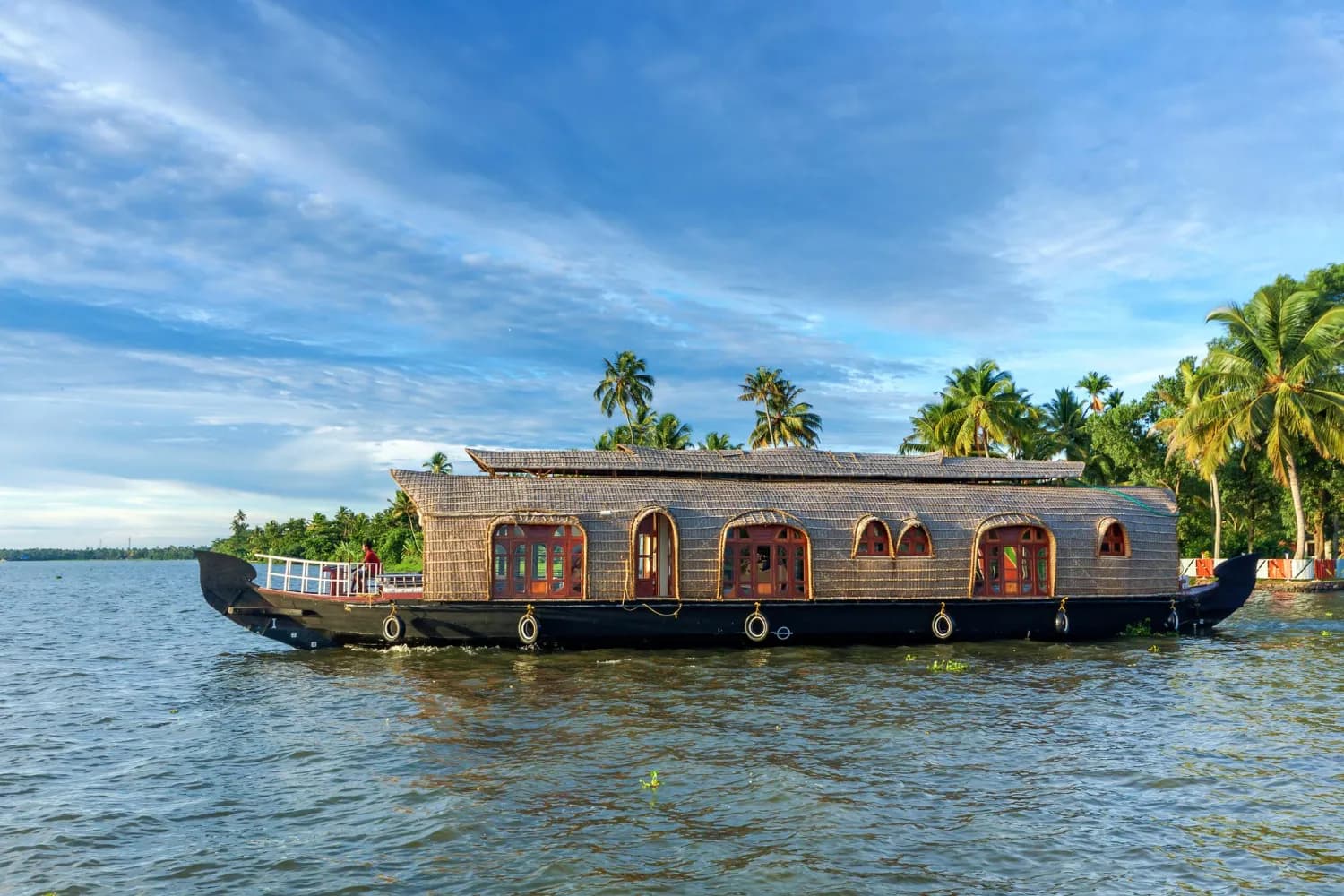
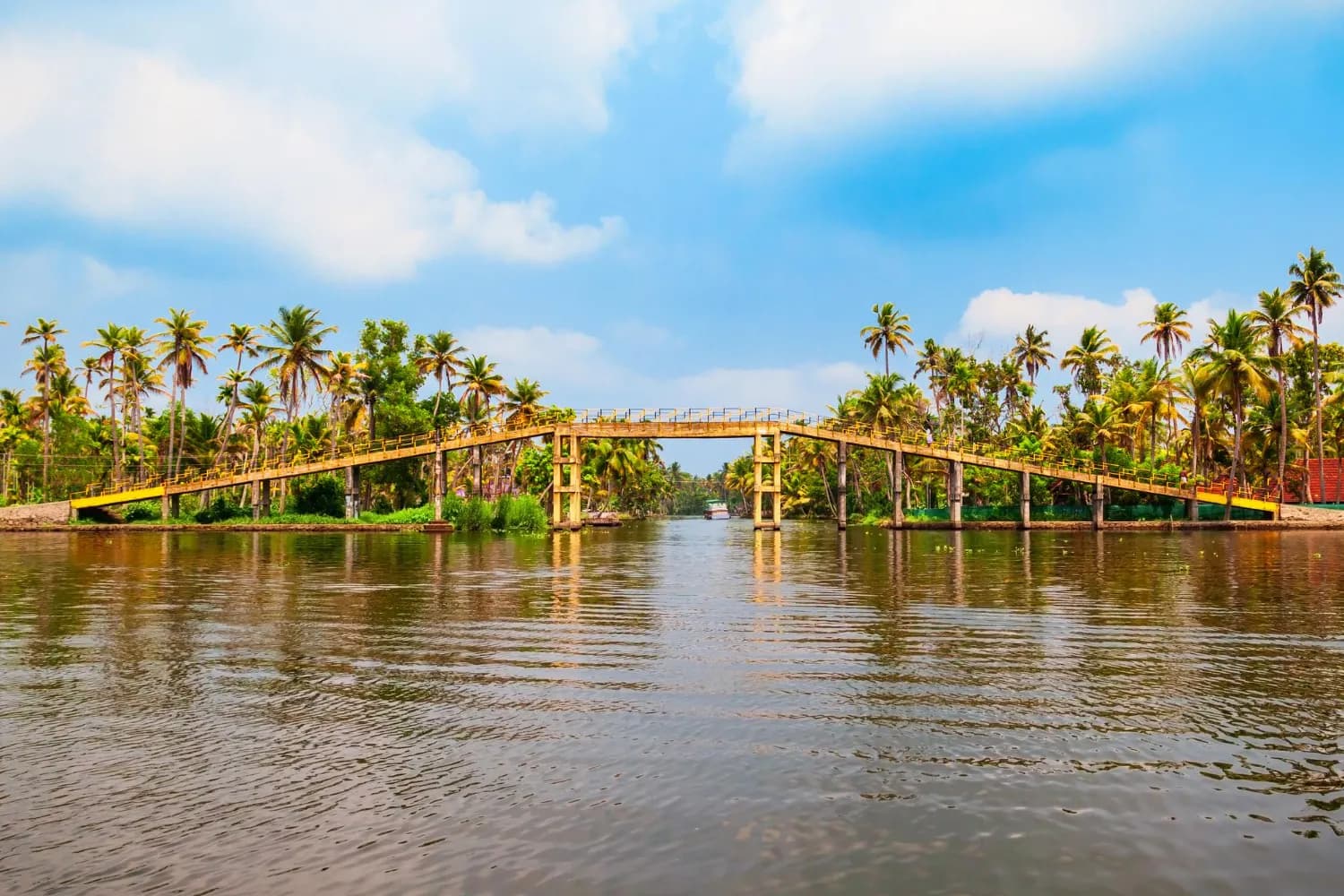
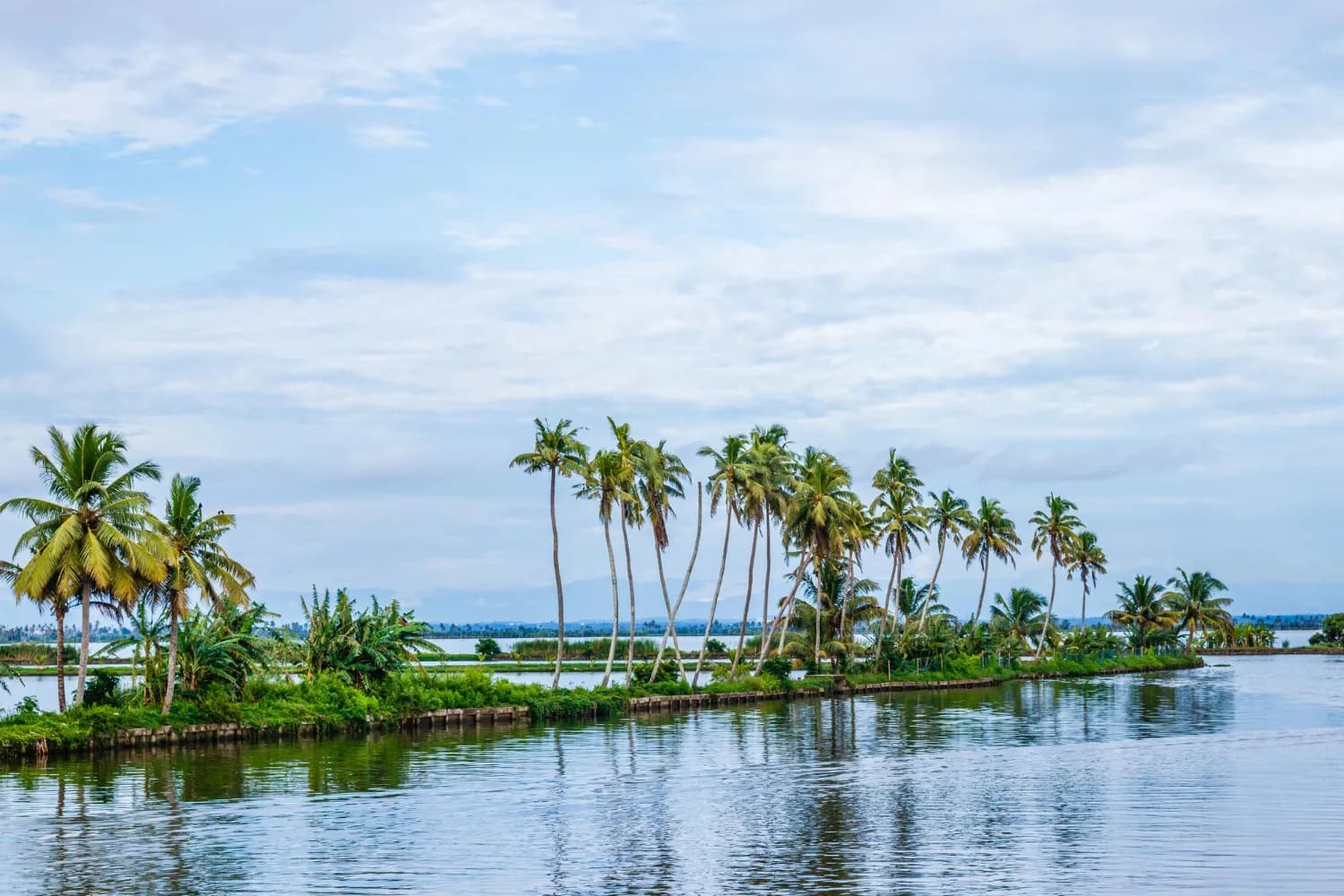
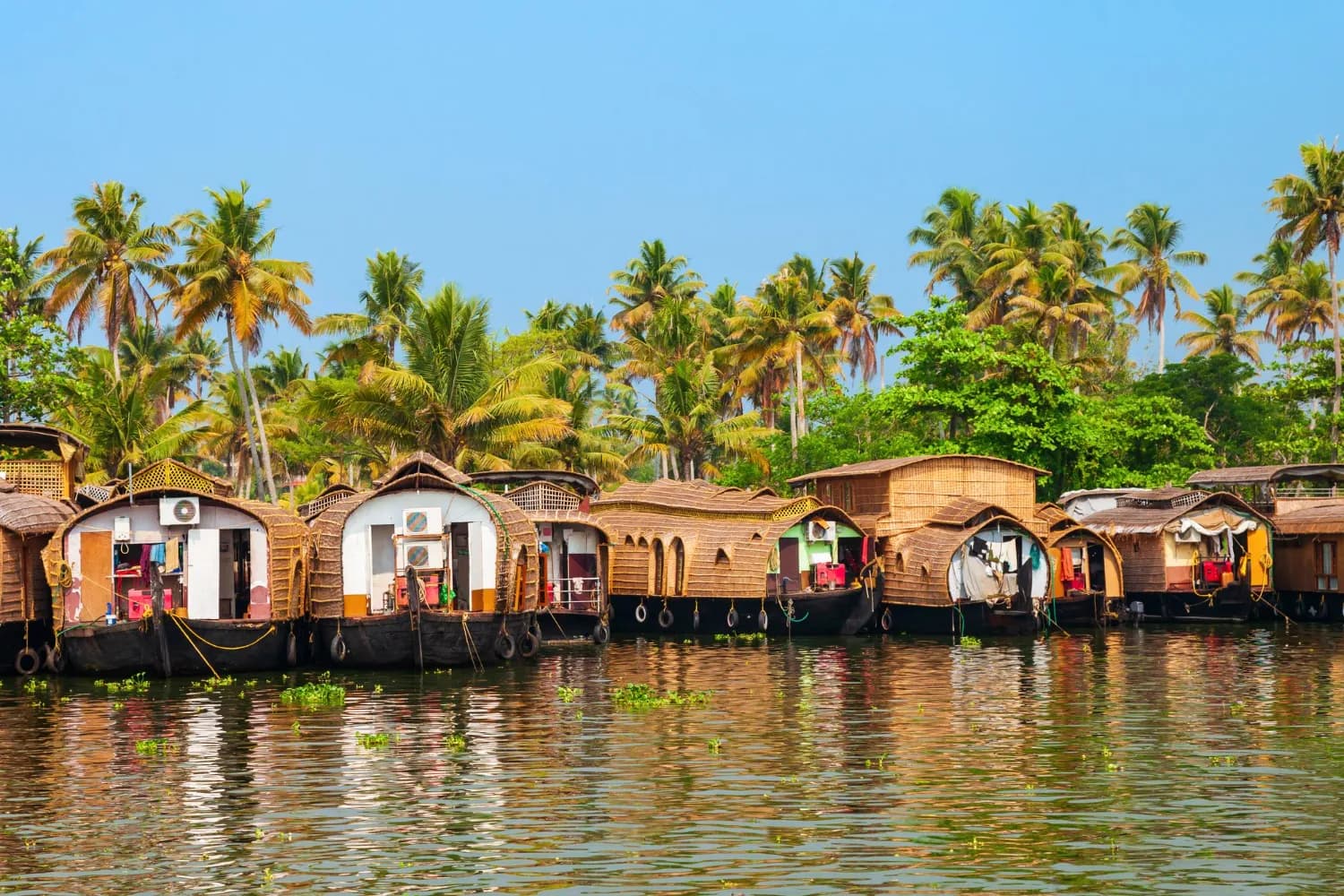
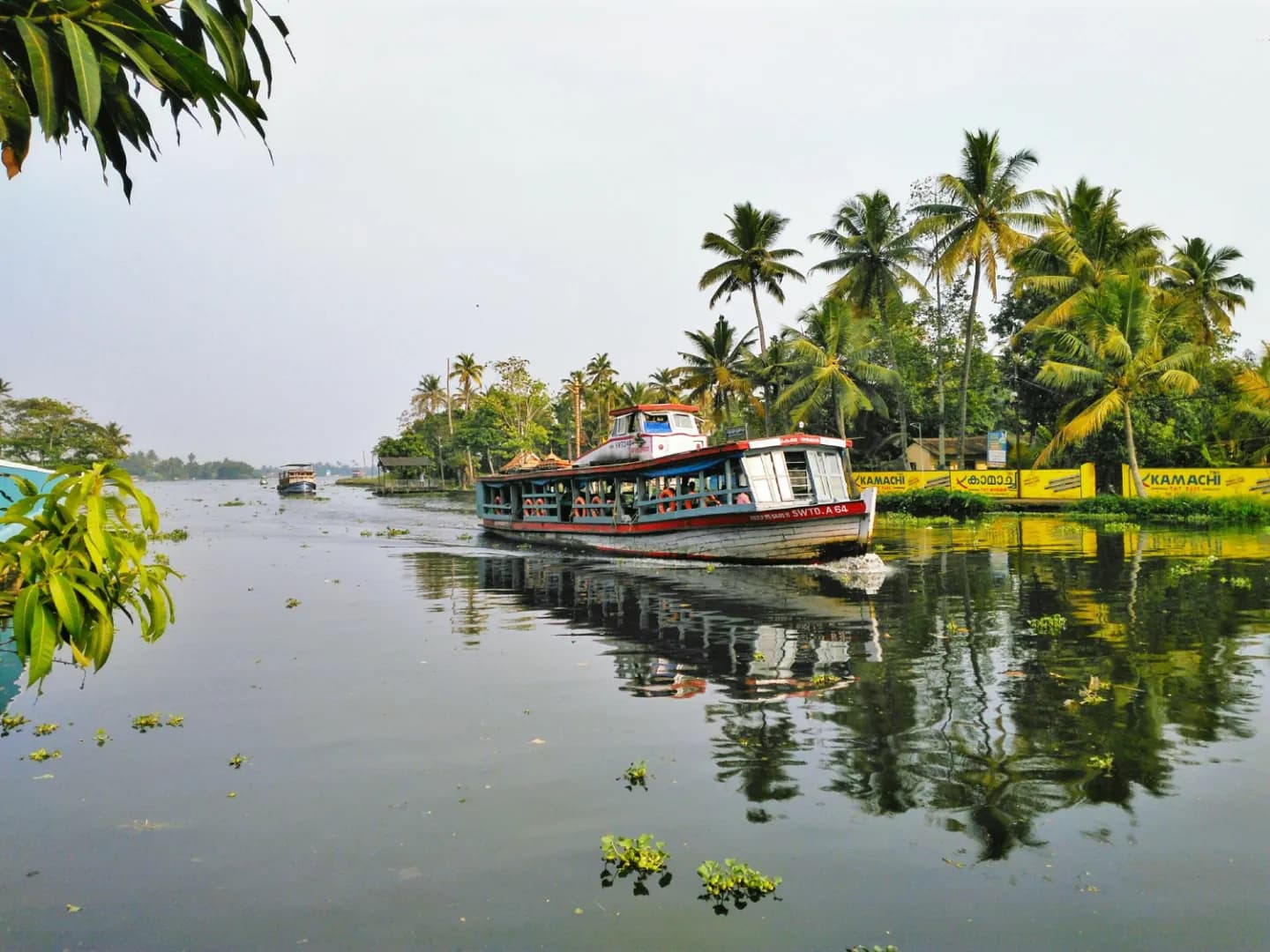
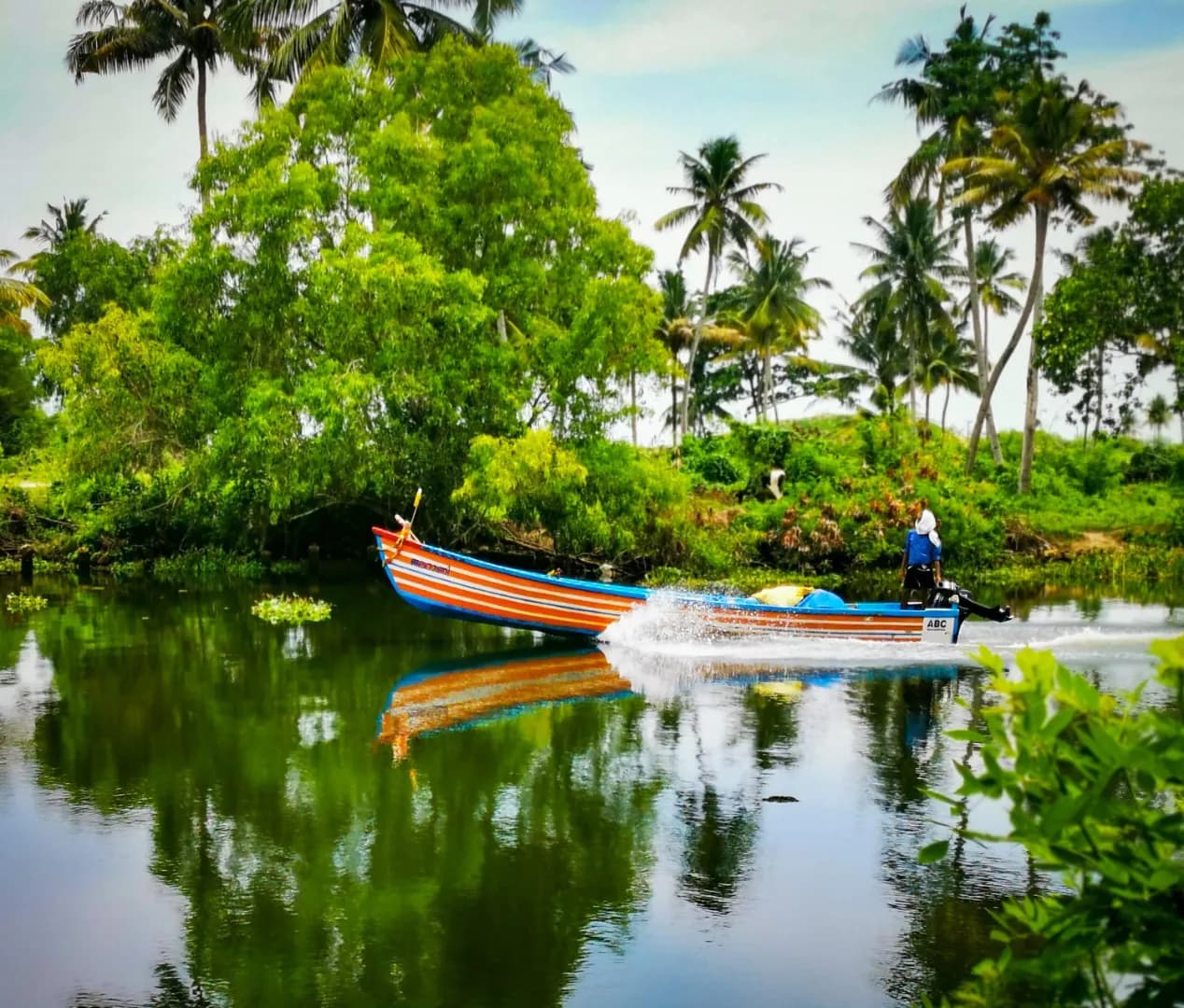
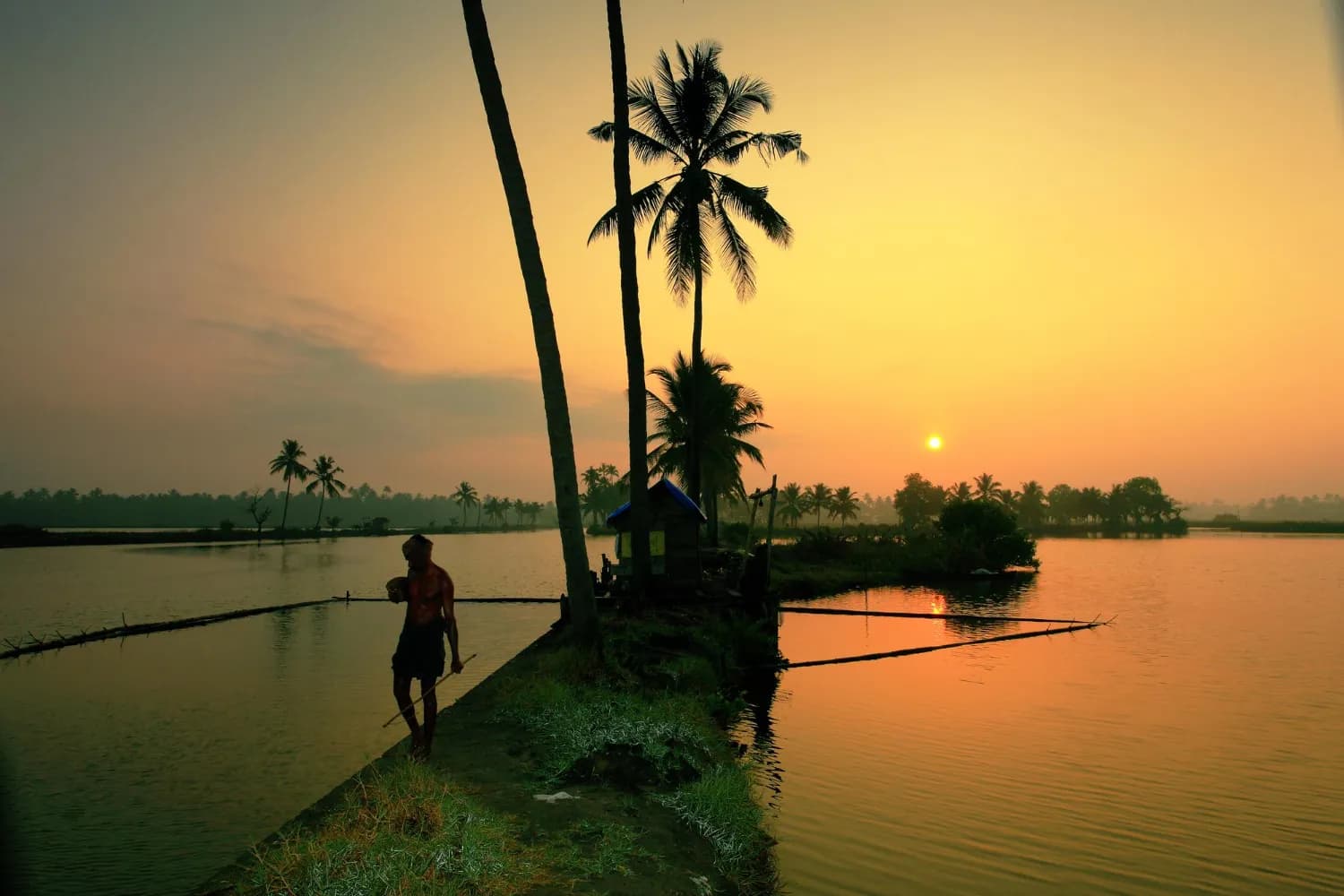
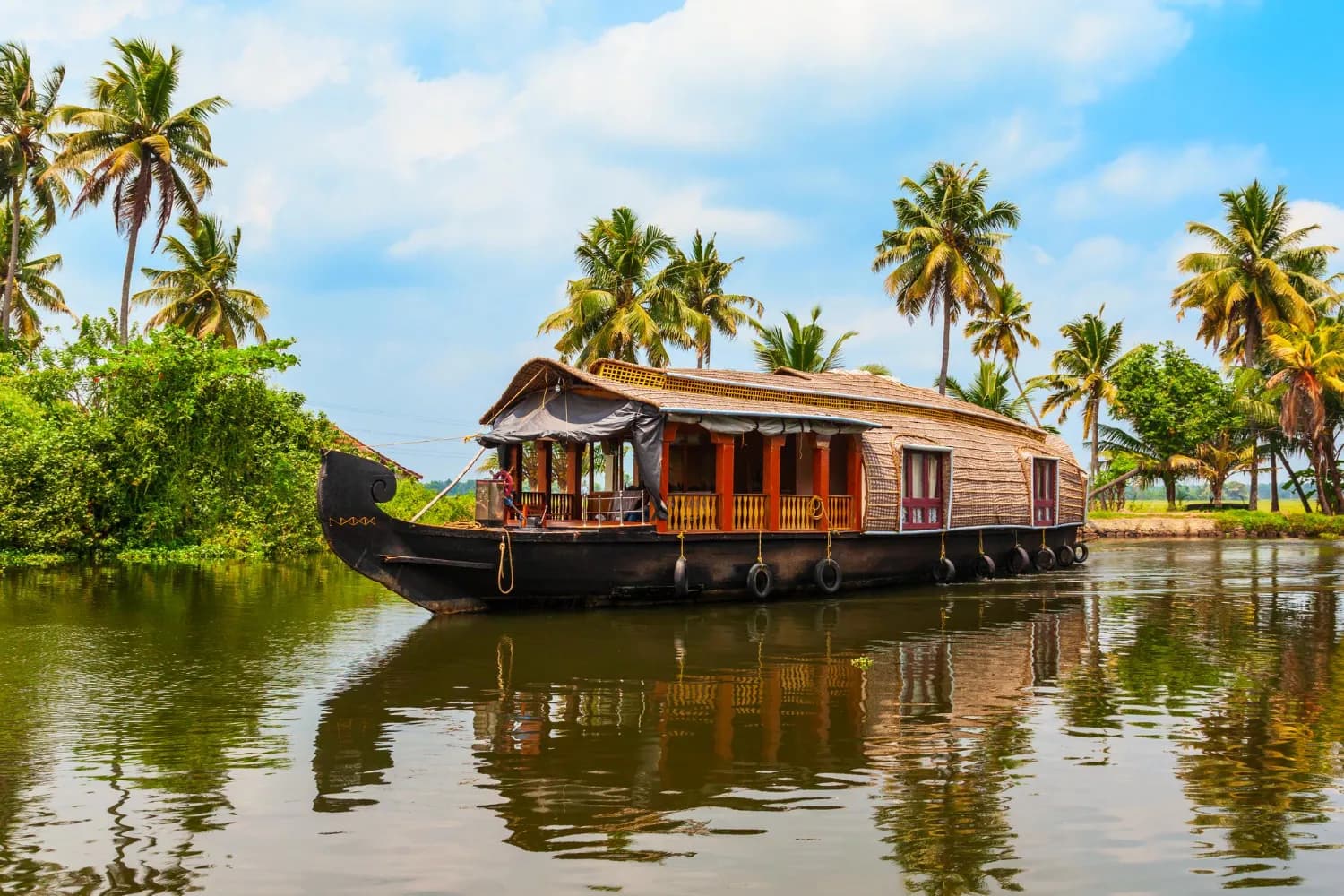
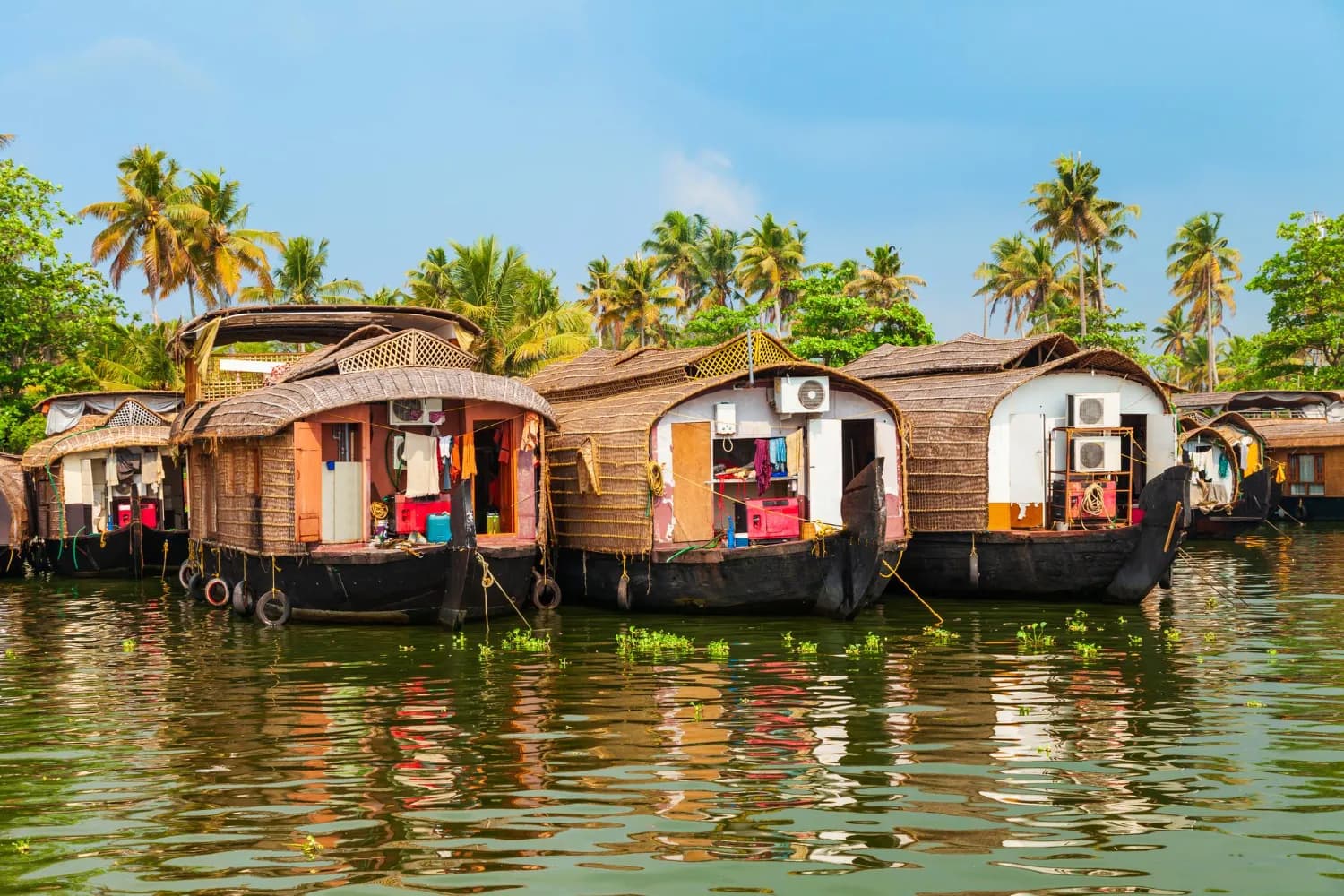
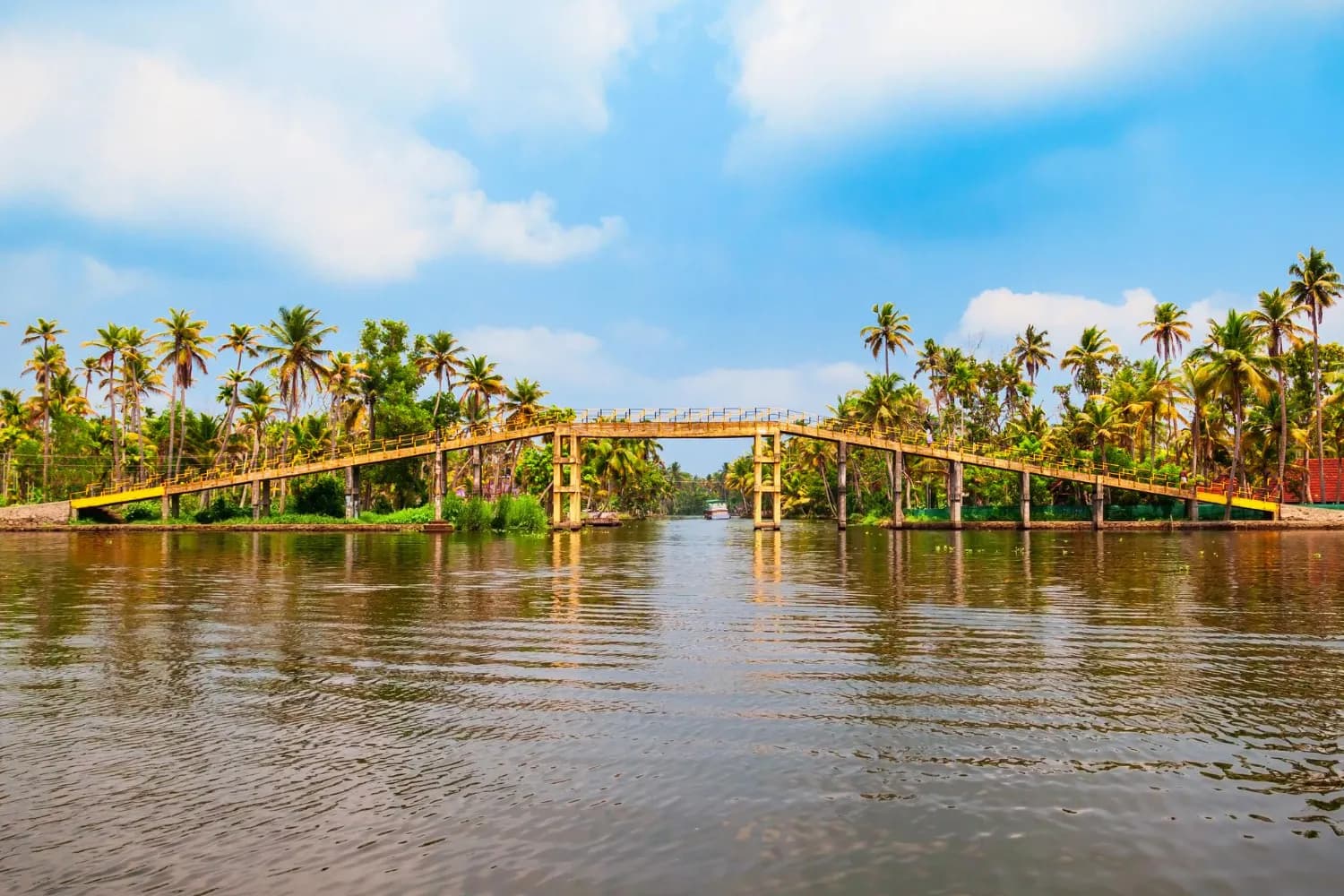
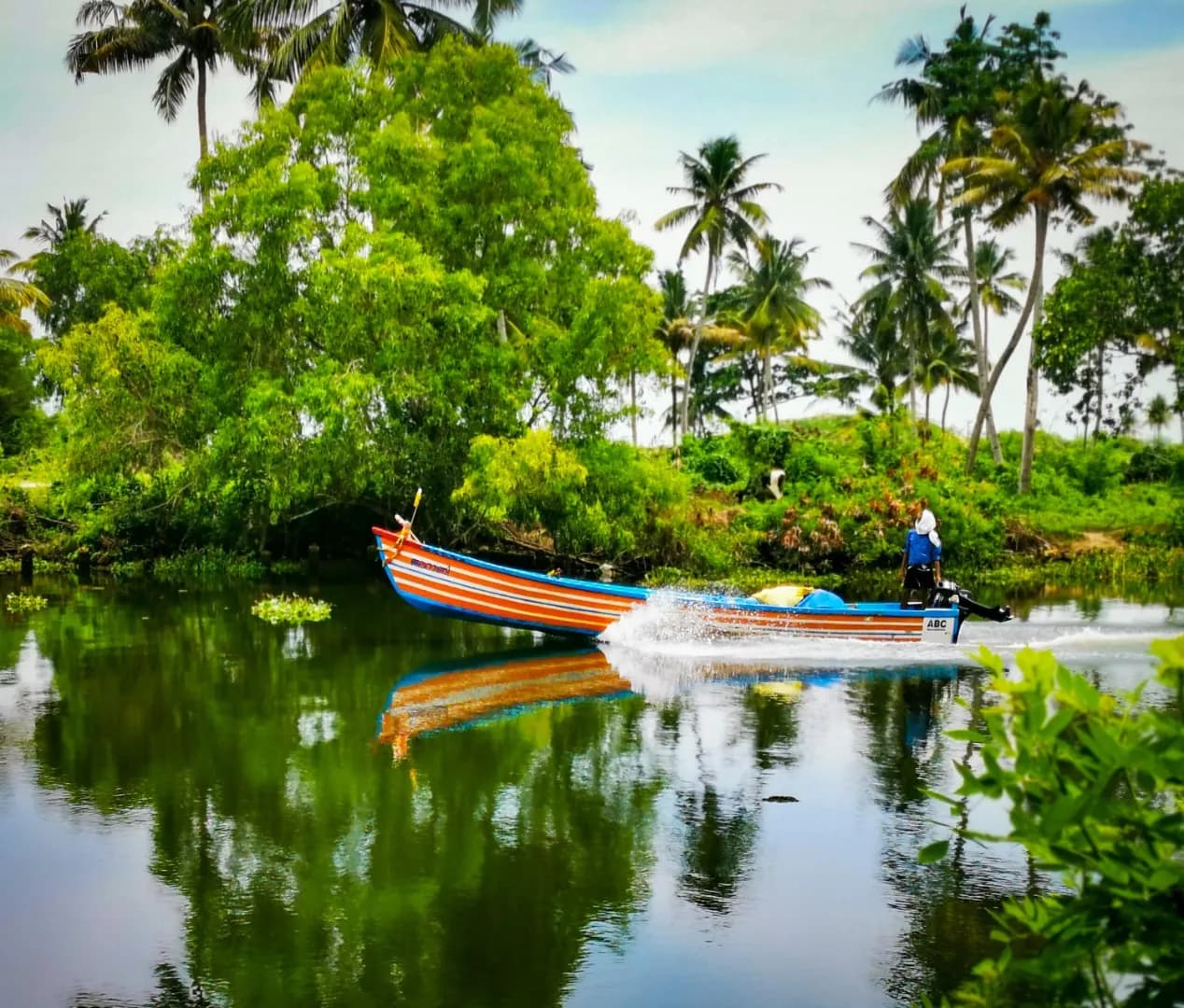
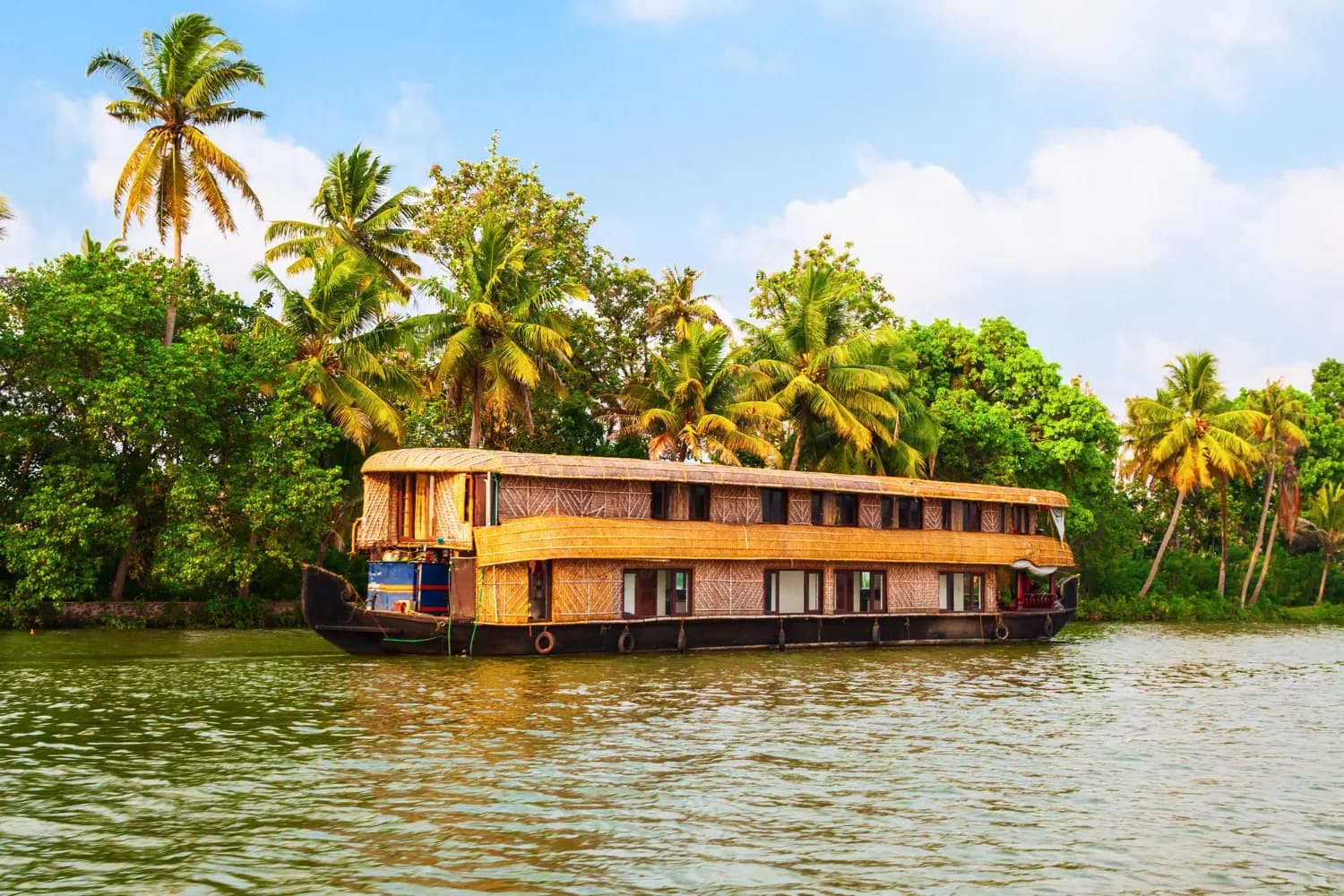
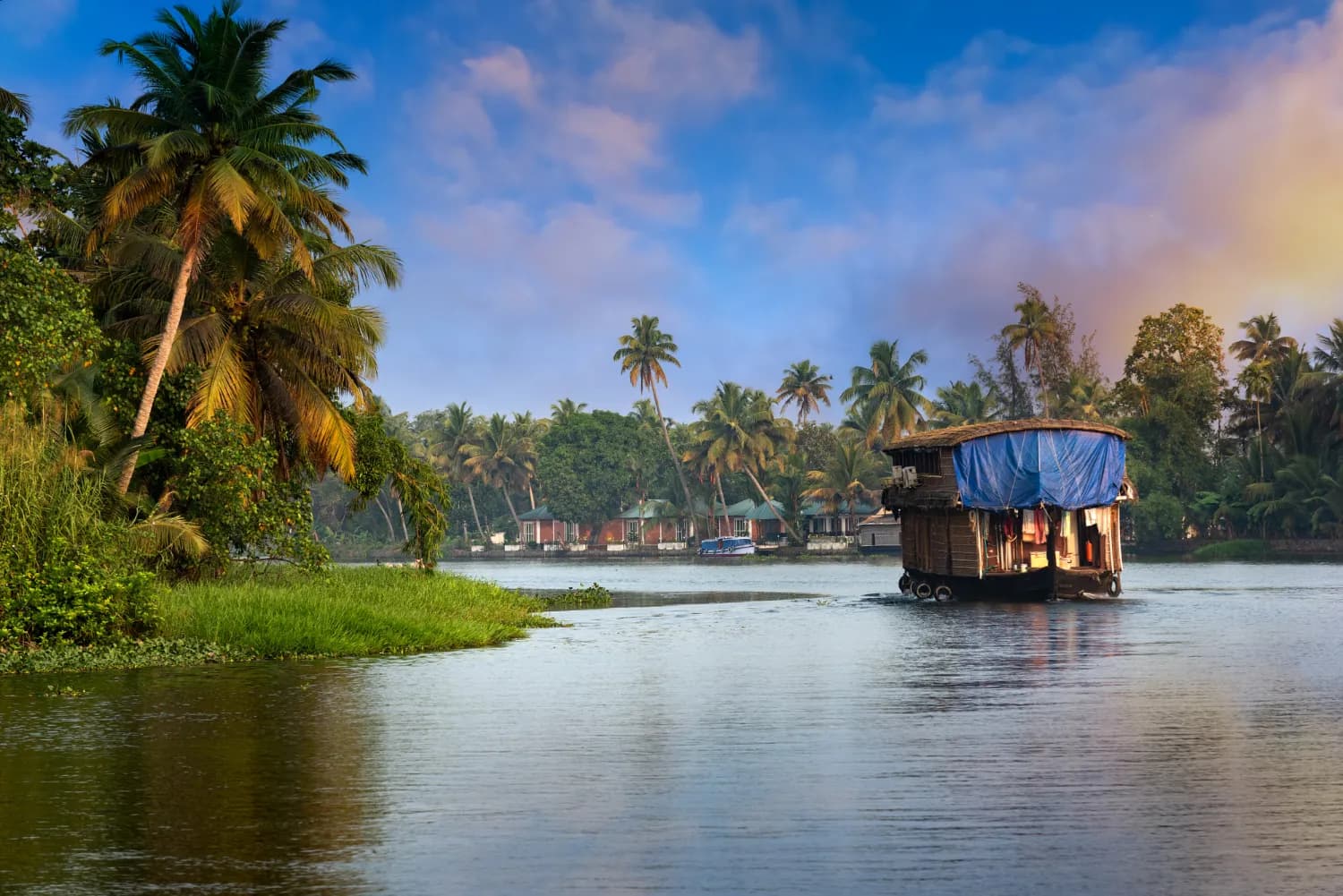
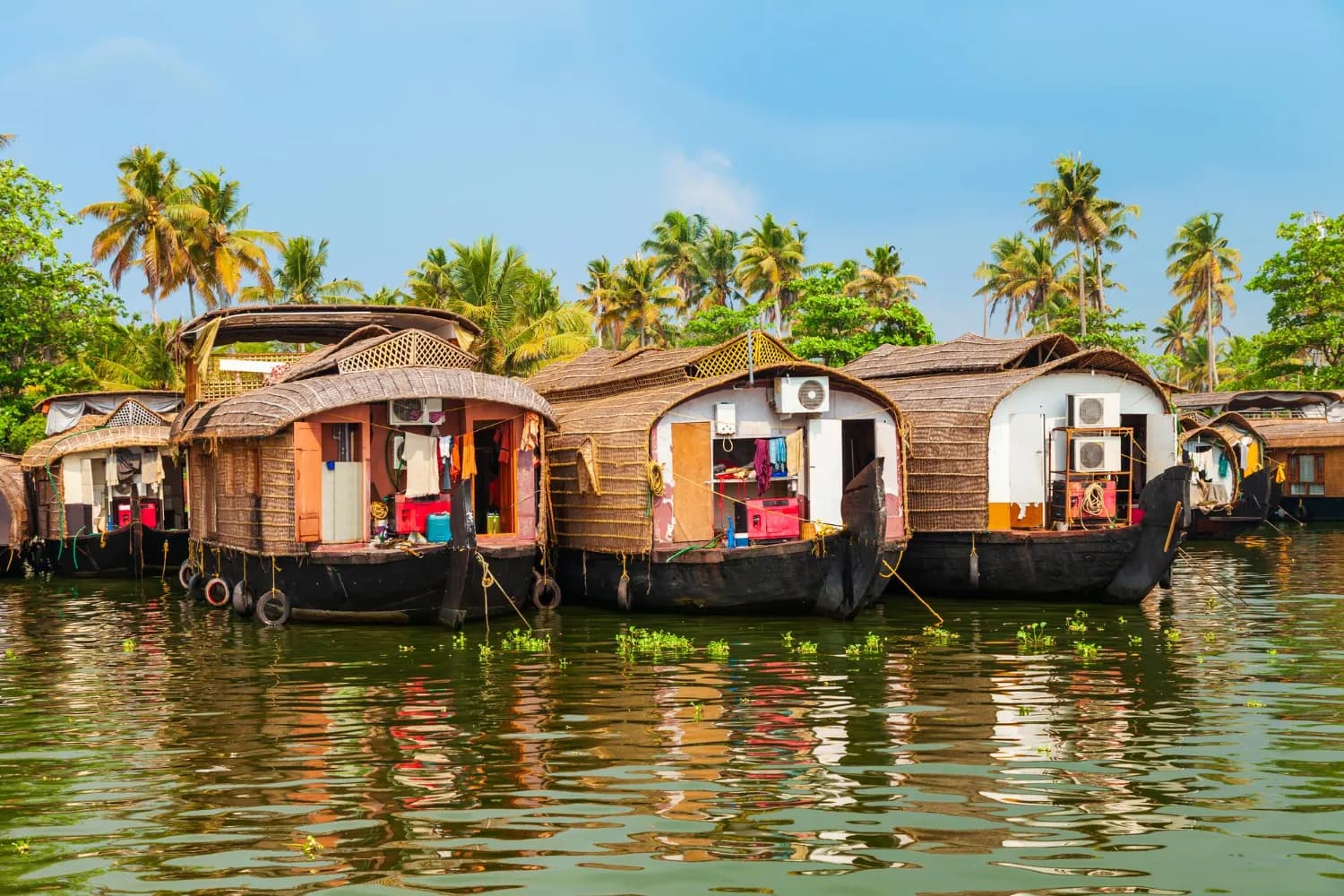
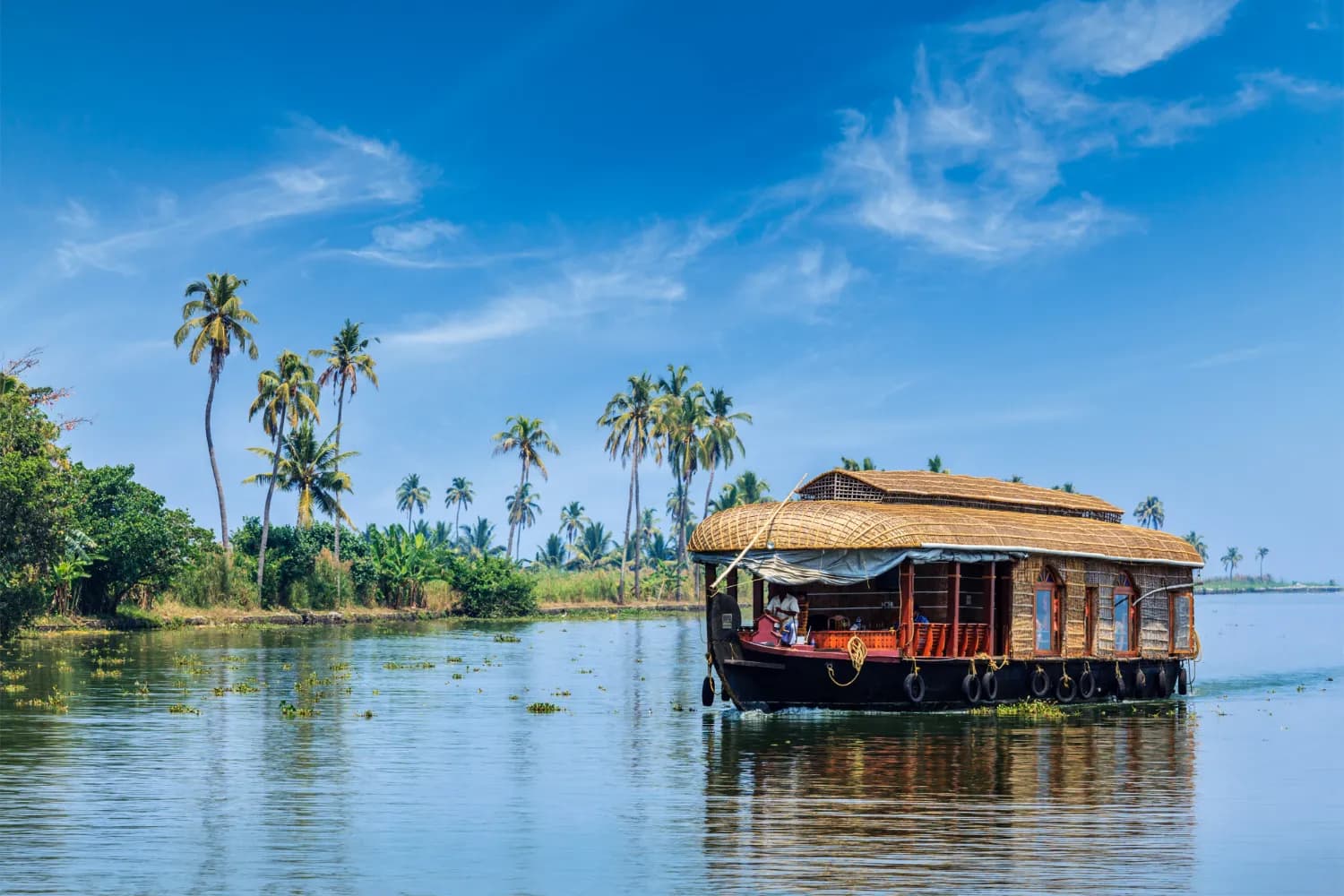
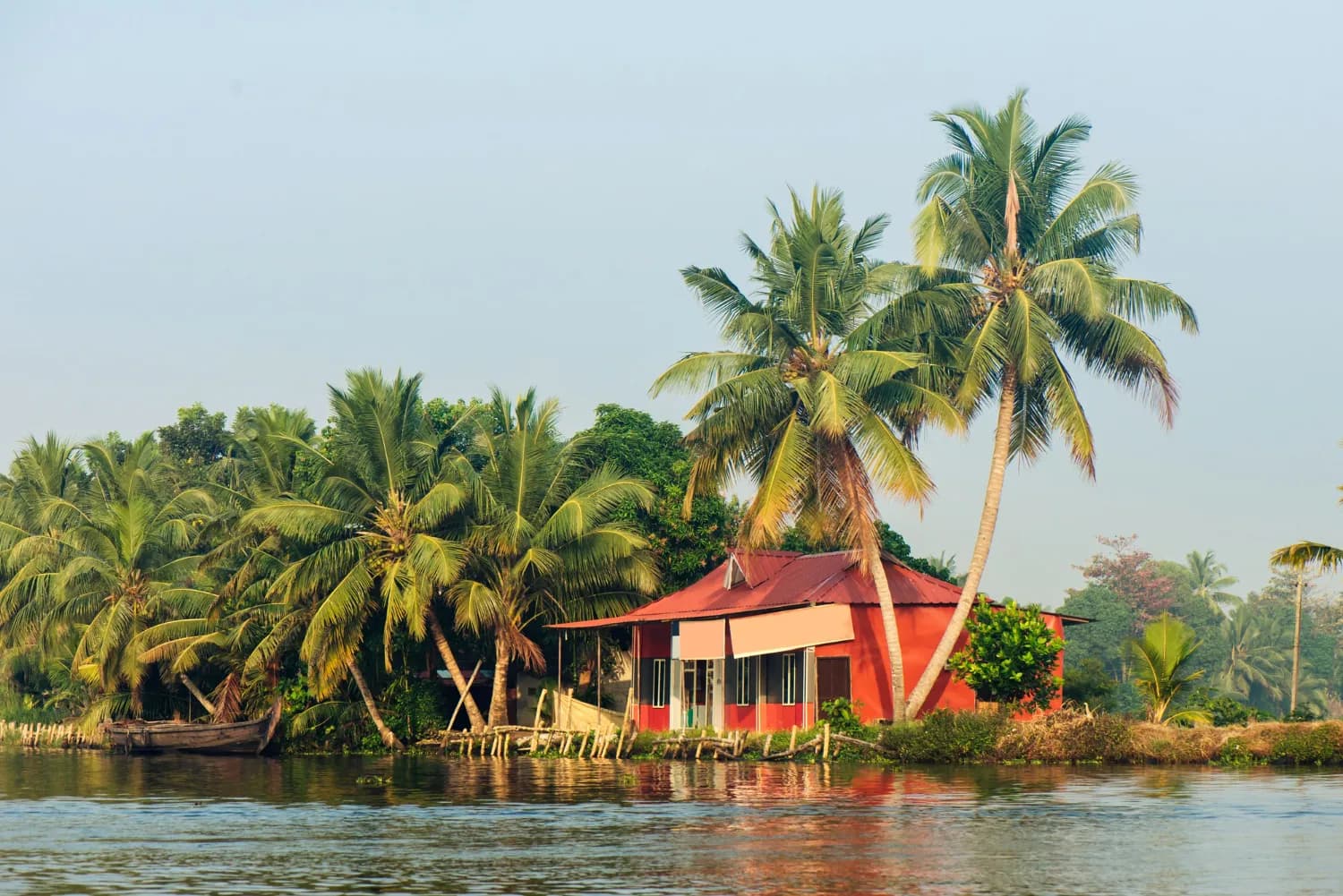
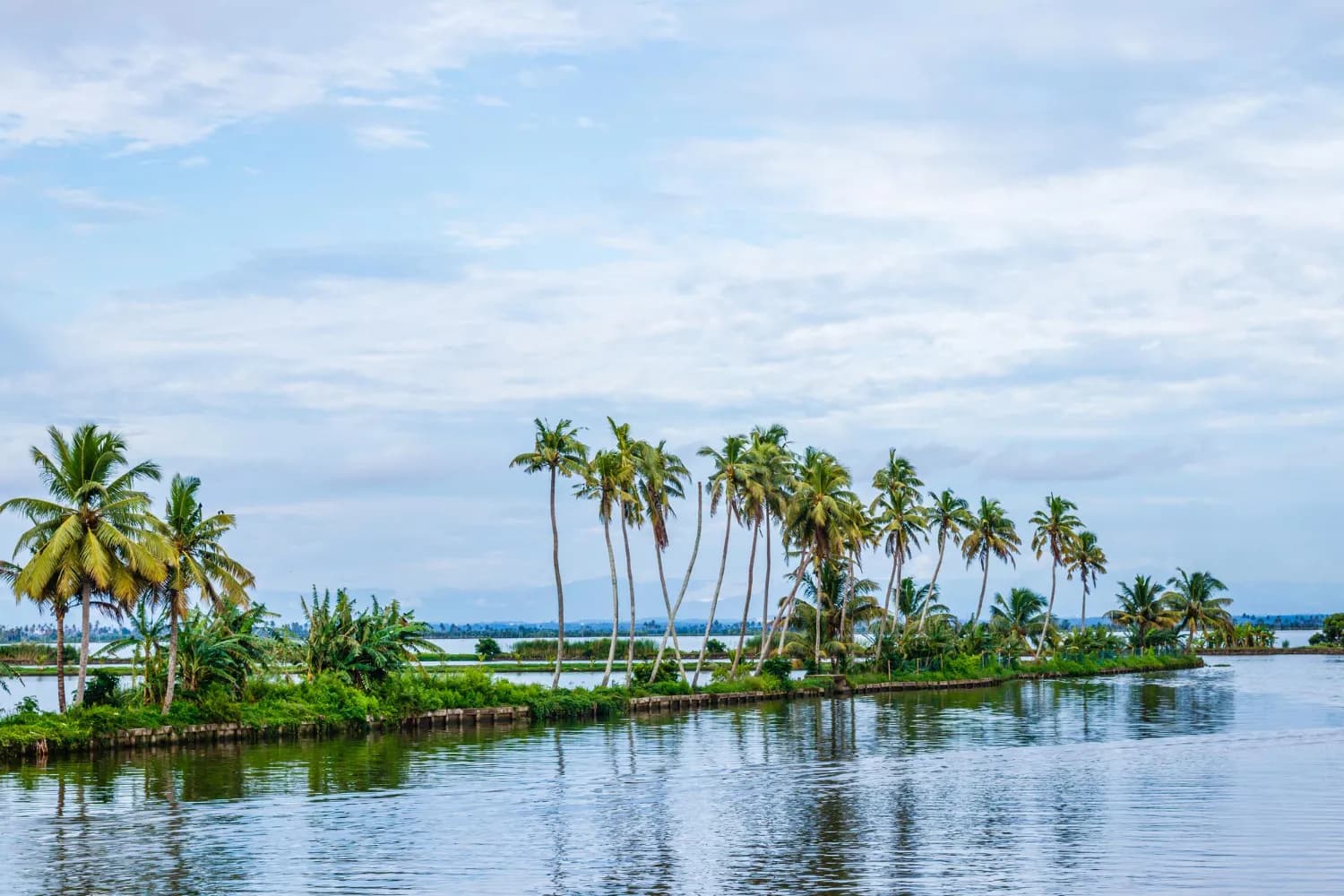
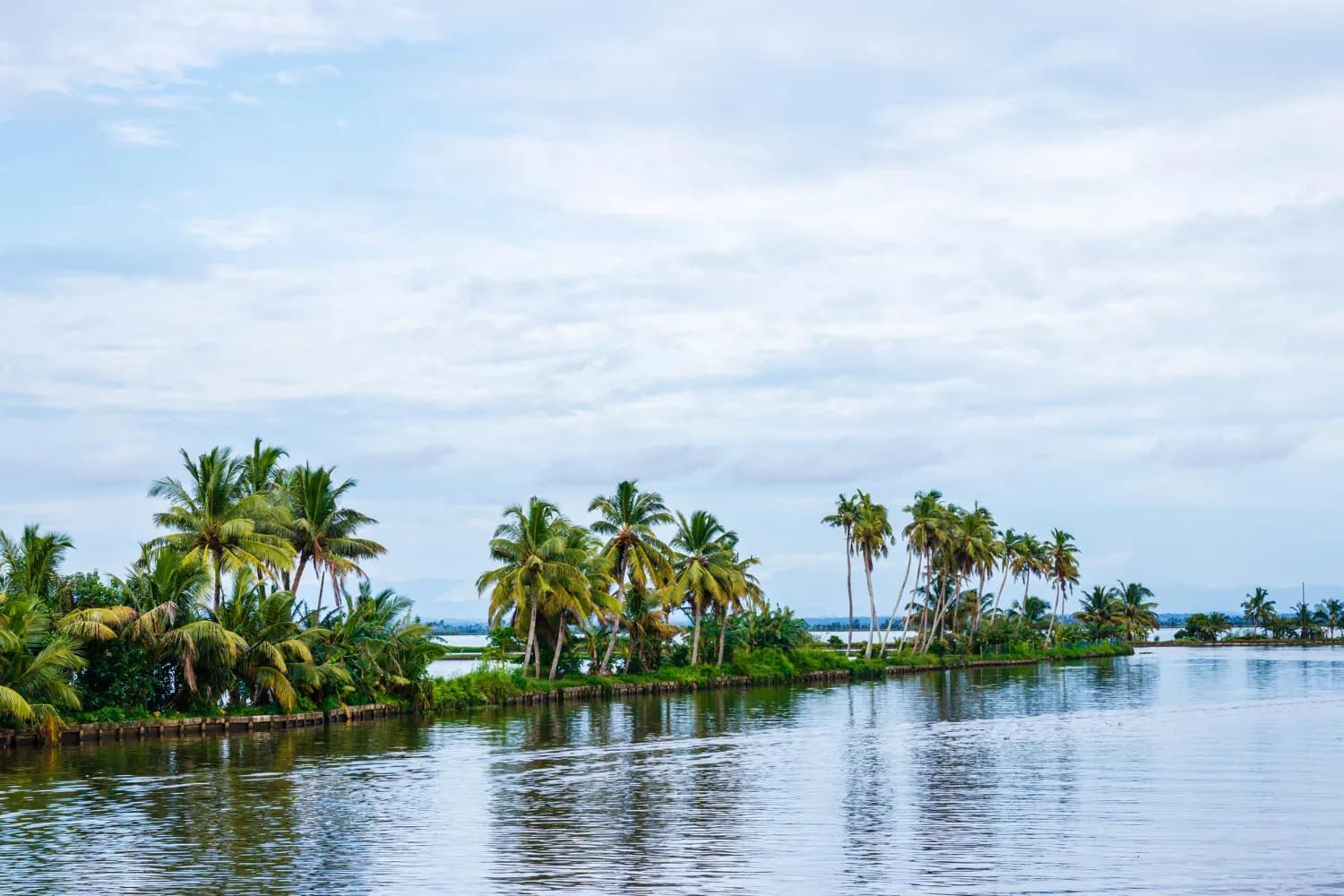
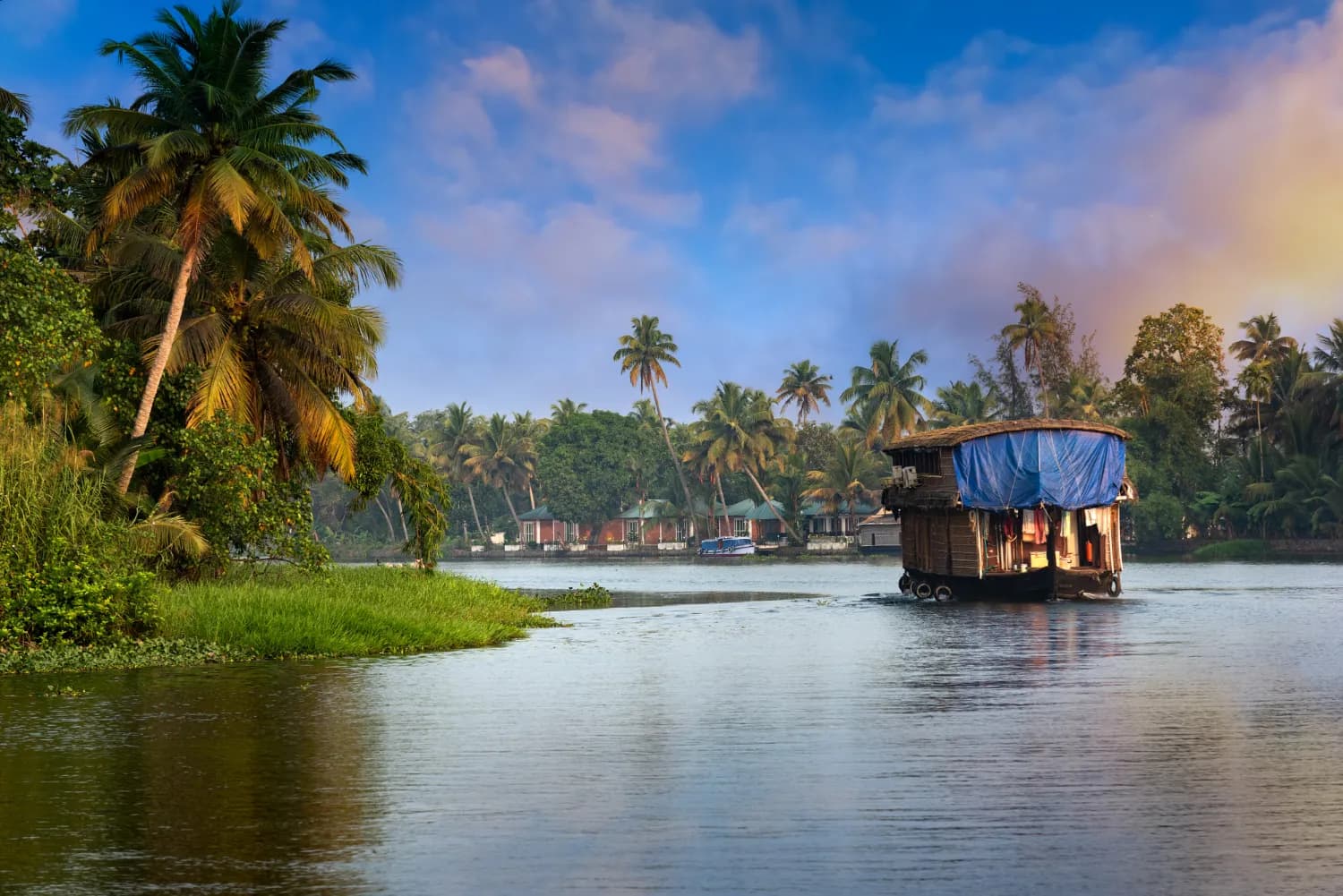
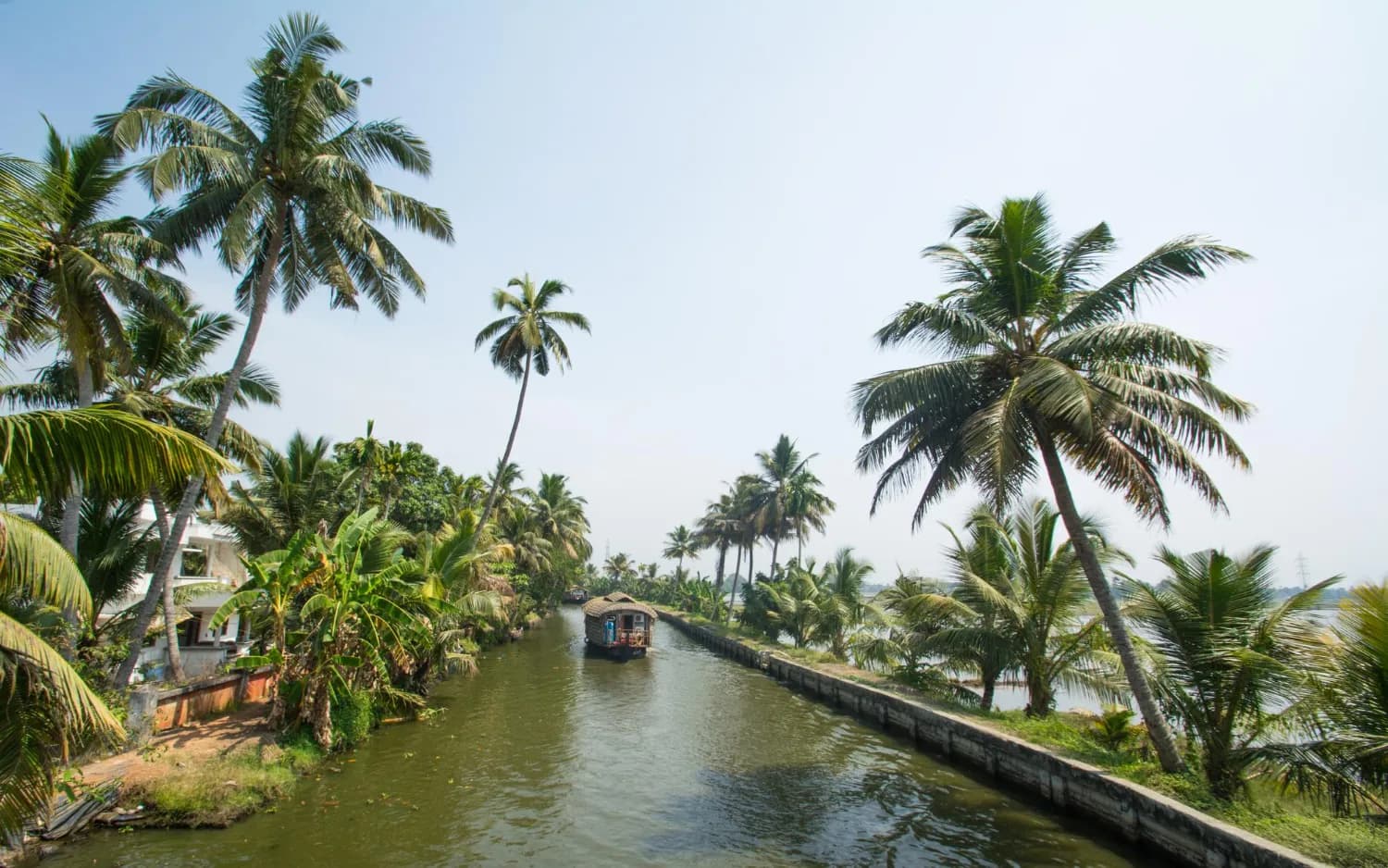
3. Alleppey (Alappuzha): Dehradun's mountain rivers — the Tons, the Asan, the Bindal — are swift and cold and defined by movement. Alleppey Vembanad Lake is the opposite of all these things: still, warm, brackish, and infinitely generous in its beauty. An overnight houseboat drifting through the backwater canal network at golden hour, with paddy fields on both banks and a Kerala feast being prepared in the on-board kitchen, delivers the most complete geographical transformation available to a Dehradun traveller anywhere in India — from mountain river to tropical waterworld in a single day's flight.
Key Attractions:
- Vembanad Lake Overnight Houseboat Cruise
- Punnamada Lake — Nehru Trophy Snake Boat Race Venue
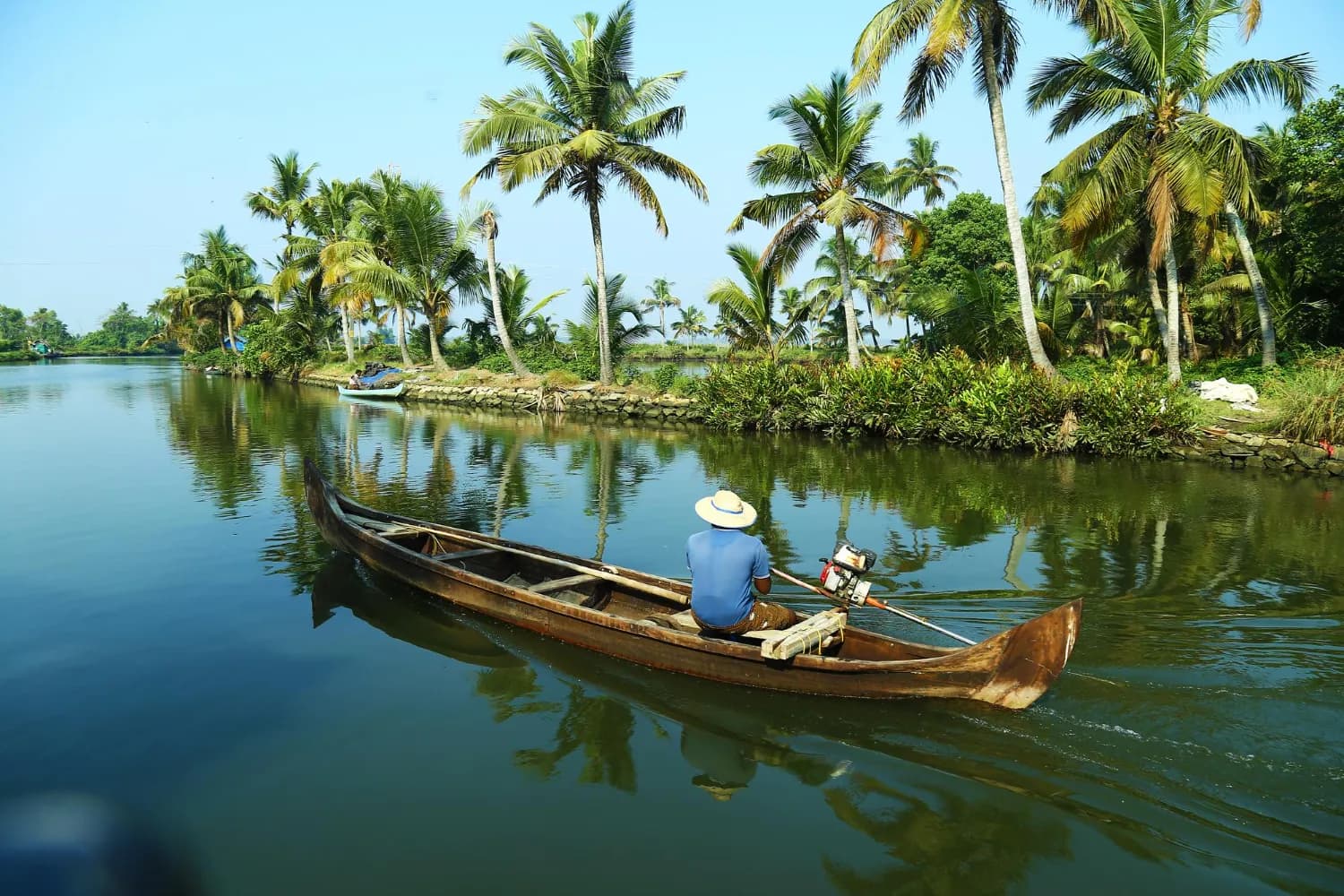
- Kuttanad Backwater Village Canoe Tour
- Alleppey Lighthouse Beach & Promenade
- Pathiramanal Island Bird Watching (Nov–Feb migratory season)
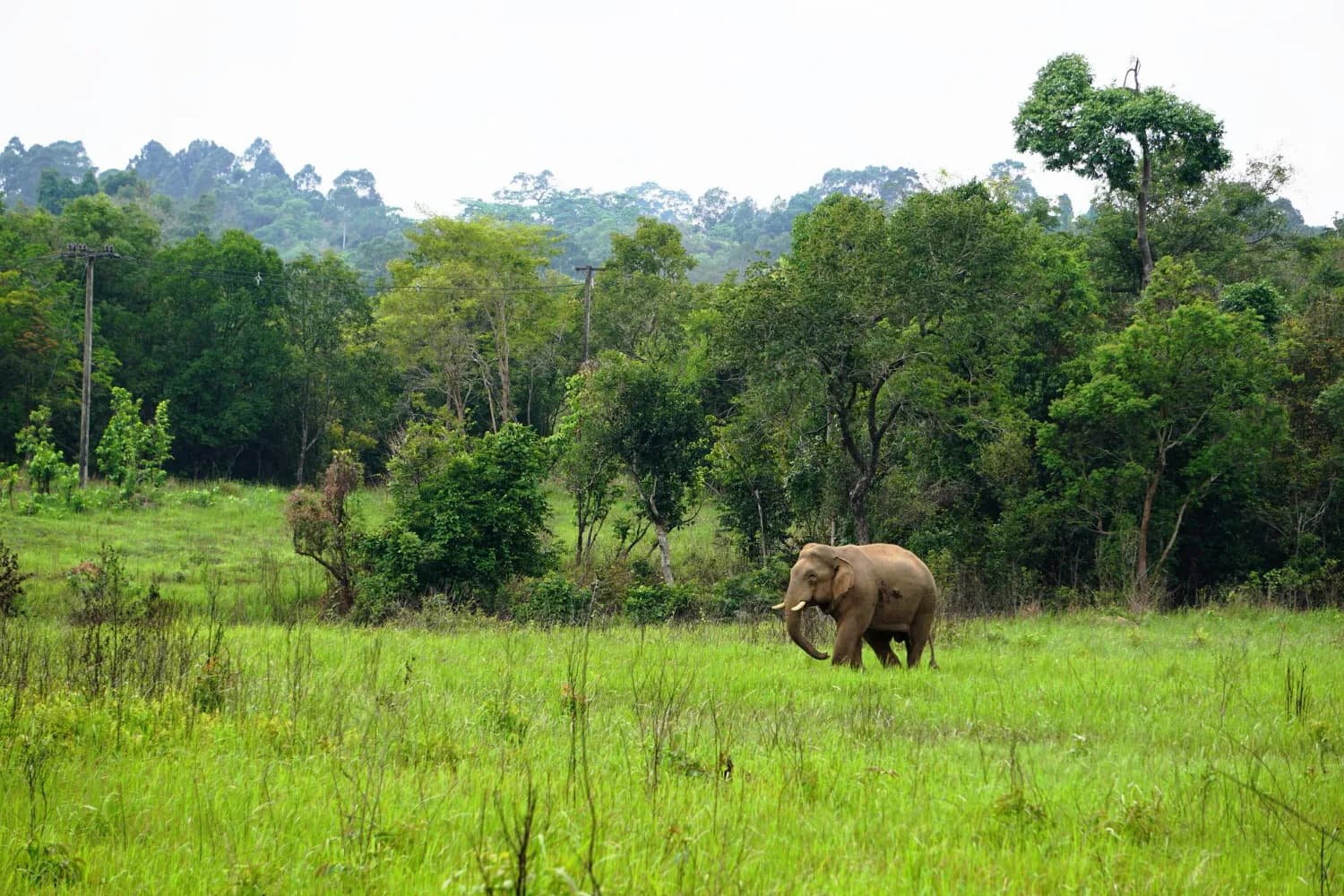
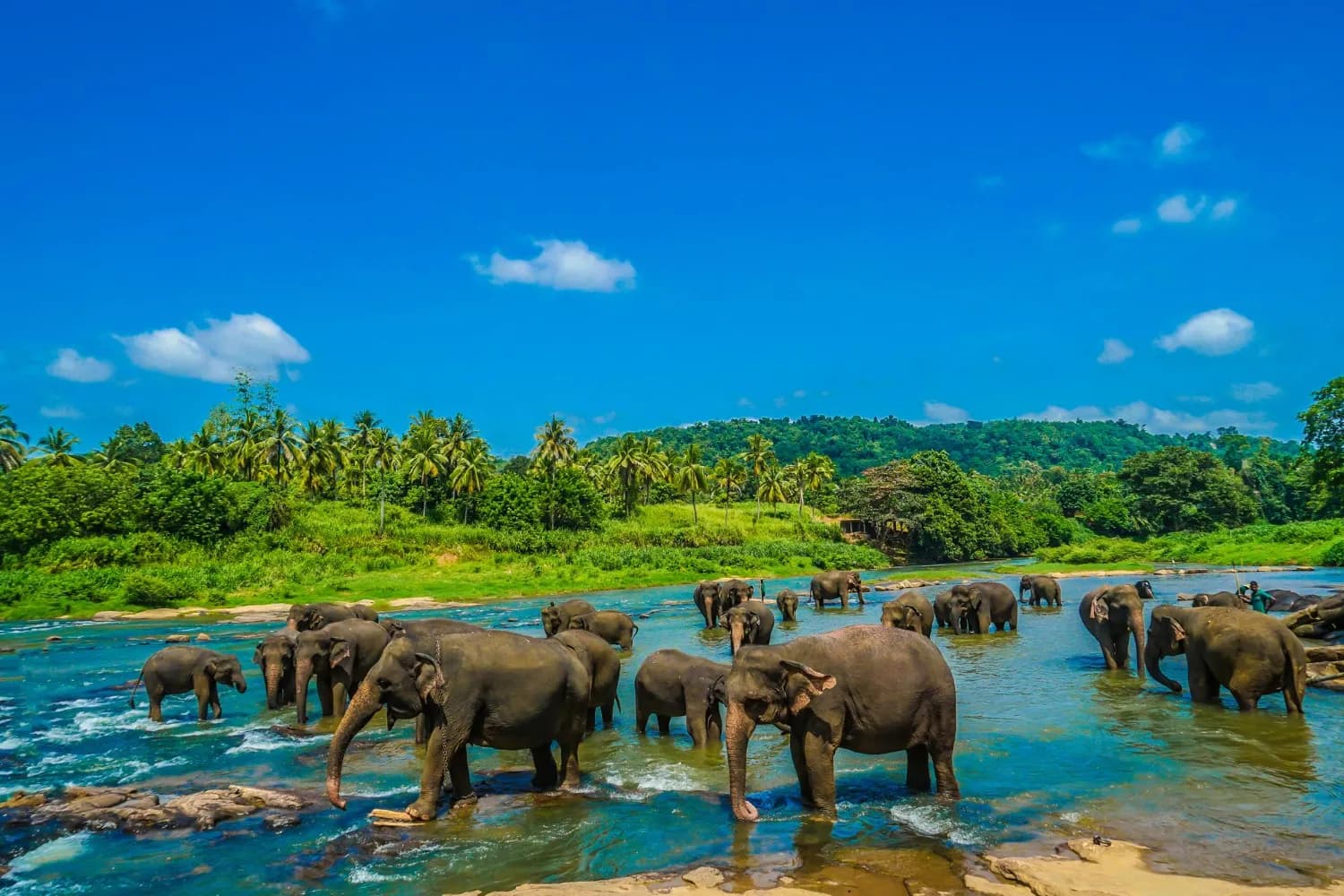
4. Thekkady (Periyar): Dehradun's proximity to Rajaji National Park and the Garhwal wildlife corridors gives its travellers an authentic appreciation for forest ecosystems and wildlife conservation. Thekkady have Periyar Tiger Reserve — experienced via the unique lake boat safari format — delivers a South Indian wildlife encounter of the highest order, where wild elephants, gaur, wild boar, and kingfishers are routinely sighted from the water's surface. The surrounding cardamom and pepper estates add a fragrant, distinctly Keralan dimension to the wildlife experience.
Key Attractions:
- Periyar Lake (elephants, gaur, kingfishers, otters)
- Cardamom & Pepper Spice Plantation Walk
- Bamboo Rafting on the Periyar River
- Kalaripayattu Martial Arts & Kathakali Cultural Show
- Mangaladevi Temple Trek (seasonal, border forest)
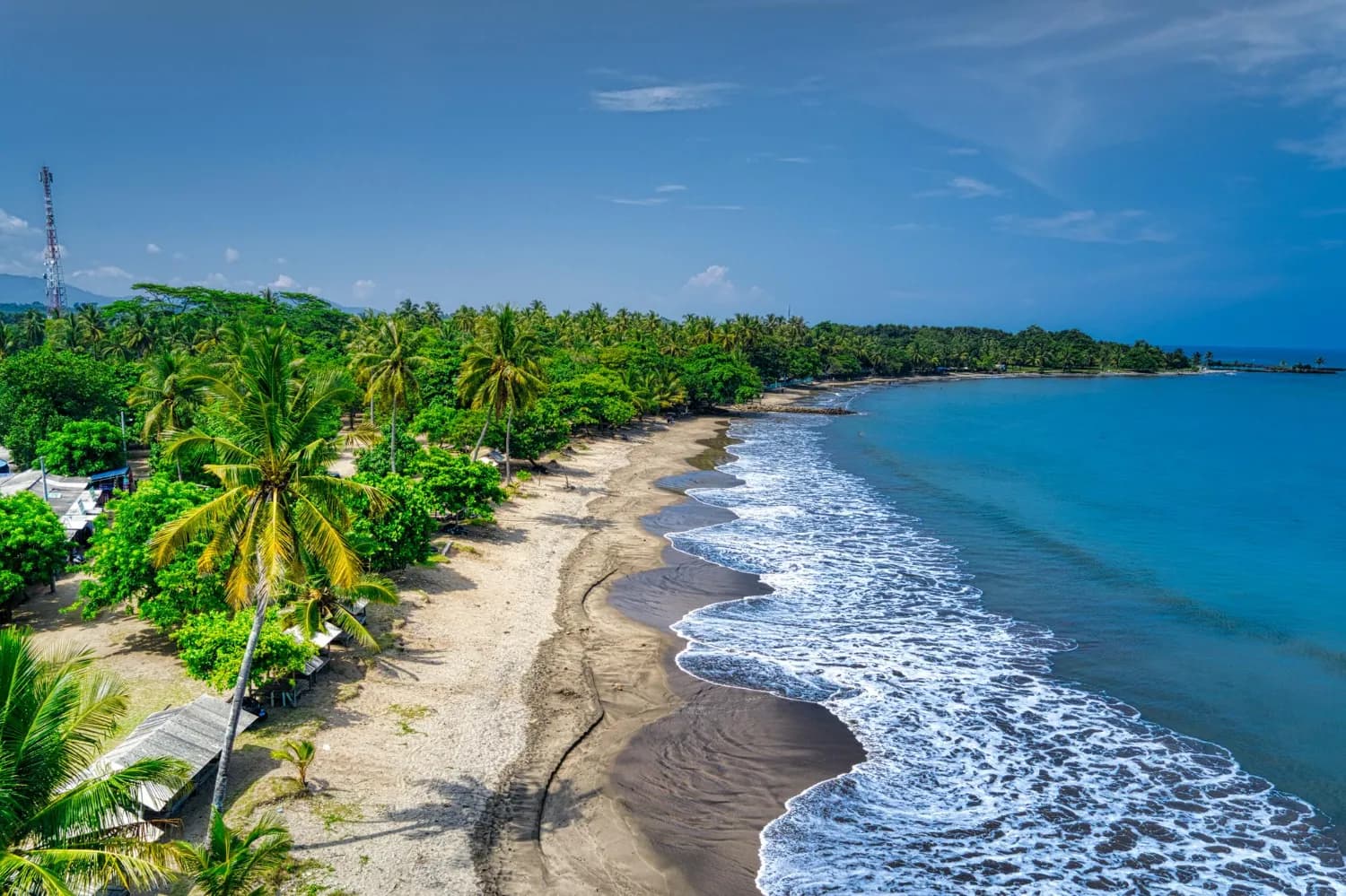
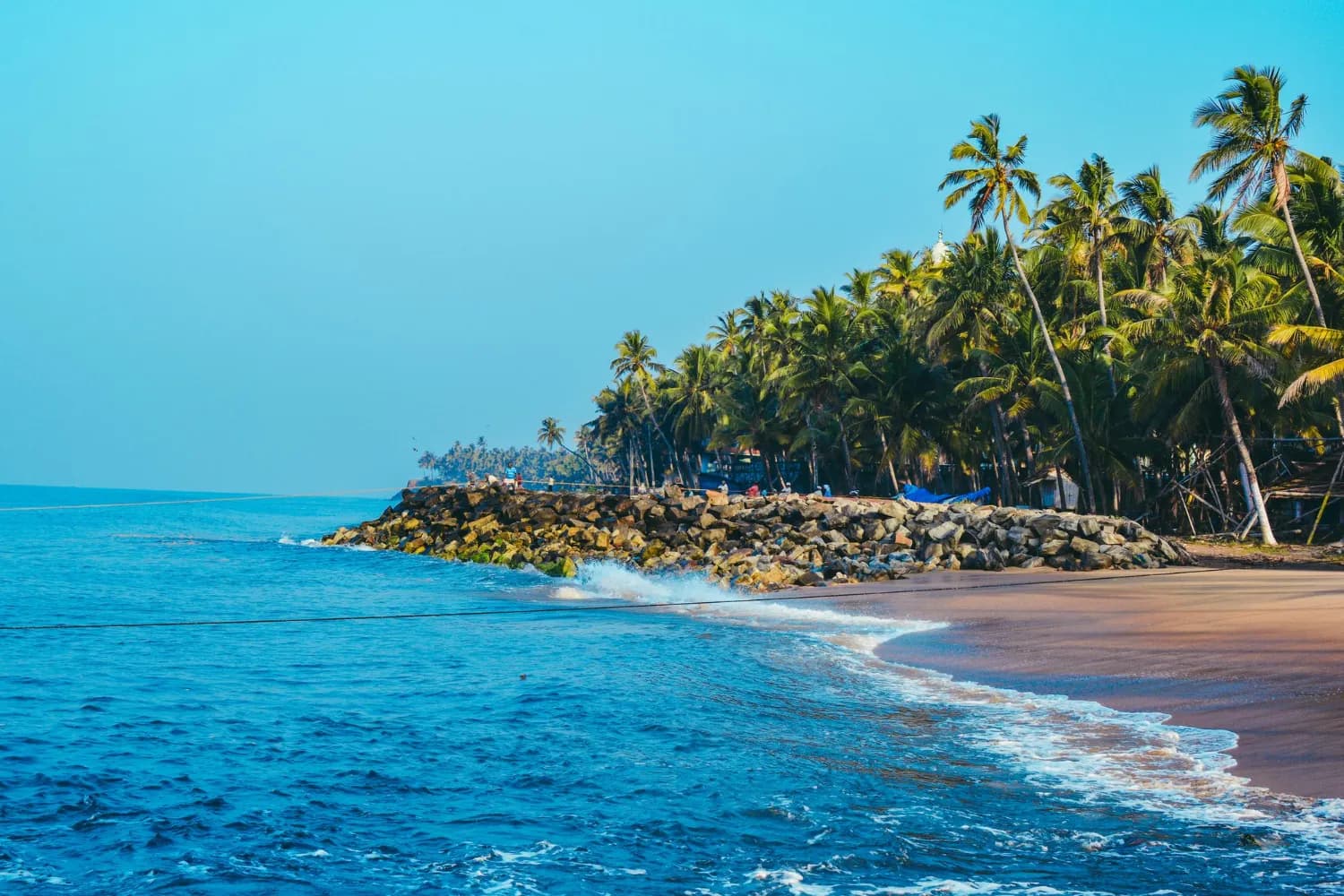
5. Varkala & Kovalam: Dehradun is landlocked — the nearest sea is a journey of many hours in any direction. Kerala's Arabian Sea coast, experienced for the first time at Varkala's dramatic laterite cliffs or Kovalam's famous crescent beach, delivers the coastal revelation that landlocked North Indian travellers consistently describe as their most lasting Kerala memory. The warmth of the sea, the particular gold of a South Indian beach sunset, and the freedom of swimming in the Arabian Sea are experiences that simply do not exist in Uttarakhand — and that Kerala delivers with spectacular, unhurried generosity.
Key Attractions:
- Varkala Cliff & North Cliff Promenade (47-metre laterite clifftop)
- Papanasam Beach — Natural Mineral Springs, Varkala
- Kovalam Beach — Kerala's Most Famous Beach
- Padmanabhaswamy Temple, Thiruvananthapuram (20 km from Kovalam)
- Janardanaswami Temple, Varkala (2,000 years old)
Kerala vs Uttarakhand — Two Green Worlds Compared
Dehradun travellers approach Kerala with a specific frame of reference — one shaped by living between the Doon Valley's sal forests, the Garhwal Himalayas' snow-capped peaks, and some of India's finest hill station scenery. This comparison is designed to help Dehradun's experienced nature and hill-station travellers understand exactly what Kerala's natural world offers that is genuinely different — and equally magnificent — alongside what the two regions share.
- The Mountains: Uttarakhand's Garhwal Himalayas are young, dramatic, and perpetually snow-capped — among the world's highest and most geologically active mountain ranges. Kerala's Western Ghats are ancient, rounded, and perpetually forested — among the world's oldest mountain systems and most biodiverse. The Himalayas inspire awe through sheer scale and altitude; the Western Ghats inspire wonder through the extraordinary density and variety of life they contain. Anamudi (2,695 m) is Kerala's highest peak — modest by Himalayan standards but set in a landscape of tea, cardamom, and rare mountain grasslands that Kedarnath's glacial terrain cannot replicate.
- The Forests: Uttarakhand's forests are primarily temperate broadleaf, conifer, and alpine — oak, rhododendron, pine, and deodar in distinctive altitudinal bands. Kerala's Western Ghats forests are tropical wet evergreen and semi-evergreen — a dense, multi-canopy jungle of enormous biodiversity containing over 4,000 plant species, 200 tree species per hectare, and a level of biological complexity that the temperate forests of Uttarakhand, for all their beauty, cannot approach. For a forest lover from Dehradun, walking through Periyar's or Wayanad's jungle is a revelation of what forest can be when given both warmth and abundant rain.
- The Wildlife: Uttarakhand's wildlife highlights include the Bengal tiger (Corbett), the Asian elephant (Rajaji), leopard, sambar, and the barking deer. Kerala shares the tiger and elephant but adds species that have no counterpart in the Himalayas — the lion-tailed macaque, Nilgiri tahr, Malabar giant squirrel, and the Malabar grey hornbill. The coastal addition of dolphins, sea turtles, and the rich marine ecosystems of the Arabian Sea and Lakshadweep extends Kerala's wildlife canvas into dimensions that Uttarakhand simply cannot match.
- The Rivers: Uttarakhand's rivers — the Ganga, Yamuna, Tons, Alaknanda — are sacred, swift, and cold, rushing down from glacial sources through steep Himalayan gorges. Kerala's rivers are slower, broader, and warmer — the Periyar, Chalakudy, and Pamba flowing through dense jungle before fanning into the backwater network. Both are essential to the cultures that have grown beside them, but the river experience in Kerala is one of depth and slowness rather than power and speed — a different and equally rewarding relationship with moving water.
- The Seasons: Uttarakhand's winter produces snow at altitude and crisp, clear Doon Valley days. Kerala's winter is warm, sunny, and perfect. Uttarakhand's monsoon is beautiful and dramatic in the Doon Valley. Kerala's monsoon is extraordinary — the most powerful in India — and the landscape transformation it produces is the most dramatic natural seasonal change available anywhere in the country outside the Northeast. For Dehradun travellers, every Kerala season has a Uttarakhand counterpart — only more tropical, more intense, and more colourful.
Kerala's Coastal Adventure Guide
Dehradun's outdoor community is accustomed to adventure in a mountain register — trekking in the Garhwal, rafting on the Ganga at Rishikesh, camping in Har ki Dun, skiing at Auli. Kerala's coastline offers a completely different adventure universe — one shaped by the Arabian Sea, by warm water, by coral reefs, and by the particular physics of coastal India's most consistent swells. Here is what Kerala's coast offers Dehradun's adventure travellers.
- Surfing at Varkala & Kovalam: Kerala's southwestern coastline receives consistent Arabian Sea swells that make Varkala and Kovalam viable surfing destinations for beginners and intermediate surfers from October to March. Several professional surf schools operate on both beaches with certified instructors, quality board rentals, and morning group lessons designed for first-timers. For Dehradun's adventure community — who know river rafting but may never have experienced ocean surfing — catching a first wave at Varkala's beach below the cliff is a physical and emotional experience of a completely different order from anything available in Uttarakhand.
- Sea Kayaking Through the Backwaters: The narrow village canals of Alleppey and Kuttanad offer some of South India's finest sea kayaking terrain — intimate waterways too small for motorised houseboats, where paddling through rice paddies, past coir-making huts, and under low coconut palm canopies brings you into direct, unhurried contact with backwater village life. Several certified kayaking operators in Alleppey offer dawn and dusk guided paddle tours for groups of 2 to 10 — ideal for Dehradun's outdoor community who want the backwater experience at its most physical and most personal.
- Cliff Jumping at Varkala: The 47-metre laterite cliff at Varkala drops not just to the beach — at certain points along the cliff face, brave travellers can access jumping platforms above the sea where the deep Arabian Sea water makes cliff jumping safe for experienced participants. Local guides lead small groups to specific cliff-edge jumping points at carefully timed tidal windows. For Dehradun's adventure seekers accustomed to adrenaline experiences in mountain settings, a cliff jump into the warm Arabian Sea is a genuinely thrilling and deeply memorable coastal adventure.
- Snorkelling & Diving at Lakshadweep (via Kochi): Kochi is the departure point for Lakshadweep — India's most pristine coral reef archipelago in the Arabian Sea, approximately 400 km offshore. The coral reefs, manta rays, reef sharks, and crystal-clear lagoons of Bangaram and Agatti islands are among the finest snorkelling and scuba diving destinations in the Indian Ocean. For Dehradun travellers who want to extend their Kerala trip into an extraordinary underwater adventure, Viacation offers Kerala plus Lakshadweep combination packages that add the reef experience to the standard Kerala circuit.
- River Wildlife Experiences at Chalakudy: The Chalakudy River in Thrissur district — which feeds the spectacular Athirappilly Waterfalls — offers canoe-based wildlife watching tours through the riverine forest zone of the Vazhachal Reserved Forest. These guided river tours in shallow-draft canoes move slowly through the forest corridor, offering sightings of otters, kingfishers, hornbills, cormorants, and occasionally elephants coming to drink at the river's edge. For Dehradun travellers familiar with Rajaji National Park's Ganga riverine habitat, the Chalakudy river tour offers a South Indian tropical forest equivalent — denser, wetter, and spectacularly alive.
All Packages
Why Book Packages with Viacation?

Trusted by 1,00,000+ travellers

Dedicated experts to plan your trips

Secure bookings, clear cancellations
10,000+ unique trips to choose from
All Packages
There are no direct non-stop flights from Jolly Grant Airport (DED) to Kerala currently. The most practical route is a connecting flight via Delhi (DEL) to Kochi (COK) or Trivandrum (TRV). Total travel time including the Delhi connection is approximately 5 to 6 hours. IndiGo, Air India, and SpiceJet operate multiple daily combinations on this route.
Given the travel time from Dehradun, a minimum of 8 days is recommended to make the journey worthwhile. A 9-day itinerary covering Kochi, Munnar, Thekkady, Alleppey, and Varkala is the most popular choice for Dehradun families. Nature and adventure travellers often prefer 10 days to add Wayanad as a fifth destination.
Absolutely. Munnar and Wayanad are Kerala's finest hill stations and both offer landscapes that rival — and in some ways surpass — the most popular Uttarakhand destinations for sheer scenic drama. The tea estate panoramas of Munnar are unlike anything in North India, and Wayanad's forested highlands offer a Western Ghats wilderness experience that complements rather than repeats the Garhwal experience.
October to February is the best overall season — warm coastal weather, clear skies, and the full Kerala experience at peak quality. March to May suits Dehradun travellers escaping the pre-summer heat — Kerala's hill stations are cool and excellent value. June to September gives monsoon lovers a tropical rain experience of extraordinary scale.
Viacation's Kerala Tour Packages from Dehradun start from ₹25,000 per person for budget 8-day packages including flights via Delhi, ₹42,000 to ₹70,000 for standard mid-range itineraries, and ₹85,000 upwards for premium luxury packages — all with complete transparent pricing and zero hidden charges.
